



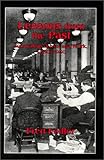
Fred Fedler. Lessons from the Past: Journalists' Lives and Work, 1850-1950. Prospect Heights: Waveland Press, 2000. xiv + 250 pp. $21.95 (paper), ISBN 978-1-57766-067-5.
Reviewed by John Harris (Department of Journalism, Western Washington University)
Published on Jhistory (September, 2004)
In this age of cell-phone cameras, Wi-Fi, and Hi-Def, it requires some imagination for young journalists to envision their predecessors laboring away on manual typewriters. Consider, then, what it must have beenlike in newsrooms before the appearance of even that technological wonder: journalists put pencil to paper to write and edit their stories. A printer once tried to decipher a story that began "Terre Haute, Ind." Not sure what the reporter had meant, he finally set in type: "Terrible Hot Indiana." Horace Greeley, the renowned editor of the New York Tribune was infamous for his horrible handwriting. He once fired an inept reporter and detailed his faults in a long letter. It was unreadable except for Greeley's signature, and the reporter claimed it was a letter of recommendation. Editors were so impressed they hired the young reporter on the spot.
Fred Fedler, longtime journalism professor at the University of Central Florida, provides a wealth of such anecdotes in his fourth book. Greeley aside, this is not a study of the great men and women of journalism history. Readers will learn more about Agness Underwood, a reporter and editor for the Los Angeles Record, than they will about Ida Tarbell. Moses Koenigsberg, a city editor for the Chicago American, is mentioned more than a dozen times, while H. L. Mencken's name does not appear even once.
Fedler's purpose is to provide a look at what it was like in the trenches for typical journalists during the one hundred years beginning in 1850. He starts with that year, he notes, because before then newspapers hired few reporters. They could not afford them, and editors did not see a need for them. He stops at 1950, because "the number of newspapers was declining, and fierce competition among many dailies in big cities was disappearing" (p. 5).
Fedler addresses technology, pay, competition, ethics, hiring, firing, and even drinking habits. It is an ambitious undertaking. No Romenskos were around back then to provide a daily blog of what journalists were up to, and many of the books describing that period were written by successful journalists working in the country's biggest cities (see _The Autobiography of Lincoln Steffens, 1931). "Most journalists were never well known and left little or no record of their lives," Fedler notes in his preface (p. ix). Fortunately, some did write about their profession, and Fedler has managed to pull together enough material to shed light on their century. To wit, his first chapter, on "Journalists" Characteristics," includes 109 endnotes.
Fedler's research shows that no matter how much things have changed through the years for journalists in the Peorias and Boises of America, they have remained surprisingly constant. A century ago journalists worked hard, were underpaid, and, despite their dedication to their profession and their community, suffered from a poor reputation. They were seen by the general public as prying and insensitive. They were eccentric, uninhibited, and not to be trusted. And that is different today, how?
Therein lies much of this book's value, especially for aspiring journalists and journalism students. They hear plenty today about the innovators and the heroes of the field--Joseph Pulitzer, Edward R. Murrow, Bob Woodward and Carl Bernstein, and the rest--and they are required to read the New York Times or other national newspapers in the classroom. What they do not hear or read about are the conditions and the people in the small- and medium-sized markets where they are likely headed, at least for starters. Many young journalists expect they will be Woodward and Bernstein, and that their paper will be like the Washington Post, if not the Post itself. Instead, they find themselves covering the mundane as well as the fascinating in a community of twenty thousand or so people, many of whom view media with a great deal of skepticism. If these young journalists end up feeling put upon, they can take comfort in the fact that they come from a long line of beleaguered reporters and editors, as Fedler shows.
Herein lies the book's greatest shortcoming as well. Things are not really that much different today than they were seventy-five or even one hundred years ago. Yes, technology has evolved, journalism education has improved and ethical standards have come a long way, but journalists still gripe about the same things; the demands of the profession still break up marriages, and some journalists still find the best way to deal with the stress of the job is through drinking and drugs.
In 1941, Philadelphia newspaperman Morton Sontheimer foresaw the journalist of the future, making a prediction that seems especially prescient in light of the debate today over technology's place in newsgathering: "No change I can conceive of in the dissemination of news can eliminate the necessity for men and women to gather, edit, and present it. They may not be called 'newspapermen' in another century, and they may not be using pencils and typewriters; but I'll venture that, in some form or another, they'll be hanging around where things happen, still scrapping for exclusives, still swaggering, still case-hardened and soft-hearted, still envied, still bellyaching" (p. 8).
To his credit, Fedler acknowledges this underlying sameness: "Journalism continues to attract people looking for fun, adventure, and fame. Many are idealistic, wanting to write and help the public. Once in the field, they complain about their work, yet savor its variety and excitement" (p. 32).
That said, the book is worth reading simply for the wealth of stories Fedler has managed to uncover. Many are amusing; others provide context for what is happening in media today. The San Francisco Examiner rejected a number of job applicants because "they could not write." Among those were Robert Louis Stevenson and Rudyard Kipling (p. 52). The editor of Collier's magazine heard a commotion in the editorial room, emerged from his office and asked: "Gentleman, would you be good enough to get drunk one at a time and not all together. We do have a magazine to get out" (p. 179).
On June 15, 1904, the telephone rang in the newsroom of the New York Evening World. An unidentified caller reported from his office overlooking the East River that he could see a boat afire. He read its name, General Slocum, and told in detail how passengers were leaping from the flaming deck into the water. More than 1,000 people died, mostly women and children. The World never got the caller's name but reported what he had said over the telephone. New technology had allowed the newspaper to score an exclusive. Similarly, a boy using a cell phone called a television station during the Columbine High School shootings in 1999 and reported that he was holed up in a classroom. The station put him on the air live, only to discover later that he was a fraud, calling from somewhere other than the school. Apparently what worked a century ago does not always apply today.
Early on in the advent of the telephone, reporters rejected it because they figured the best and only way to interview subjects was face to face. Today's reporters debate the virtue of using e-mail as an interviewing tool. Will it eventually become as accepted as the telephone? Fedler leaves such questions to the reader to ponder. He chooses instead to string together anecdotes without pointing out how they illustrate a deeper meaning. Possibly, and understandably, he was overwhelmed by the amount of digging he completed to simply come up with the stories, and felt it was enough to give them a retelling.
The book's scope, consequently, is broad, but not deep. For those readers who like eight hundred pages on the rise of the New York Times, or five hundred pages on the life of William Randolph Hearst, this will not fit the bill. But for those looking for some insight into the everyday life of journalists in the late-nineteenth and early-twentieth centuries, presented primarily in paragraph-long anecdotes, this product of Fedler's hard work will serve well.
If there is additional discussion of this review, you may access it through the network, at: https://networks.h-net.org/jhistory.
Citation:
John Harris. Review of Fedler, Fred, Lessons from the Past: Journalists' Lives and Work, 1850-1950.
Jhistory, H-Net Reviews.
September, 2004.
URL: http://www.h-net.org/reviews/showrev.php?id=9796
Copyright © 2004 by H-Net, all rights reserved. H-Net permits the redistribution and reprinting of this work for nonprofit, educational purposes, with full and accurate attribution to the author, web location, date of publication, originating list, and H-Net: Humanities & Social Sciences Online. For any other proposed use, contact the Reviews editorial staff at hbooks@mail.h-net.org.

