



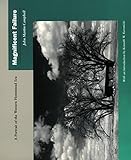
John Martin Campbell. Magnificent Failure: A Portrait of the Western Homestead Era. Stanford: Stanford University Press, 2001. xiv + 183 pp. $65.00 (cloth), ISBN 978-0-8047-3886-6; $31.95 (paper), ISBN 978-0-8047-3887-3.
Reviewed by Claire Strom (Department of History, North Dakota State University)
Published on H-West (February, 2004)
Illustrations of Western Homesteading
Illustrations of Western Homesteading
Campbell's book Magnificent Failure was a hard book for me to review, mainly because it is not a history book in any sense, but rather a book of images, created through words and pictures. Campbell, an anthropologist and photographer, has no intention of saying anything new about homesteading in the West. Instead, his aim is to evoke the grandeur of the enterprise itself and its environment.
Campbell opens his book with a short (twenty-two-page) discussion of the homesteading era. This is interesting because, in many ways, the text does not give an overview, but rather effectively creates mental images of homesteading and homesteaders. Using oral interviews with surviving homesteaders or their heirs, as well as his background in material culture, Campbell sketches the homesteading experience for his audience. He colors this sketch with attractive details, such as the story of John and Maud Fontaine, who homesteaded near Yakima, Washington, in the 1910s and 1920s. He also includes lots of information concerning the stuff of homesteading: the architecture of the barns and homes, the tools used to farm the land, and the land itself.
The text serves as a supplement for the main part of the book: the images. Campbell has traveled around the shortgrass prairie, taking photographs of the remnants of the homesteading era: mostly buildings and machinery. These elegant black and white images are each accompanied by a paragraph of descriptive text, usually expanding on the object's use, size, price, and/or construction. The photographs are a delight: beautifully framed and lit. They succeed very well in bathing the homestead era in a nostalgic sense of past glory. And, for those of us who love the austere landscape of the plains, with its spare shapes and vast skies, these pictures speak clearly to the beauty of a difficult land. They do not, however, actually evoke the homestead era itself, with its much denser population, cultivated lands, and hustle of farming life.
In the book's introduction, Kenneth W. Karsmizki of the Museum of the Rockies in Bozeman provides a brief and adequate historical overview of the reasons for homesteading, the land policies involved, and the nation's imperial ambitions. Karsmizki relies on the classic sources for homesteading such as Gates, Hibbard, and Hargreaves. Neither he nor Campbell (nor Stanford University Press, for that matter, as the cover text reads "Historians of the Western United States have largely ignored the homesteaders") seem familiar with the large body of literature dealing with the homesteading experience, from Glenda Riley to Paula Nelson to John Mack Faragher. In fact, Campbell blithely writes, "the Rural men and women with whom I talked affirmed that bad marriages and unhappy families were unusual, and that divorces and desertions were rare" (p. 24), completely ignoring the debate that has raged for several decades over whether women's homesteading experiences were generally positive or negative.
But this is nitpicking. Campbell does not try to give a scholarly analysis of homesteading nor does he claim a comprehensive understanding of the literature. What he does, and very effectively, is give us a wonderful picture of a lost era in western history. This is ultimately not a book to read, but a book to look at and enjoy.
If there is additional discussion of this review, you may access it through the network, at: https://networks.h-net.org/h-west.
Citation:
Claire Strom. Review of Campbell, John Martin, Magnificent Failure: A Portrait of the Western Homestead Era.
H-West, H-Net Reviews.
February, 2004.
URL: http://www.h-net.org/reviews/showrev.php?id=8903
Copyright © 2004 by H-Net, all rights reserved. H-Net permits the redistribution and reprinting of this work for nonprofit, educational purposes, with full and accurate attribution to the author, web location, date of publication, originating list, and H-Net: Humanities & Social Sciences Online. For any other proposed use, contact the Reviews editorial staff at hbooks@mail.h-net.org.

