



Basil Johnston. Crazy Dave. St. Paul: Minnesota Historical Society Press, 2002. x + 334 pp. $16.95 (paper), ISBN 978-0-87351-423-1.
Reviewed by Robert Bogdan (Cultural Foundations of Education and Sociology Departments, Syracuse University)
Published on H-Disability (December, 2002)
Crazy Dave
Crazy Dave
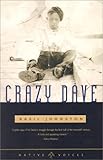
A picture of the author's uncle, the person for whom the book is named, David McLeod (or Crazy Dave), dominates the front cover of this paperback. It is an unflattering picture. Dave sits spread eagle, hat askew, holes in the soles of his shoes, mouth open, eyes unfocused and with Down's syndrome features. No pretty title, no normalized image. The cover is truthful to the book's content, a direct, unromantic story of a developmentally disabled person living in a Native American community told by a relative who is an intelligent observer and a gifted writer. The story is not sanitized. It is free of the staid and distancing language of disability professionals and minimizes the voyeurism David and his ethnicity could evoke. It is a book that makes you think but does not tell you how to think. It is also an in-depth encounter with an interesting person, a different culture, a different time (most of it takes place starting in the 1930s until 1956, when Dave dies), and a new voice. The voice is that of the author, not David, who does not talk much.
The teller is Basil Johnson, an accomplished Native Canadian author and Ojibay scholar who lives in Ontario, on the Cape Croker Indian Reservation. The author spent most of his early years, and Dave spent his entire life, on the Cape Croker Reservation. Johnson did not just rely on his own memory to reconstruct his uncle's life, he collected information from several sources including in-depth interviews with family members and elders who knew David first-hand.
David is not the only memorable character. David's mother and the author's grandmother, Rosa, shares center stage. David was dependent on her and, as a result, she subordinated her life to his. It is as much about her struggle with poverty, divorce and social isolation as it is about David and his place in the community. The family never used the phrase "Crazy Dave." That was what community people used and the book is as much about the culture David lived in, and the forces that shaped that culture, as it is about the focal characters.
The author has an eye for detail, for the poignant illustration and for the larger point. He knows how to move from the particular to the big picture. Not heavyhandedly, but throughout the work, the author uses his uncle's situation as a metaphor to explore the situation of Native Canadians in their homeland. Johnson's skill in jumping levels of abstraction, moving from his uncle to larger issues of the Ojibay people, is illustrated by the following quotation:
"It was assumed that Uncle David didn't know much about anything, or what he knew didn't count; what North American Indians knew didn't amount to a jar of jelly beans, and did not have any relevance. As long as Uncle David stayed where he belonged and didn't bother anyone or interfere with anyone's business, neighbors could put up with him; and as long as North American Indians kept the peace and didn't rock the boat, society would tolerate them. Uncle David didn't belong in the community. He wasn't one of the normal human beings; he was dumb and couldn't talk; didn't and couldn't understand. He didn't belong in the society of sensible people. He belonged in some institution where he could learn to perform simple tasks and operations. Some day he might have learned to help himself to earn a place at the bottom of the totem pole, or the ladder." (p. 11)
Crazy Dave is exceptional because it is about a person who, at first glance and by most criteria, did not accomplish anything. He only survived. Easily dismissed by a less sensitive person as someone not worthy of the time and effort necessary to write a book, the author engages us with his uncle's and family's struggle to show that David's life was an accomplishment. David allowed his nephew, and, in turn, that author has taught us, to be more engaged with people others might write off as having nothing to say. In doing so, we may find out more about ourselves and our society.
If there is additional discussion of this review, you may access it through the network, at: https://networks.h-net.org/h-disability.
Citation:
Robert Bogdan. Review of Johnston, Basil, Crazy Dave.
H-Disability, H-Net Reviews.
December, 2002.
URL: http://www.h-net.org/reviews/showrev.php?id=6992
Copyright © 2002 by H-Net, all rights reserved. H-Net permits the redistribution and reprinting of this work for nonprofit, educational purposes, with full and accurate attribution to the author, web location, date of publication, originating list, and H-Net: Humanities & Social Sciences Online. For any other proposed use, contact the Reviews editorial staff at hbooks@mail.h-net.org.

