



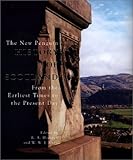
R. A. Houston, W. W. J. Knox, eds. The New Penguin History of Scotland: From the Earliest Times to the Present Day. London: Penguin, 2002. lvix + 572 pp. $25.00 (paper), ISBN 978-0-14-026367-1.
Reviewed by Jeremy Black (Department of History, University of Exeter)
Published on H-Albion (October, 2002)
The reader is not entirely served well by this paperback edition of a work first published in 2001. A book that cries out for maps (how many non-Scottish readers know where Galloway or the Great Glen are?), for tables (whether of coal production or rising Scottish Nationalist votes), and for notes that draw attention to differences of opinion is, instead, more simply presented. That was probably a publisher's decision, and it contrasts with the ably selected and handsomely reproduced illustrations, and with the space found for full bibliographical essays at the end of each chapter.
The text is first-rate. The editors have assembled a good team, and the latter do not disappoint. There is a full introduction on "Scots and their Histories" which covers much of Scottish history and makes a large number of sensible points. For example, in the discussion of religion, the editors point out that the twentieth century saw not a linear trend towards secularization, but a series of phases of growth and decline, with a shift from a comprehensive religious culture to a society based on voluntary but often strongly held religious beliefs. Ian Armit on "Prehistory" ranges widely and makes the point that in that period "divisions between communities in different parts of Scotland were at least as great as those which separated them from neighbours in England, Ireland, and the mainland of northern Europe" (p. 9). Thomas Owen Clanchy and Barbara Crawford discuss the formation of the Scottish kingdom, pointing out that, as a territorial unit, Scotland was late in forming. The impact of successive incomers is ably considered as the story is taken forward to the 1090s. By then, "the medieval Scottish identity was fast taking shape, and even though the geographical limits had not been reached in every direction the territorial extent was recognised and attainable" (p. 90). For David Ditchburn and Alastair MacDonald, medieval Scotland is taken forward to 1560. This is a lengthy chapter that points out that "coming to terms with the English remains one of the medieval past's most enduring legacies" (p. 175). They see innate conservatism alongside anglophobia as other "enduring psychological scars" (p. 176) of the era. The text also responds to current concerns, with a full discussion of gender issues, including employment, sexuality, and authority within the family. Keith Brown moves the story forward from Reformation to Union, arguing that there was nothing inevitable about either. There is much bleakness here, not least in the account of the brutal treatment of the Covenanters, but Brown urges modern readers to avoid the perspective of eighteenth-century Whigs and, instead, to celebrate pre-Union Scotland. This is a reasonable view, although one that might have benefitted from a writer better able to appreciate Stuart perspectives. Bruce Lenman is characteristically vigorous in his coverage of 1707-1831. Charles Edward Stuart becomes "an Italian drunk" (p. 323) and there are heroes and villains, as well as those whose age was over and others whose time had come. It is useful to stop on occasion and think of other approaches, but Lenman is a very sage guide and well able to cover the full range of development. Graeme Morton and R. J. Morris successfully cover 1832-1914 and John Foster offers a fine treatment of 1914-1979. If Christopher Harvie is as opinionated as ever in his "Scotland after 1978," he also shows a welcome willingness to include environmental developments, and he retains his fine ear for cultural shifts. For this very satisfying collection that is excellent value for money, both contributors and editors deserve considerable praise.
If there is additional discussion of this review, you may access it through the network, at: https://networks.h-net.org/h-albion.
Citation:
Jeremy Black. Review of Houston, R. A.; Knox, W. W. J., eds., The New Penguin History of Scotland: From the Earliest Times to the Present Day.
H-Albion, H-Net Reviews.
October, 2002.
URL: http://www.h-net.org/reviews/showrev.php?id=6809
Copyright © 2002 by H-Net, all rights reserved. H-Net permits the redistribution and reprinting of this work for nonprofit, educational purposes, with full and accurate attribution to the author, web location, date of publication, originating list, and H-Net: Humanities & Social Sciences Online. For any other proposed use, contact the Reviews editorial staff at hbooks@mail.h-net.org.

