



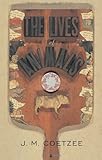
J. M. Coetzee. The Lives of Animals. Princeton: Princeton University Press, 2001. 130 pp. $18.95 (paper), ISBN 978-0-691-07089-6; $31.95 (cloth), ISBN 978-0-691-00443-3.
Reviewed by Sehjae Chun (Department of English, SUNY at Buffalo)
Published on H-Nilas (June, 2002)
Animal Others and Ourselves
Animal Others and Ourselves
J. M. Coetzee, an eminent figure in postcolonial literature from South Africa, has, through his novels, examined the various aspects of otherness in the context of apartheid. In his recent novel, The Lives of Animals, Coetzee expands his interest in otherness beyond anthropocentric concerns regarding anti-apartheid to examine animal others through the story of Elizabeth Costello, who is engaged in an investigation of the polemical issue of animal rights.
What makes this work an outstanding novel about animals is not only the subtly engineered frame of the discussion--in which the different, often conflicting views on animals are well orchestrated--but also Coetzee's careful examination of the relationship between the literary imagination and animal others in light of commitment to praxis. In addition to the helpful introductory essay by Amy Gutmann, the 2001 edition of Coetzee's novel contains valuable critical responses to Costello's fictional lectures by four real-life scholars who have written extensively about animals: Marjorie Garber, a literary critic; Peter Singer, a moral philosopher in the Princeton University Center for Human Values; Wendy Doniger, a religious scholar; and Barbara Smuts, a professor of anthropology who has lived with baboons.
Intriguingly, Coetzee's novel about animal rights was originally presented as the 1997-98 Tanner Lectures at Princeton University as a part of its University Center for Human Values series. Instead of delivering the Tanner Lectures, as he had been asked to do, he presented a fictional work about Costello, an Australian literary figure, who has been invited by Appleton College in the United States to deliver its annual Gates Lectures on the topic of her choice.
Particularly rewarding are the relationships between philosophical and poetic discourses on animals that gradually emerge in the course of two lectures. In her first lecture, titled "The Philosopher and the Animals," Costello starts with Franz Kafka's famous story, "Report to an Academy," about the super-ape Red Peter, who stands before a learned society of humans "telling the story of his life--of ascent from beast to something approaching man" (p. 18). Similarly, Costello, a passionate animal rights promoter, reports in the manner of Red Peter to her human audience, describing the merciless cruelty committed to animals by humans. Disturbingly, she makes a direct analogy between how humans treat animals and the Nazis' treatment of Jews, arguing that we, as bystanders, are not unlike the people living near Treblinka who never inquired or expressed concern about what was going on in the concentration camps. Even worse, Costello says that the Nazis slaughtered Jews like cattle, implying--through the use of this ordinary simile--the extent to which mass cruelty to animals is accepted as commonplace.
Costello goes on to take issue with the philosophical discourse on animals from Plato through Augustine, Aquinas, Descartes, Kant, and Thomas Nagel, arguing that their applications of philosophical reason never reached beyond humans to the animal kingdom, and "reason is the being of a certain spectrum of human thinking" (p. 23). Therefore, as the crime committed by the Nazis consisted of their lack of compassion with their victims, it is other spectrums, such as sympathy and compassion, which need to be prioritized in consideration of animal rights. Because "there are no bounds to the sympathetic imagination" (p. 35), we can even imagine our way into the existence of animal others.
Costello, in her second lecture on "The Poets and the Animals," argues that the poetic discourses of William Blake, D. H. Lawrence, Ted Hughes, Gary Snyder, and Robinson Jeffers provide, unlike the other philosophical discourses, an accessible avenue to animal presence without colonizing its otherness. In particular Costello uses Ted Hughes's "The Jaguar" and "The Second Glance at a Jaguar" to demonstrate "the process called poetic invention that mingles breath and sense" (p. 53) as philosophers failed to do and argues that poetry itself is "the record of an engagement" (p. 51) with an animal. For the most part, the poets who can render the sympathetic engagement with animal others lead us to imagine other life forms from within and, therefore, she urges us to read these poets.
Amazingly the exchange of questions and answers which follows Costello's fictional lectures is sophisticatedly designed to nail down the polemical issues of the animal rights movement. Issues such as the limits of humanity, the danger of imposing a "Western crusade" of animal rights on non-Western worlds, and the ethical issues concerning hunting are raised, but, disappointingly, Costello is unable to formulate lucid answers to these thorny problems.
The first of the four respondents to Coetzee's novel, literary critic Marjorie Garber, views The Lives of Animals as a postmodern meta-fiction and interrogates its meaning, without much success, by not answering but asking "What does the form of these lectures displace, repress, or disavow?" "What does the emphasis on animals tell us about people?" (p. 74), and "What, if anything, is the 'value' of literary study in today's academy and today's world?" (p. 75).
Peter Singer, who might be the central philosopher Costello is challenging, guards philosophy against Costello's critique of reason via a fictional dialogue between her daughter Naomi and himself, as Peter, over Coetzee's lecture. In Singer's fictional tongue-in-cheek reply, Peter reiterates the principles of the equal consideration of interests of all sentient creatures, adding all animals do not necessarily have the same interests. They discuss whether Peter would necessarily rescue Naomi before the family dog Max in a fire.
Wendy Doniger uses her expertise in the history of religions to demonstrate that the issues of compassion toward animals, vegetarianism, and individual human salvation which Costello promotes are deeply rooted in non-Western traditions such as Buddhism, Jainism, and Hinduism, to different degrees.
The most exciting response comes from Barbara Smuts, a professor of psychology and anthropology, who complements Costello's lecture with her own experience living among baboons in the wild and the story of her personal relationship with her dog, Safi. Smuts urges, as Costello does, that we open our hearts to the animals and find out what it is like to befriend a non-human being.
What is Coetzee's ironic, multi-layered lecture really about? What does Coetzee contribute to the ongoing discussion on animal rights? Is it whether philosophy or poetry is more conducive to the cause of animal rights and to render ethical doctrine more effectively? I suspect that he wouldn't answer the question. Even though this book might serve to redirect the issue of animal rights in literary works neglected by many practitioners, Costello's woolly emotional view on animal rights and her sloppy reasoning agitate animal rights supporters as well. Moreover, as a standard textbook for animal rights study, The Lives of Animals might not fit well.
Regarding the failure of philosophical discourse to bridge the gap between human and animal, Costello sidesteps more complex philosophical issues by ignoring the continuing philosophical tradition of sympathy, which stretches from David Hume and Adam Smith to their twentieth-century followers, such as the environmental philosophers Arne Naess and John Baird Callicott.[1] Furthermore, Costello's interpretation of animal poems by Ted Hughes is poetic and persuasive but it is questionable whether that poetic experience itself leads to the practical animal rights activism she argues for.
However, the very weakness of this book is also its strength. The Lives of Animals and the four reflections on the novel are subtly orchestrated to let the extensive exchange of views from a variety of commentators flow in its unpredictable course, and its Nightline style of debate will attract a larger audience. As a host and a master trickster, Coetzee will put the readers on the uncomfortably thought-provoking rollercoaster named The Lives of Animals.
Overall, Coetzee's novel provides a forum for a broader discussion of the problems involved and is an excellent choice if you want to come to grips with the current controversies of animal rights and its implications, which reach beyond the lives of nonhuman animals to those of humans as well.
Note
[1]. For an excellent philosophical survey of sympathy between humans and animals, see John Fisher, "Taking Sympathy Seriously" Environmental Ethics 9 (1987): 197-215.
If there is additional discussion of this review, you may access it through the network, at: https://networks.h-net.org/h-nilas.
Citation:
Sehjae Chun. Review of Coetzee, J. M., The Lives of Animals.
H-Nilas, H-Net Reviews.
June, 2002.
URL: http://www.h-net.org/reviews/showrev.php?id=6415
Copyright © 2002 by H-Net, all rights reserved. H-Net permits the redistribution and reprinting of this work for nonprofit, educational purposes, with full and accurate attribution to the author, web location, date of publication, originating list, and H-Net: Humanities & Social Sciences Online. For any other proposed use, contact the Reviews editorial staff at hbooks@mail.h-net.org.

