



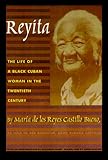
Maria de la Reyes Castillo Bueno. Reyita: The Life of a Black Cuban Women in the Twentieth Century. Translated by Anne McLean. Durham: Duke University Press, 2000. 182 pp. $16.95 (paper), ISBN 978-0-8223-2593-2.
Reviewed by Helen Safa (Center for Latin American Studies, University of Florida, Gainesville, Florida )
Published on H-LatAm (November, 2001)
Against All Odds: Life as a Poor, Black Woman in Twentieth Century Cuba
Against All Odds: Life as a Poor, Black Woman in Twentieth Century Cuba
Reyita is a remarkable book. In a short 160 pages, a 94 year old black Cuban woman recounts her life, including memories of her grandmother in slavery and her mother in the independence movement, and her observations of the 1912 massacre of the PIC (Partido Independiente de Color), plantation life, Fulgencio Batista (notorious dictator of Cuba in the l950s), the formation of the Popular Socialist Party (the Communist party of the time) and the socialist revolution in l959. But the most important aspect of this gem of a book is not a local rendition of national political events, but Reyita's own struggle to overcome all the obstacles in her life, which were overwhelming for a poor, black woman born in l902.
Race figures prominently in her life, but in a contradictory way. Reyita is proud of her blackness, and recounts her grandmother's recollections of life in Africa and the terrible trials of slavery. She maintains her African connections through her Spiritualism mixed with a folk Catholicism that makes primary the Virgen de la Caridad del Cobre, a national icon whom Reyita claims for her own salvation. Her racial awareness is also marked by her participation in the short-lived Marcus Garvey movement and her knowledge of the Partido Independiente de Color, formed after the U.S. occupation to protest the exclusion of blacks from Cuban politics and their racial subordination. As the blackest child of a mixed race woman, born of an African mother and a slave master, Reyita is discriminated against by her own mother and other members of her large, extended family. She is also discriminated against in education and employment, and never finds formal employment, but is always active earning money through teaching, washing clothes, selling home-cooked food, and other means to sustain her 11 children. The final betrayal is by her white husband, who deceives her into thinking they are formally married through an elaborate wedding ceremony. She is shocked to discover many years later, in her fifties, that the marriage was never formally registered. She marries a white man consciously, to improve her race (adelantar la raza), so that her children may have less difficulty in life than she has faced as a poor black woman. In the United States, marriage to a white spouse may be seen as racial betrayal, but not in Cuba, where intermarriage was a prime mover in the integration of blacks into Cuban society. As Reyita says, "I didn't want a black husband, not out of contempt for my race, but because black men had almost no possibilities of getting ahead and the certainty of facing lots of discrimination" (p. 166).
Class is also a strong element in Reyita's life, since she was born and brought up among the poor in Oriente, where women and men worked in the sugar plantations that became so important after the U.S. occupation in l898. Class distinctions also marked the Afro-Cuban community, as Reyita notes that upwardly mobile blacks looked down on the poor, forming their own exclusive associations. Her pretty light-skinned mother had children by several different men, and as she moved around to seek work, would leave some of her children with members of her extended family, a pattern still common to poor women in the Caribbean today. Several of Reyita's sisters and brothers died as children, and she describes how war, illness, lack of public health facilities, and overall poverty decimated many families, especially the young. Reyita's own father was a black rebel soldier in the Wars for Independence, in which her mother also participated, but was left landless and penniless. She also maintains contact with his relatives, particularly her paternal grandmother, and her father's brother's family, with whom she lived part of her childhood.
Reyita's marriage to Rubiera in 1923 did not alleviate her struggle for survival, although Rubiera always had a job, and even held some supervisory positions with the United Fruit Company. But the family never owned a house of their own until the 1959 revolution, when she was given a house as the mother of a martyr, since she had lost a son in the 26th of July Movement. Although Reyita's family also moved around a lot, depending on Rubiera's employment, none of the children were ever left with relatives, and they were all with her husband. All of Reyita's children survived, except for the son killed in a sabotage explosion in 1960. This attests to the general improvement in health conditions, as well as Reyita's determination to look after her children's welfare.
Gender relations are another particularly intriguing part of the book, which should be read by all feminists who think that Cuban women, and black women in particular, are submissive and obedient. Early in their marriage, Reyita is forced to accept Rubiera's harsh restrictions on her social life and independence, since women with young children are often the most economically and emotionally dependent. She describes her "awakening" (p. 84) when despite her husband's disapproval she joined the Popular Socialist Party, because of their fight for equality. She always respected her husband, because he provided for the family, and did not squander money on drink and other women. In her own words, "Rubiera guaranteed--above and beyond his representation as head of the family-house, food, doctor and medicine. The rest I decided to go after myself" (p. 85). In fifty-four years of marriage, until his death in 1975, they never separated, and he loved his children, and never looked down on them. But he did not share Reyita's aspirations for their children, and she began to build a life independent of him, to be able to give her children an education and a decent job. As Reyita asserts, "Economic independence is the only way to be free" (p. 142). Here we see the central role of the man as breadwinner[1], which if fulfilled, enabled women to withstand other forms of domestic abuse. Although there is no hint that Rubiera ever hit Reyita, much less their children, he was very strict, especially with his daughters, and stingy, objecting every time Reyita purchased clothes for the children or items for the house. On her own, Reyita managed to finance her daughters' weddings and to supply her house with electricity, and to buy a radio, refrigerator and television. The radio transformed her life and broke "the tradition of submission to the man of the house" (p. 145).
Reyita takes great pride in her family, which as the book closes, numbers 118 persons, including great-great- grandchildren, spread all over Cuba, though significantly none have emigrated to the U.S. Reyita remarks: "My family's beautiful! It looks like a rainbow: whites, blacks, mulaticos, jabatos. Long hair, short hair, curly and straight. Engineers, lawyers, teachers, technicians, workers; all organized and, most importantly, free of racial prejudices" (p. 158).
Only one of her own children studied at the university, Daisy Rubiera Castillo, who edited her mother's biography (originally in Spanish), with an excellent English translation by Anne McLean. Unfortunately, the English version of the book contains no information on her daughter, who is listed on the back jacket as a founder of the Fernando Ortiz cultural Centre in Santiago.
There is a valuable introduction to the book by Elizabeth Dore, an American historian at the University of Portsmouth, UK, who has written extensively on modern Latin American history and gender studies. Dore serves to place Reyita's life in historical context, stressing political events, such as the massacre of 1912 or the socialist revolution of 1959 that were important to Reyita. However, I would have preferred more attention to Reyita's focus on her family. This book contributes much to our understanding of the intersection of race, class and gender in the lives of ordinary Cubans, and how this nexus motivates their household formations, aspirations for their children, and national and racial ideologies. It also helps us to understand the strengths of Cuban women, and black women in particular, who devoted their lives to furthering their family's welfare. As Dore notes, Reyita is strangely silent about the socialist revolution (and about Fidel), given that she credits socialism with providing many of the educational and occupational opportunities that her large family now enjoys. Equally important, in Reyita's eyes, is that her children and grandchildren knew how to take advantage of these opportunities to advance themselves as well as to contribute more to their country.
Now that the success of the revolution in combating racial discrimination in Cuba is being questioned, especially in the United States, this book helps us to understand the ways in which Afro-Cubans have gained and how solid these achievements are. As de la Fuente[2] affirms in his recent book, the gains of Afro-Cubans in education, occupation, health and other indices of well-being are undeniable. They are reflected in Reyita's own family. I also think Reyita helps demonstrate that Afro-Cubans are more broadly integrated into Cuban society now than they were in the past, and that the promise of Jose Mart, of "a nation for all" has been substantially fulfilled. Institutional barriers to racial advancement have been removed, but discrimination remains in interpersonal relations, particularly intermarriage,[3] and has been exacerbated during the Special Period. But precisely because of these achievements, Afro-Cubans are now in a position to defend the gains they have made, and remain among the revolution's staunchest supporters. Certainly Cubans like Reyita and her family are unlikely to accept reversals lightly.
Reyita thus provides an additional example that racial integration through mestizaje is possible and opens the way toward greater racial democracy in Cuba. Her life provides a valuable contribution to the growing literature on race relations in Cuba, both before and after the revolution of l959, and to the continuing debate between integration and black separatism in the Americas.[4] Reyita makes clear that the idea of integration stemmed not only from the elite, but from ordinary black Cubans like herself, who believed that they had a place in Cuban society, and could achieve a better life in this country, despite all the obstacles produced by racism, sexism and poverty. The book helps to clarify for a non-Cuban audience why Cubans have been able to survive a forty-year plus embargo from the United States, and then a decade of economic crisis under the Special Period. In addition to a clearly written and extremely readable text, highly suitable for undergraduates, the book contains fifteen poignant pages of photographs of Reyita and her family, including grandchildren, great grandchildren and great-great-grandchildren, and a useful three page bibliography of further reading on gender and race relations in Cuba. Reyita should rank along with Miguel Barnet's Biography of a Runaway Slave[5] among the leading Cuban books in the testimonial genre, and should appeal to a broad, interdisciplinary audience interested in race relations, gender studies, and other forms of inequality in both contemporary and historical Cuba.
Notes
[1]. Helen I. Safa. The Myth of the Male Breadwinner: Women and Industrialization in the Caribbean. Boulder: Westview Press, 1995.
[2]. Alejandro de la Fuente. A Nation for All: Race, Inequality and Politics in Twentieth Century Cuba. Chapel Hill and London: The University of North Carolina Press, 2001.
[3]. Nadine T. Fernandez. "The Color of Love: Young Interracial Couples in Cuba." Latin American Perspectives 23, no. l (Winter 1996): 99-117.
[4]. In addition to the examples cited above, most of the studies on race relations in Cuba are historical. See for example: Jorge and Isabel Castellanos. Cultura Afrocubana. 4 vols. Miami: Ediciones Universal, 1990-94; Tomas Fernandez Robaina. El Negro en Cuba, 1902-1958. Havana: Editorial de Ciencias Sociales, 1990; Ada Ferrer. Insurgent Cuba: Race, Nation and Revolution, 1868-1898. Chapel Hill: University of North Carolina Press, 1999; Aline Helg. Our Rightful Share; The Afro-Cuban Struggle for Equality, 1886-1912. Chapel Hill, University of North Carolina Press, 1995; Vera Kutzinski. Sugar's Secrets: Race and the Erotics of Cuban Nationalism. Charlottesville: University of Virginia Press, 1993; Robin Moore. Nationalizing Blackness: Afrocubanismo and Artistic Revolution in Havana, 1920-1940. Pittsburgh: University of Pittsburgh Press, 1997; Rebecca Scott. Slave Emancipation in Cuba: The Transition to Free Labor, l860-1899. Princeton: Princeton University Press, 1985. And a more contemporary collection, Pedro Perez Sarduy and Jean Stubbs, eds. Afro-Cuban Voices: On Race and Identity in Contemporary Cuba. Gainesville: University of Florida Press, 2000.
[5]. Miguel Barnet. Biography of a Runaway Slave. Willimantic, Conn: Curbstone Press, 1994. Also of interest is a book just published by the Afro-Cuban writer, Pedro Perez Sarduy on his mother, Las Criadas de La Habana. San Juan, Puerto Rico: Editorial Plaza Mayor, 2001.
If there is additional discussion of this review, you may access it through the network, at: https://networks.h-net.org/h-latam.
Citation:
Helen Safa. Review of Bueno, Maria de la Reyes Castillo, Reyita: The Life of a Black Cuban Women in the Twentieth Century.
H-LatAm, H-Net Reviews.
November, 2001.
URL: http://www.h-net.org/reviews/showrev.php?id=5705
Copyright © 2001 by H-Net, all rights reserved. H-Net permits the redistribution and reprinting of this work for nonprofit, educational purposes, with full and accurate attribution to the author, web location, date of publication, originating list, and H-Net: Humanities & Social Sciences Online. For any other proposed use, contact the Reviews editorial staff at hbooks@mail.h-net.org.

