




Julia Alvarez. In the Time of the Butterflies. New York: Plume, 1995. 325 pp. $15.00 (paper), ISBN 978-0-452-27442-6.
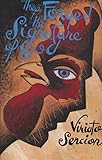
Viriato Sencion. They Forged the Signature of God. Willimantic, Conn.: Curbstone Press, 1995. 250 pp. $13.95 (paper), ISBN 978-1-880684-33-7.
Reviewed by Peter G. Felten (Tulsa Community College)
Published on H-LatAm (September, 1996)
Dominican Historical Novels in the Classroom
Two recent Dominican historical novels offer intriguing, although widely divergent, opportunities for classroom use. Julia Alvarez's In the Time of the Butterflies would work well as a fictional supplement in many courses, while Viriato Sencion's They Forged the Signature of God would deepen advanced students' understanding of modern Dominican history.
The authors of both novels share Dominican heritage and United States residence. In 1960, Julia Alvarez's father fled with his family to New York City to escape Rafael Trujillo's secret police. Just 10 years old when she became an exile, Julia Alvarez grew up on tales of anti-Trujillo activists; one of these serves as the basis for her novel. Viriato Sencion's life parallels his book even more directly. Like his main characters, he attended seminary in Santo Domingo. Sencion later became a political activist in the Dominican Republic, and moved to the United States as an adult to study literature. Both novels, thus, include not only an interpretation of modern Dominican history but also touches of autobiography.
In the Time of the Butterflies fictionalizes the story of the Mirabal sisters. Minerva, Maria Teresa, and Patria Mirabal became anti-Trujillo heroes on 25 November 1960 when the dictator's henchmen murdered them and their driver Rufino de la Cruz, as the sisters traveled to visit their political-prisoner husbands. A fourth sister, Dede, survived because she did not go with her siblings on that fateful day. The novel allows each sister to tell part of the tale from her own perspective, with Dede bringing the story up to the present and commenting on the way her sisters have become mythical figures.
The book tells a compelling and tragic story, but its greatest strength is its subtlety. The characters come alive as complex yet understandable individuals. The novel reveals how circumstance and emotion can lead ordinary people to be daring at some points and debased at others. Indeed, a recurring theme is how Trujillo's repression shaped everything in the Dominican Republic, not just the nation's politics. Near the novel's end, Dede recalls a radio commentator she heard: "'Dictatorships,' he was saying, 'are pantheistic. The dictator manages to plant a little piece of himself in every one of us'" (p. 311).
Another asset of In the Time of the Butterflies, from a history teacher's perspective, is its solid historical grounding. Julia Alvarez uses the novelist's freedom to construct some composite characters, to create dialogue, and to explore motivations and experiences that are closed to a historical researcher. Yet Alvarez also succeeds as a historian, filling the story with telling details from the Trujillo era. A fascinating scene, for example, illustrates the conflict between Trujillo and the Catholic Church by explaining what happened when the secret police hired prostitutes to attend mass at the Mirabals' local church (p. 207). Alvarez also brings subtlety to the historically complex relationship between the Dominican Republic and the United States. Alvarez acknowledges the significant U.S. presence, but repeatedly reminds Dominicans of their responsibility for their own history. In a scene set during the middle of Trujillo's brutal reign, the sisters ask their mother about Dominican rebels during the 1916-1924 U.S. occupation:
"Of course, I sympathized with our patriots.... But what could we do against the Yanquis? They killed anyone who stood in their way.... They weren't in their own country so they didn't have to answer to anyone."
"The way we Dominicans do, eh?" Minerva said with sarcasm in her voice (p. 57).
Reiterating this theme, Dede later comments that after Trujillo's assassination Dominicans had "our spell of revolutions...as if to prove we could kill each other even without a dictator to tell us to" (pp. 303-4).
Because of its accessibility and its historical insights, In the Time of the Butterflies would be an excellent supplement for classes ranging from lower level surveys of modern Latin America and the Caribbean to advanced courses on politics, women, or the Dominican Republic.
They Forged the Signature of God, on the other hand, is less suitable for classroom use apart from specific recent Dominican studies. Sencion's novel is more difficult to understand, more polemical, and less well written than Alvarez's book. Its fantastical interludes and its abrupt transitions will challenge, and perhaps overwhelm, many students unfamiliar with Latin American literary styles. However, Sencion's tale could be assigned to students with the goal not only of examining the plot but also of deconstructing the novelist's politics.
Sencion tells the story of three young seminarians who come of age during the "Tirano" (Trujillo) dictatorship. The central character, Arturo Gonzalo, is sent to the seminary by a mother who dreams her son will become a priest. Arturo struggles with the Church's seemingly arbitrary rules, setting up as one of the novel's major themes the conflict between "the inner, natural part...(and) the outward image" (p. 22). In the seminary, Arturo befriends Antonio Bell and Frank Bolano. The three young men secretly become political activists under the tutelage of a priest from Havana. After they leave the seminary, the trio splits up. Frank abandons his early idealism to become a high government official, Antonio becomes a revolutionary, and Arturo muddles on trying to balance his inner ideals and the demands of the outside world.
The villain in this book is not Tirano (Trujillo), but the ever-present Dr. Mario Ramos. The parallels between Ramos and Joaquin Balaguer, like many of the other fictional parts of the novel, will be clear to anyone with even a passing knowledge of recent Dominican history. Ramos (Balaguer) begins the novel as a bachelor functionary to Tirano, becomes president after Tirano's 1961 assassination, is forced into exile in 1962, returns to the presidency in 1966, loses an election in 1978, returns to power in 1986, constructs a lighthouse as a legacy of his rule, etc. Sencion's portrait of Ramos (Balaguer) is insightful at times (for example, pp. 76-77), but more often is bitterly hostile. Sencion calls Ramos "a perfect example of a split personality," who outwardly is respectable but who is cruel and perverted internally (pp. 135, 166, 243). The image the novel paints of Ramos (Balaguer) explains why the book created such an uproar in the Dominican Republic. Sencion won the 1993 National Prize Novel Award, but he was denied the award after Balaguer and others denounced his work.
Despite the attention it received, Sencion's book is less suitable for the history classroom than Alvarez's novel. Ultimately, They Forged the Signature of God is a polemic targeting contemporary Dominican politics, whereas In the Time of the Butterflies is an insightful historical novel accessible to a wide audience.
Copyright (c)1996 by H-Net, all rights reserved. This work may be copied for non-profit educational use if proper credit is given to the author and the list. For other permission, please contact H-Net at H-Net@h-net.msu.edu.
If there is additional discussion of this review, you may access it through the network, at: https://networks.h-net.org/h-latam.
Citation:
Peter G. Felten. Review of Alvarez, Julia, In the Time of the Butterflies and
Sencion, Viriato, They Forged the Signature of God.
H-LatAm, H-Net Reviews.
September, 1996.
URL: http://www.h-net.org/reviews/showrev.php?id=566
Copyright © 1996 by H-Net, all rights reserved. H-Net permits the redistribution and reprinting of this work for nonprofit, educational purposes, with full and accurate attribution to the author, web location, date of publication, originating list, and H-Net: Humanities & Social Sciences Online. For any other proposed use, contact the Reviews editorial staff at hbooks@mail.h-net.org.

