



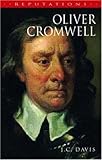
J. C. Davis. Oliver Cromwell. London: Edward Arnold Publishers, 2001. 224 pp. $65.00 (cloth), ISBN 978-0-340-73118-5.
Peter Gaunt, ed. The English Civil War: The Essential Readings. Oxford: Blackwell Publishers, 2000. viii + 360 pp. $64.95 (cloth), ISBN 978-0-631-20809-9.
Reviewed by Ronald Hutton (Department of Historical Studies, Bristol University)
Published on H-Albion (August, 2001)
This pair of titles provides a useful indication of the current condition of studies of the English Civil War and Revolution. Peter Gaunt's brief reprints a set of fourteen articles and chapters which are intended to provide students with a sense of the major themes which have characterised the historiography of the causes, nature, and consequences of the war over the past three decades. The word "essential" is susceptible in this context to two quite different interpretations. The more customary would be to indicate the most important works in the field, which attracted the most attention, formulated opinion, and provoked or resolved debate. Alas! Caprices of copyright and practicalities of format make such an enterprise very difficult, and this is not an example of it. To be sure, such celebrated works do make appearances, key essays by Conrad Russell and John Morrill being notable examples. It is clear, however, any compendium on the Civil War which has nothing by Ann Hughes or Kevin Sharpe, and includes pieces by much less prominent authors, does not capture the essence of its historiography by that reckoning. There is, however, a different take on the word: that it indicates works which sum up the spirit of moments in debate, and of particular arguments, so well that they may be taken as representative of the whole. In that sense, Dr. Gaunt has managed his task with sensitivity and imagination.
He compounds it by providing his own overviews of the historiography in four editorial introductions. These lay out the story of the various debates in a manner which is objective to a point at which virtually any participant or observer would find them an acceptable portrayal. The clarity and fair-mindedness of these summaries will be of considerable value to students, and if they sound familiar to colleagues, then the great advantage of stating the obvious is that one has an above average chance of being right. Peter Gaunt carefully avoids putting a personal spin on the subject, or trying to suggest any overall sense of where the study of it is going. Readers are told that experts differ markedly in interpretation, that the main debates are probably incapable of resolution and that most specialists now avoid single or simple explanations for events.
The only real problem with this approach is that what in general seems fair and restrained, can at times just look tired. To Gaunt the historiography concerned is very much of a continuum, so that polemical work published almost thirty years ago is portrayed as if it were part of ongoing debates. In many ways the book belongs to the 1980s, in which most of its reprinted material appeared. Only two of its fourteen pieces came out in the 90s, both of which belong to the first half of the decade and neither of which, though well-researched, created much stir. To attribute a lack of resolution to scholarly exchanges which are still in progress is one thing, but to do so in the case of debates which are going dead is to suggest a failure of achievement. The greatest single recent development in the study of English history in the 1640s has been its decline from Great Power status in the academy to that of being just another area of historical research. Whether this is simply because of changing fashion, as interest has shifted from political to cultural studies, or whether revisionism helped to destroy its own market, by declaring that mighty metanarratives of social, economic, and ideological change did not in fact converge on the period, is a question which a later historian may be bold enough to attempt.
The figure of Cromwell has at least remained enigmatic and alluring enough to emerge into the new century with scholarly interest in him still running high. The 1990s produced an important collection of essays edited by John Morrill and two biographies, by Peter Gaunt himself and by Barry Coward. All this work was characterized by a relative lack of new primary research (Professor Morrill's own contribution to his collection being the most notable exception) and a generally admiring attitude towards the man; indeed, this perpetuates a love-affair between Cromwell and academic historians which has lasted for over a hundred years and intensified in the last fifty. This being so, the appearance of a new biographer in the field is of particular interest. Colin Davis has made his name as a historian of political and religious thought and as a brilliant and provocative iconoclast, weakening, or destroying the traditional categories in which historians had grouped Civil War radicals. His record promises a man who can at once understand Oliver better than any before and make a wreck of traditional perceptions.
The first expectation is largely rewarded, the second not. Professor Davis brings two considerable strengths to his work. This first, unsurprisingly, is an ability to characterize Cromwell's religious mentality and language--antiformalist, providentialist, and dedicated to the service of a capricious, all-powerful, and constantly interventionist deity. The second is a knack for the reconstruction of networks, of those familial, religious, and political alliances on which the man's career always depended and to which he devoted much more regard than to institutions and constitutions. Both enable us to understand a key actor in English history better than before, and so this takes its place as an important study. It argues convincingly for a consistency to Cromwell's policies greater than that perceived before, centered on a quest for the achievement of religious and civil liberties without social revolution, guaranteed by the government of a single presiding figure limited by Council and Parliament and imbued with an evangelical Protestant tone. It concludes, moreover, that he achieved a great measure of success in this, and might have made it permanent had his death not cut short the process.
This is an excellent case, and superbly argued, but it has weaknesses. They begin with a functional problem; that, once again, this is a biography which does not rest on much original research. Davis has confined himself to the secondary literature, a selection of mostly published primary sources, and the famous editions of letters and speeches in which Cromwell presents and refashions himself. What is lost in this approach is the practical context of day-to-day warfare and politics. In the case of military affairs, this results in trivial errors which do not affect the overall arguments (Donnington Castle was a royalist not a parliamentarian fortress in 1644, Belton was the site of a local battle not the capture of a strongpoint, etc). In political matters, the problem works the other way round: the facts are right, but interpretation one-sided.
Three aspects of Cromwell's career need to be addressed properly if Davis's view of him is to be upheld. The first is the extent to which he was capable of moulding the army on which he depended to his own will. Biographies tend to assume that he could, and that therefore his own attitudes are crucial, but it needs to be demonstrated that his options were not in fact limited by the men on whose support his power rested. The second is that in politics, as in war, Cromwell was tactically devious. A notorious episode ignored in this study is that in which he not only abandoned his own Major-Generals in the Parliament of 1656 but silently encouraged his clients to oppose them. Also untreated is the deliberate way in which he devised governments of men who were united only by loyalty to himself, resulting in a paralysis of policy in Ireland under his rule and a riven power-base for his successor. The third aspect concerns his achievement. His policy of religious liberty could probably not have been permanent, because sectarian tensions worsened in England under his rule. The Restoration was precipitated by the ex-royalist with no commitment to godly reform whom he had put in charge of a strategically vital army. His disdain for constitutions meant that others had to draw them up for him, and get the blame when they failed; his death does not seem untimely so much as that of an exhausted man bankrupt of ideas. There is a darker Cromwell still awaiting his biographer, and another challenge presented to a historian: that of discovering why the Victorian admiration of the man has persisted unchallenged till the present.
If there is additional discussion of this review, you may access it through the network, at: https://networks.h-net.org/h-albion.
Citation:
Ronald Hutton. Review of Davis, J. C., Oliver Cromwell and
Gaunt, Peter, ed., The English Civil War: The Essential Readings.
H-Albion, H-Net Reviews.
August, 2001.
URL: http://www.h-net.org/reviews/showrev.php?id=5388
Copyright © 2001 by H-Net, all rights reserved. H-Net permits the redistribution and reprinting of this work for nonprofit, educational purposes, with full and accurate attribution to the author, web location, date of publication, originating list, and H-Net: Humanities & Social Sciences Online. For any other proposed use, contact the Reviews editorial staff at hbooks@mail.h-net.org.

