



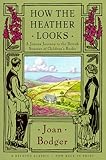
Joan Bodger. How The Heather Looks: A Joyous Journey to the British Sources of Children's Books. Toronto: McClelland and Stuart, 1999. xiv + 249 pp. $23.95 (cloth), ISBN 978-0-7710-1118-4.
Reviewed by Lorinda B. Cohoon (Department of English, University of Southern Mississippi)
Published on H-Albion (March, 2001)
Beloved Books, Family, and Travel
Beloved Books, Family, and Travel
This is not a book of literary criticism or a precise guidebook to literary landmarks. It is perhaps most useful to cultural critics as a record of how highly British children's literature was valued by white upper middle-class Americans writing in the 1960s. In what can best be described as a travel narrative geared toward fellow appreciators of children's literature, Joan Bodger takes readers with her family on a nostalgic trip to England to find out more about the places connected to nineteenth and twentieth-century works of children's literature, arguing for the importance of literature in providing mental landscapes that enrich the human condition.
The family, made up of a mother, a father, an eight year old son and a two and a half year old daughter, travels to Whitchurch in search of Caldecott's home turf and to Cornwall to find the landscape-based inspiration for Narnia as well as to experience life in a caravan as it is described by Beatrix Potter in The Fairy Caravan and Hugh Lofting in Dr. Dolittle's Caravan. The family continues to drive around England, hunting for King Arthur in Glastonbury and for the houses described in Wind in the Willows in towns along the Thames. Other places visited include Harwell, home of L. Leslie Brooke, the Kipling and Rosemary Sutcliffe country of Turnbridge Wells, and Ashdown Forest, home of Milne's Hundred Acre Wood. The family visits Yorkshire in search of Frances Hodgson Burnett's gardens and moors, and the Lakes region to look for Beatrix Potter's and Arthur Ransome's landscapes.
Although the book does not provide enough specifics for readers to re-trace the family's steps precisely (there are no maps or addresses provided), the book does provide a model for enriching one's own experience of children's books and also an unusual means of revisiting favorites. Bodger's privileging of a literary upbringing can be sensed in passages such as her meditation on the connections between Frances Hodgson Burnett's works and the Bronte novels: "I suppose that an American's approach to English literature must always be oblique. We share a language but not a landscape.
In order to understand the English classics as adults, we must build up a sort of visual vocabulary from the books we read as children. Children's literature is, in some ways, more important to us than it is to the English child. I contend that a child brought up on the nursery rhymes and Jacobs' English Fairy Tales can better understand Shakespeare; that a child who has poured over Beatrix Potter can better respond to Wordsworth" (p. 184). Bodger does not question the importance of canonical literature and throughout the book insists, with an absent-minded elitism, that her reading lists are the best kind of cultural capital.
Bodger's book works actively to preserve what she sees as a vanishing world: "Before our very eyes we saw the end of an era as many a farmer's wife rushed to buy the new garish pink or blue synthetic carryall in preference to her old hand-caned basket" (p. 4). Bodger does her preservation work by celebrating books and watching as her own children experience travel enhanced by the privilege of being well-read. Bodger exoticizes and condescends to the "gypsy" population by renting a caravan, and claiming "it would seem foolish to claim respectability -- by ordinary Anglo-Saxon middle-class standards -- for the average gypsy" (p. 24).
These problematic blindnesses to her own biased attitudes appear throughout the book, and their complacency serves as a record of American political and cultural views while it marks their changes. The most intriguing part of this book comes in the afterword when Bodger, looking back at her work as she prepares it for republication, contemplates the story it tells about her reading, her family, and her world. Here, she admits that the sweet picture she draws covers enormous tragedy, but she continues to insist on children's literature's magic, its ability to provide memories and healing catharsis. Although lovers of children's books may be mesmerized briefly, Bodger's re-published joyous journey reveals that post-modern readers cannot be easily transported by either the cultural values or the exclusively white and middle-class childhood reading promoted in this celebration.
Copyright (c) 2001 by H-Net, all rights reserved. This work may be copied for non-profit educational use if proper credit is given to the author and the list. For other permission, please contact H-Net@h-net.msu.edu.
If there is additional discussion of this review, you may access it through the network, at: https://networks.h-net.org/h-albion.
Citation:
Lorinda B. Cohoon. Review of Bodger, Joan, How The Heather Looks: A Joyous Journey to the British Sources of Children's Books.
H-Albion, H-Net Reviews.
March, 2001.
URL: http://www.h-net.org/reviews/showrev.php?id=5019
Copyright © 2001 by H-Net, all rights reserved. H-Net permits the redistribution and reprinting of this work for nonprofit, educational purposes, with full and accurate attribution to the author, web location, date of publication, originating list, and H-Net: Humanities & Social Sciences Online. For any other proposed use, contact the Reviews editorial staff at hbooks@mail.h-net.org.

