



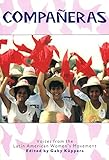
Gaby Kuppers. Companeras: Voices from the Latin American Women's Movement. London: Latin American Bureau, 1994. 188 pp. $15.00 (paper), ISBN 978-0-906156-86-5.
Reviewed by Elaine Carey (University of New Mexico)
Published on H-LatAm (June, 1996)
Women in Motion: The Continual Redefining of Feminism
Testimonial literature and essays of collected voices have provided Latin American women a space to speak about their realities, struggles, and daily lives. Gaby Kuppers' work, Companeras is a recent and insightful addition to this genre. The text is composed of an introduction, a foreword by Esther Andradi, a body, a list of resources, an index, and further readings. The body, a collection of interviews with politically active women, is divided into six sections: "Autonomy," "Debating the Social Movement," "Reclaiming Politics," "Human Rights and Women's Rights," "Feminist Publications," and "Where Next?" The articles cover women's activism in Brazil, Bolivia, Colombia, Cuba, El Salvador, Guatemala, Haiti, Honduras, Mexico, Nicaragua, Panama, Paraguay, Peru, and Uruguay. The activists interviewed represent a wide spectrum of activism: feminists, human rights activists, market women, indigenous women, peasants, black women, journalists, and politicians.
Each article or interview contains an introductory essay briefly sketching the history of the country and/or women's organizations or providing legal or statistical information about the lives of women in their respective country. While five of the articles in the collection are essays by Latin American women activists and scholars, the majority are interviews. Kuppers conducted the interviews either in Latin America or when representatives from women's organizations traveled to Europe. Since Kuppers collected the interviews in the early 1990s and first published them in 1992, some of the questions and responses are dated as a result of the elapsed time. Since this is the English edition, at times the translation is stilted and some of the expressions, such as "positive discrimination" may ring strange to a North American reading audience. This criticism, however, is not a problem in the overall reading of the work.
In the introduction, Kuppers positions herself by stating that her questions and editing are colored by her European perceptions; nonetheless she sees the interviews as a positive exchange of ideas on various issues affecting the lives of women (p. 2). Her questions elicit a discussion and occasionally she and the interviewees draw comparisons between European and Latin American women and activism. Although the text is organized into sections to show the diversity of the women's movement in Latin America, certain dilemmas appear over and over: the fight against machismo, feminist versus feminine organizing, and economic upheaval and struggle. While these concerns are not explicitly discussed with each informant, machismo, feminism, and the economy often remain beneath the surface.
The first section of the book, "Autonomy," appears to be a catch-all for those articles that did not fit into the other sections; however, it focuses upon the struggles of women at different levels and within different institutions. Margarita Munoz of Panama recounts the dramatic effects of the U.S. invasion on the lives of Panamanians, which extended into all aspects of life: from the militarization of Panama and the rape and murder of civilians to loss of jobs, economic upheaval, declining health, and rising domestic violence. Similarly, Alba de Mejia of Honduras describes how women organized to oppose the U.S. military presence in Honduras and to use their efforts as a springboard to initiate the demand for legal rights to property and protection under the law.
"Autonomy" comprises other interviews, with Jael Bueno of Bolivia, Yance Urbina of El Salvador, and Olga Benoit and Marie Frantz Joachim of Haiti, that address the struggle to develop viable feminist organizations under difficult circumstances. Bueno describes the rise of feminism and feminist publications; however, as an educated feminist she views working-class women as contributing the most to feminist organizing in Bolivia. Benoit and Frantz Joachim of the Solidariti Fanm Ayisyen (SOFA) and Urbina of the National Coordinating Committee of Women in El Salvador (CONAMUS) explicitly call their organizations feminist; however, all three women discuss the internal struggles and dilemmas of labeling their organizations feminist. Their words invoke the images of feminism as a Western-influenced ideology and the stereotypical perceptions that feminists are the female version of machos or male-hating lesbians. The women contend that their organizations had to overcome this debate in with the difficulty of getting women to participate, since many women had to contend with their husbands' attitudes.
In "Debating the Social Movement," the contributors discuss their activism within the confines of other social movements or political organizations. Elizabeth Maier recounts the development of Benita Galeana's women's association in Mexico, which emerged in the wake of the fraudulent presidential election of Carlos Salinas de Gotari. Benita emerged in 1988 aiming to interlink gender and class in their demands (p. 42). Maier also contends that Benita had to overcome negative attitudes toward feminism, but it has been incorporated into the organization to empower women and to work toward democracy in Mexico (p. 42).
Carmen Alicia Echeverry, Nedier Gamba, and Gladys Lagos of Colombia reveal a different side of women's organization. These women are members of the Asociacion de Esposas de Trabajadores de Sintrasidelpa y Sintraime. In this series of interviews, Kuppers introduces the point that the Asociacion organized around more "feminine" interests rather than "feminist." The Asociacion members support their husbands, and in turn the husbands organize events for the women, such as Mother's Day celebrations. Juxtaposed with Jael Bueno's interview, Kuppers presents two opposing views. Bueno discusses the importance of women organizing outside of the male dominated unions, while the Asociacion maintains a traditional women's/wives auxiliary to the union.
As the Asociacion organized within a traditionally feminine model, Maritza Villavicencio describes the importance of similar forms of organizing in Peru as articulated by Maxine Molyneux. In her now much-contested work, Molyneux defined two forms of gender interests. Strategic gender interests "are those that women (or men for that matter) may develop by virtue of their social positioning through gender attributes."[1] Molyneux goes on to describe how these interests lead to an analysis of women's subordination and consequently a feminist consciousness. On the other hand, practical gender interests "are given inductively and arise from concrete conditions of women's position within the gender division of labor."[2] In this context, women react to events that exist or occur and do not analyze their position within society vis-a-vis feminist theory. Villavicencio, in her history of Peruvian feminism, describes how Molyneux's work profiled many Latin American women's organizations; however, Villavicencio remarks that Peruvian women had to learn to organize beyond practical gender interest and class demands to engender greater emancipation and begin to work toward gender equity.
In contrast to working toward gender equity, women representing other organizations consider their activism as an entity outside of or untouched by feminism. Petrona Coronel of the Movimiento Campesino Paraguayo (MCP) discusses the large number of women involved in MCP in a highly militarized and consequently sexist society. Having large numbers of women activists, however, does not create a feminist organization. In response to Kuppers' question of whether the organization is feminist, Coronel contends that the women of MCP do not limit themselves to feminism. She says, "We are clear that we're fighting for something more global and we know that our men are also exploited" (p. 87).
Kuppers avoids questions of feminism and feminist organization when specifically dealing with human rights organizations such as the National Association of Guatemalan Widows and the Mexican Committee for the Defense of Prisoners. Since the question of feminism is not mentioned, we are led to conclude that it is not even an aspect of organizing. In Kuppers' interview with Lady Elizabeth Repetto of Uruguay, however, the development of a feminist consciousness contributes greatly to Repetto's work. Repetto, who runs SOS Mujer, which provides services to battered women, contends that women's rights are human rights. Furthermore, she acknowledges the importance of men recognizing women's human rights, and conversely, of women recognizing that men can contribute to women's struggles. SOS Mujer's psychologist, Repetto mentions, is a man--a conscious decision made by the people involved in SOS Mujer.
While Villavicencio's approach to Peruvian feminism and Repetto's interview argue the need to overcome gender-specific demands, Kuppers includes women involved in political and social organizations who have combined feminism and politicking. For example, Maria Amelia Teles analyzes population control as a feminist issue, contending that current Brazilian population control deals with the control of women, but that it is also tied to the control of the lower classes and people of color. Her interview portrays a greater feminist consciousness when addressing the need for strategic planning to combat the government's policies. Maria Dirlene T. Marques of Brazil discusses the important role of women in the Partido dos Trabalhadores (PT). She engages in the debate that feminists working within traditional parties where women are active may expand women's rights, but at the same time they maintain the power structures. Marques acknowledges that this may be the case, but she argues that feminist organizations have their own power structures, which obviously mimic traditional politics. Thus, she contends that feminists should not discount party politics on the basis that the fight for gender equity may be difficult within the party.
The interview with Claudia Colimoro stands out as an interesting example of combining feminist thought and political action. Colimoro, a feminist prostitute, ran for the Mexico City parliament on the Revolutionary Worker's Slate. Colimoro's statements about sexual hierarchy ring of radical feminism in a Dworkin-like tone.[3] During her campaign, she was bitterly attacked for being a prostitute. She responded, "...I said loud and clear that every woman on this planet could end up a prostitute and that wealth and snow white clothing only serve to veil the fact that a woman belongs to a man sexually" (p. 95).
While Colimoro experienced discrimination based on her profession and class, the interviews with Colombian Eulalia Yagari Gonzalez and Chabela (Vicenta) Camusso of Uruguay reveal the lives of women further marginalized within their countries due to race. Camusso, a black Uruguayan, describes the need for a black women's organization. Although Mundo Afro works to develop political identity for black women, the members also continue to work closely with black men (pp. 120-123). Camusso explains that Mundo Afro is not formally a feminist organization. Many members, however, identify as feminists, and in the future she hopes to convince the other members that being a feminist is not necessarily negative.
The interview with Yagari Gonzalez, a Chami Indian, does not mention feminism. Instead the topic focuses on a crucial problem among women activists: how does an activist maintain a family and family life? Yagari explains that her children are being raised by a relative. Like characters in literary portrayals such as Claribel Alegria's work, They Won't Take Me Alive, Yagari recognizes the difficulty in reconciling her commitment to activism, which conflicts with her role as caregiver to her children; thus she relies on alternative methods.[4]
Although Kuppers' work does not include women from all of Latin America and the Caribbean, or women involved in gay and lesbian rights, she does introduce a number of women who are not readily known outside their countries and activists circles. Through the interviews, the women reveal certain aspects of their countries that are not well publicized or researched. For example, Mexico was not, until quite recently, regarded as a country that disappears its citizens, and yet Rosario Ibarra recounts the disappearance of her son. Chabela Camusso describes the lives of peoples of African descent in Uruguay and the need for black women to organize separately from black men and from white women. Zoila Hernandez of Peru, Lucy Garrido and Lilian Abracinskas of Uruguay, and Marta Lamas and Berta Hiriart of Mexico discuss the rise of feminist newspapers and literature that is growing in Latin America. The interviews also reveal the continual debates that arise among feminists throughout the world: academic life versus activist life, writing for the mass market versus the alternative media, and feminist versus feminine organizing.
As in most collections of interviews and testimonial forms of writing, we do not know what Kuppers concludes from her discussions. In the introductions to each interview, we get glimpses of her thoughts and perspectives but not a complete analysis. In the Introduction, Kuppers addresses the issue of organizing around "feminine" versus "feminist" issues, but does not question or define the terms, nor does she evaluate how such movements differ from one another in the women's movement. Of course, the feminist versus feminine debate harkens back to Molyneux's strategic gender versus practical gender interests and other such ambitions to classify or define women's activism.[5] Unfortunately, usually such ambitious efforts fall short in their attempts to define all women's activism as some form of innate feminism. Kuppers, however, does not perceive all women's activism as feminist, and she does not employ her feminism as a tool to question or debate the motivation of women who are not feminists.
One of the most fascinating aspects revealed in Kuppers' work is that many of the women interviewed are open to feminism, view themselves as feminists, and recognize that many of the women who do not consider themselves feminist are acting as such in their daily lives. As fewer women in North America feel comfortable in calling themselves feminists, it is comforting to know that the term is gaining acceptance in areas where it was once seen as another form of colonization. The acceptance of the term engenders greater definition and scope. North American and European feminists learned that feminism is not universal but differs from one woman to another on the basis of race, class, culture, sexual preference, and so forth. In Latin America, as well as Africa, Asia, and the Middle East, feminists question and challenge the paradigms of feminism as constructed in North America and Europe. Through this questioning, perhaps the definition of feminism will be broadened, but not employed as a term that must describe all activities engaged in by women. For this descriptive use minimizes those actions that are rationally undertaken by feminists.
Notes
[1] Maxine D. Molyneux, "Mobilization Without Emancipation? Women's Interests, State and Revolution in Nicaragua," in Feminist Studies, 2 (Summer 1995): 232.
[2] Ibid., 233.
[3] See for example, Andrea Dworkin, Pornography: Men Possessing Women (New York: E.P. Dutton, 1989).
[4] Claribel Alegria, They Won't Take Me Alive, trans. Amanda Hopkinson (London: The Women's Press Ltd., 1987).
[5] See, for example, Karen Offen, "Defining Feminism: A Comparative Historical Approach," Signs, 14 (Autumn 1988): 119-57, in which she uses an individual/rational dichotomy to define feminism and feminist activity.
Copyright (c) 1996 by H-Net, all rights reserved. This work may be copied for non-profit educational use if proper credit is given to the author and the list. For other permission, please contact H-Net@H-Net.MSU.EDU.
If there is additional discussion of this review, you may access it through the network, at: https://networks.h-net.org/h-latam.
Citation:
Elaine Carey. Review of Kuppers, Gaby, Companeras: Voices from the Latin American Women's Movement.
H-LatAm, H-Net Reviews.
June, 1996.
URL: http://www.h-net.org/reviews/showrev.php?id=496
Copyright © 1996 by H-Net, all rights reserved. H-Net permits the redistribution and reprinting of this work for nonprofit, educational purposes, with full and accurate attribution to the author, web location, date of publication, originating list, and H-Net: Humanities & Social Sciences Online. For any other proposed use, contact the Reviews editorial staff at hbooks@mail.h-net.org.

