



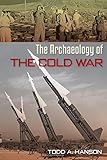
Todd A. Hanson. The Archaeology of the Cold War. American Experience in Archaeological Pespective Series. Tallahassee: University Press of Florida, 2016. 208 pp. $74.95 (cloth), ISBN 978-0-8130-6283-9.
Reviewed by Curtis Foxley (University of Oklahoma)
Published on H-War (December, 2016)
Commissioned by Margaret Sankey (Air University)
The Cold War has become rather mundane in American memory. Despite the anxieties mutual assured destruction produced, conservative commentators look back to the height of the Cold War—the 1950s—as America’s golden days. Meanwhile, more liberal pundits downplay the threat that the Soviet Union posed to the United States. Indeed, both sides of the culture wars seem to have downgraded the Cold War into a benign phenomenon. Yet the Cold War was far from benign. While the United States and the Soviet Union never engaged with one another in formal combat, they competed in a myriad of other ways. This competition transformed American and Soviet institutions, industries, and environments. Military bases and laboratories, mineral mines and quarries, intercontinental ballistic missile silos, and test sites changed American land and pocketbooks.
In The Archaeology of the Cold War, the Los Alamos anthropologist Todd A. Hanson synthesizes ten notable archaeological studies of Cold War infrastructure, including Susan Edwards’s study of Camp Desert Rock and Christopher Lowry and Mary Henry’s examination of McGregor Range. While Hanson primarily revisits studies of military sites located in the United States, he also includes research conducted in Cuba and the Republic of the Marshall Islands. Many of these places, Hanson writes, followed “a pattern of land use in which sites were developed, used, and abandoned at a whirlwind rate” (p. 5). New technologies regularly made installations obsolete. In some cases, the military scuttled newly completed buildings and experimental technologies mere months after their completion. However, many antiquated installations often remained permanent fixtures of their environments because of the durability of their concrete and steel frames. These abandoned but sturdy relics, Hanson maintains, constitute “a massive Cold War footprint that dominated the American landscape” (p. 6).
In many ways this book is primer for people unfamiliar with Cold War archaeology. Immediately following his introduction, Hanson outlines the three frameworks archaeologists use to analyze the Cold War: conflict archaeology, archaeology of the contemporary past, and archaeology of science. Next, Hanson contextualizes the creation of Cold War infrastructure. To do this, he divides the Cold War into three distinct periods, evolution (1945–57), revolution (1958–75), and resolution (1976–89). Breaking the Cold War down into discrete historical periods is a useful way to analyze change over time, and makes studying the Cold War more intellectually manageable. However, this periodization is in some ways perhaps a bit too simplistic. While it is true that the Cold War was, indeed, resolved in the late 1980s, the late 1970s and the early 1980s contained heated debates over MX installations and the Strategic Defense Initiative. While these plans did not come to full fruition, they did leave behind material relics. This contingency matters.
Chapter 5 is perhaps the most instructive chapter in The Archaeology of the Cold War. In it, Hanson outlines some of the challenges associated with researching, exploring, and preserving Cold War sites. He also charts the rise of atomic tourism and its implications for Cold War archaeology and material culture studies. “In many ways,” Hanson writes, “archaeological studies are the wheel upon which heritage stewardship turns. It is through the interpretation of tangible and intangible cultural history that we are best able to meaningfully understand, represent, and manage the artifacts and monuments of our past” (p. 125). However, managing Cold War artifacts is an incredibly difficult task. While Cold War materials are rather ubiquitous, many of the conflict’s most important sites are fenced-off from academics and the general public. These terrible and grand installations, abandoned years ago, are decaying under the elements and have become physical hazards. Another difficulty associated with managing Cold War infrastructure is the covert nature of these installations and the continued classification of their associated paperwork. As Hanson explains, “because of secrecy’s central role in the conflict, issues of secrets and secret-keeping confront archaeologists of the Cold War every day and seem likely to confound the archaeological study of the conflict for decades to come, even as the secrets are revealed over time” (p. 131).
Overall, Hanson’s The Archaeology of the Cold War is a good contribution to Cold War scholarship. By crafting this overview, Hanson provides a handbook of sorts for archaeologists unfamiliar with Cold War archaeology, but interested in it. Other academics will find this book to be less useful. Although Hanson’s survey of Cold War installations and their remains will speak to a fairly wide range of scholars, his section on archaeological methodologies will have less utility for historians and political scientists. This is definitely not a book intended for the general public. Members of its limited audience, archaeologists and anthropologists, will recognize that The Archaeology of the Cold War is an important book. Let us hope that archaeologists take up its call and usher in a Cold War archaeological renaissance.
If there is additional discussion of this review, you may access it through the network, at: https://networks.h-net.org/h-war.
Citation:
Curtis Foxley. Review of Hanson, Todd A., The Archaeology of the Cold War.
H-War, H-Net Reviews.
December, 2016.
URL: http://www.h-net.org/reviews/showrev.php?id=47710
 | This work is licensed under a Creative Commons Attribution-Noncommercial-No Derivative Works 3.0 United States License. |

