



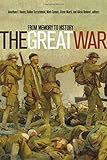
Kellen Kurschinski et al., eds. The Great War: From Memory to History. Waterloo: Wilfrid Laurier University Press, 2015. 438 pp. $38.99 (paper), ISBN 978-1-77112-050-0.
Reviewed by Alex Nordlund (University of Georgia)
Published on H-War (October, 2016)
Commissioned by Margaret Sankey (Air University)
This collection of papers from a 2011 conference at Western University offers a glimpse into the various ways that memory shaped the history of the First World War. Like much recent historiography, The Great War: From Memory to History takes a global, multidisciplinary approach, with a particular emphasis on public commemoration and its consequences for the wider understanding of the conflict and its aftermath. Overall, in consideration of the death of the last surviving veterans of the First World War, Kurschinski and the other editors compiled these various studies to “consider the memory of the war in traditional ways, but also to reflect on how that memory has been, and will continue to be, reshaped by generations with no personal connection to the events” (p. 5).
The collection is divided into three sections covering different themes, ranging from the construction of war narratives, the rediscovery of “lost” memory, and the impact of media on shaping public remembrance. In the first section, Kimberly Licursi offers a valuable study of the United States’ forgotten memory of the First World War. Her history of the state archives and the obstacles--notably the silence of veterans--that arose during their creation in New York, Virginia, and Kansas will provide Americanists with important resources to tackle what might be a renewed interest in the conflict in 2017. In her literary analysis of detective fiction, Marzena Sokolowska-Paryz uncovers not just competing memories, but also a deeper discussion on the ethics of war itself through the “juxtaposition of murder (in peacetime) and legitimate killing (in wartime)” (p. 95). Veysel Şimşek’s essay on the marginalization of non-Turkish groups--notably Arabs and Kurds--in the Turkish master narrative of the First World War will certainly be of interest to anyone wanting to look at memory of the conflict beyond the western front, as will Brian MacDowall’s consideration of Aborigines’ war service and that of Africans in the former German empire by Dan Bullard.
Other chapters that stand out are Alice Kelly’s study of nurses’ First World War narratives, which adds considerably to what is often known as a “male” genre, and Mark Facknitz’s look at the relationship between “kitsch” and commemoration. In these nurses’ narratives, Kelly argues that “conservative literary tropes,” notably deathbed scenes, were utilized in order to “impose meaning and dignity on the mass deaths that were occurring” (p. 330). Ultimately, these traditional modes of representing death became inadequate in the face of mass killing in the First World War, and nurse narratives were at the forefront of the “wartime renegotiation of death” (p. 344). In his criticism of commemorative monuments from the war, Facknitz turns to what he sees as kitsch aesthetics, which compel mourners to “morbidly repress the disorder and horror of their emotions’ and “prefer fictitious value to real value, or shared postures of public grief to private processes of healing” (p. 352). Turning to the Bayonet Trench at Verdun and the Canadian Memorial at Vimy Ridge as kitsch and non-kitsch forms of commemoration, respectively, Facknitz insists that “we need to seek out those instances of successful and failed efforts to figure commemoration as a form of healing, as opposed to continuing to visit and venerate instances of repression or institutional deceit” (p. 365).
As with most scholarship, there are some minor shortcomings. With the exceptions of Turkey, Germany, and the United States, the global approach of most of the articles is limited mostly to the memory and commemoration of Britain and its empire. Given their centrality to the understanding of the western front in particular, it seems puzzling that France and Belgium do not feature more in these discussions as more than battlefields where Britons, Canadians, and others fought and died. Additionally, while the goal of this conference was to bridge scholarly and academic interest in the conflict, some articles may be more successful at achieving this type of engagement than others. It may be easier to appeal to a popular audience with Bette London’s “shot at dawn” soldiers than with Facknitz’s analysis of kitsch commemoration. These critiques, however, are not meant to take away from what are valuable studies of the memory and history of the First World War.
If there is additional discussion of this review, you may access it through the network, at: https://networks.h-net.org/h-war.
Citation:
Alex Nordlund. Review of Kurschinski et al., Kellen, eds., The Great War: From Memory to History.
H-War, H-Net Reviews.
October, 2016.
URL: http://www.h-net.org/reviews/showrev.php?id=47675
 | This work is licensed under a Creative Commons Attribution-Noncommercial-No Derivative Works 3.0 United States License. |

