



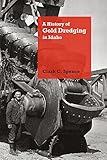
Clark C. Spence. A History of Gold Dredging in Idaho. Boulder: University Press of Colorado, 2016. 336 pp. $57.00 (cloth), ISBN 978-1-60732-474-4.
Reviewed by George Vrtis (Carleton College)
Published on H-Environment (December, 2016)
Commissioned by David T. Benac (Western Michigan University)
Clark Spence has spent much of his long and productive career writing about mining in the American West. Known as the Dean of Mining Historians, many of his numerous books and articles have focused on the changing scientific, technological, economic, and political aspects of western precious-metals mining. This trend continues in his most recent book, A History of Gold Dredging in Idaho, which weaves these focal points together and eventually ties them into an environmental assessment of gold dredging in Idaho from its rise in the 1880s to its decline in the early 1960s. Along the way, Spence argues, ever so obliquely, that abundant placer gold, advances in dredging technology, out-of-state investors, a favorable political environment, and lax environmental regulations all combined to make Idaho the fourth leading producer of dredged gold in the nation in the early twentieth century.
The introduction is a harbinger of the most useful and the most frustrating aspects of this book. Spence begins by launching into a discussion of the difference between lode and placer deposits, and then moves swiftly into synoptic considerations of gold-mining methods and tools, the early history of placer mining in Idaho, and the eventual adoption of dredging technologies that had been pioneered in New Zealand and elsewhere in the West. While this contextualization is helpful, there is no attempt at establishing the book’s larger historiographical fit, making clear its argument, or suggesting why the argument or the book itself might be important. The seventeen chapters and epilogue that follow share these problems, and they are exacerbated by the book’s geographic organization. Beginning in chapter 1 with the Snake River boom, Spence provides very detailed descriptions of the evolution of gold-dredging technology, the organization and financing of dredging companies, the production of gold and silver, and ultimately, the success--or more commonly--the failure of machines and companies. Over and over again, these subjects circulate though Spence’s narrative as he charts his way across the many Idaho waterways--all without a single map--that attracted dredge boats. Exceptions to Spence’s geographic approach appear late in the book, in chapters 15 through 17 and the epilogue. These chapters and the epilogue, in turn, focus on environmental attitudes and politics, restoration efforts, an overview of the book as a whole, and a concluding set of reflections that seek to explain the purpose and significance of the book.
For readers interested in a highly detailed account of the technological and business history of gold dredging in Idaho organized geographically, this book will prove invaluable. Spence has done yeoman’s work on these subjects, and the notes alone will prove a helpful guide for further research. For others, two noteworthy weaknesses will likely impede the book’s usefulness in significant ways. The first is the lack of attention to historiography, interpretation, and theory. There is nary a mention of other historical works that treat this subject matter outside of Idaho, nor is there much of an attempt to help readers make sense of the way the pieces of this story fit together and shape one another. This is particularly glaring in the case of Spence’s technological and environmental assessments. Neither delves into the rich theoretical and historiographical conversations on these subjects. For instance, Spence compares gold dredging to Henry Ford’s mass production techniques and Daniel Jackling’s low-grade copper-mining methods (p. 7), but he does not even mention or cite Timothy LeCain’s influential recent study, Mass Destruction: The Men and Giant Mines that Wired America and Scarred the Planet (2009), which engages these ideas directly. This leads to my second main criticism. The book promises an assessment of the environmental ramifications of gold dredging, but that analysis is far from its main focal points. The chapter on environmental attitudes and politics is seven pages long, and the one on restoration efforts is seventeen pages long. Neither of these chapters--nor the rest of the book--has a single reference to any of the recent work done on these areas in environmental history. While the rich detail in Spence’s book is useful, readers are left to draw connections to the wider world of historical scholarship, environmental and otherwise, on their own.
Despite these shortcomings, A History of Gold Dredging in Idaho may actually accomplish more than immediately meets the eye. By assembling such a detailed account of Idaho’s gold-dredging technology and business history, Spence has laid a foundation for further interpretive studies that might draw on these data for environmental, political, or other realms of historical analysis. At a time when gold miners are once again chasing after tiny flecks of gold and turning the earth inside out in the process, such research would prove timely, relevant, and illuminating.
View the author(s) response to this review: https://networks.h-net.org/node/19397/discussions/156568/vrtis-spence-history-gold-dredging-idaho. If there is additional discussion of this review, you may access it through the network, at: https://networks.h-net.org/h-environment.
Citation:
George Vrtis. Review of Spence, Clark C., A History of Gold Dredging in Idaho.
H-Environment, H-Net Reviews.
December, 2016.
URL: http://www.h-net.org/reviews/showrev.php?id=47345
 | This work is licensed under a Creative Commons Attribution-Noncommercial-No Derivative Works 3.0 United States License. |

