

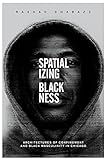
Rashad Shabazz. Spatializing Blackness: Architectures of Confinement and Black Masculinity in Chicago. Urbana: University of Illinois Press, 2015. 184 pp. $25.00 (paper), ISBN 978-0-252-08114-9.
Reviewed by David Ponton III
Published on H-Afro-Am (June, 2016)
Commissioned by Jewell Debnam
How does space affect identity, community, possibility, and life chances? Rashad Shabazz’s Spatializing Blackness: Architectures of Confinement and Black Masculinity in Chicago answers this question with particular attention to the lives (and deaths) of black men in Chicago from the Progressive era through 2015. The book’s title accurately captures its argumentation. “Spatializing blackness” refers to the ways policing, residential segregation and housing inequality, architectures and siting of public housing, and racialized mass incarceration limited black mobility and possibility through criminalization and stigmatization in twentieth-century Chicago. “Architectures of confinement” orient the reader towards how Chicago’s “Black Belt” was constructed as an amoral criminal space, the ways kitchenettes (the more densely populated, thoroughly subdivided offspring of infamous tenement housing) siphoned privacy and autonomy from their dwellers, and the ways segregated public housing projects isolated their black residents from the rest of the city. Finally, for Shabazz, “black masculinity” becomes reconfigured as a consequence of these racialized prisons, producing cycles of gender performance among black men that devastate black communities in terms of violence, health and well-being, and economic stability. In sum, Shabazz argues that “spatial matters matter” (p. 3)—that racial segregation and racialized criminalization have had profoundly deleterious effects on black communities and have shaped identity formation, particularly gendered identity formation, among black men who have been overexposed to policing, poverty, joblessness, incarceration, and disease.
Shabazz organizes the book with five chapters. The first argues that the modernization of the Chicago Police Department in the early 1910s coincided with an effort to curb or control interracial sexual liaisons in the city’s southern areas, where black people lived and where the city’s vice district thrived. Black folks who embraced respectability politics encouraged increased policing and surveillance of their neighborhoods, believing that as long as the vice district lived in their backyards, white Chicagoans would stigmatize all black people as sexual deviants. Their complicity with the police’s efforts, however, had the unintended consequence of criminalizing the entire “Black Belt,” and not just those who were engaged in interracial sex work. Shabazz presents the second chapter as an extension of this policing into black homes, arguing that racial segregation due to restrictive deed covenants and explosive in-migrations of black people to Chicago in the 1920s exacerbated the low supply of housing for black residents. Crowded into overpriced kitchenettes, dwellers found themselves overexposed to disease, frustration, crime, and surveillance inside and outside of their homes. Using Richard Wright’s Native Son (1940), Shabazz argues that kitchenettes produced a black masculinity—with Wright’s Bigger Thomas as an archetype—that yearned to flee the confining spaces that suffocated them. “Black men who were confronted with the confinement of the kitchenette,” he concludes “responded to it with flight, anger, or hostility” (p. 54).
The third chapter charts the replacement of kitchenettes with public project housing after World War II. Shabazz notes that these projects failed because white racism ensured the isolation of the communities that would reside in them, intergenerational poverty guaranteed the perpetuation of confinement, and architecture and public planning practices socialized residents for surveillance, incessant policing, and incarceration. Chapters 4 and 5, then, conclude the book by demonstrating the consequences of racialized mass incarceration for black communities in Chicago. The “coercive” and “corrosive” (p. 106) mobility of black men in particular, between Illinois prisons and select zip codes (p. 102) in Chicago compelled them to traffic gangs, violence, and disease—particularly HIV following the 1980s—and constructed a geography of cultural, economic, and epidemiological risk that still haunts Chicago into the twenty-first century.
The book’s organization, its argumentative imaginativeness, and its author’s great conviction in its importance are its greatest strengths, and its first and third chapters are its strongest in terms of providing supporting evidence to the claims therein. Shabazz’s writing is almost always easy to follow, punctuated with fine-tuned sentences, such as in his discussion about how space influences identity formation in the second chapter: “It is not a coincidence that poor people, poor people of color, immigrants, the sick, the disable, prisoners, women, sexual minorities, and other marginalized groups live in bracketed geographies. The scope of their political power often mirrors their spatial marginalization” (p. 45). Yes, indeed. In other areas, Shabazz is a clever wordsmith, such as in the fourth chapter, where in discussing the impact of spatial segregation on black masculinity and gang formation, he writes, “Black gangs were the tempest caused by the carceral current that swept through the city’s Black neighborhoods in the early 1960s” (p. 77). That is, there are significant, gripping argumentative and writing moments throughout Spatializing Blackness. However, these make the book’s shortcomings all the more disappointing, and unfortunately, these limitations are not mere quibbles.
Most importantly, Spatializing Blackness could have benefited from a world of archival sources to supplement the literary and incarcerated black voices that Shabazz privileges voices I appreciated hearing, but which could have been used with or to read against other materials. The primary source documents are almost all newspaper articles, which is surprising for a book that covers an entire century and for a city that has some of the nation’s best manuscript collections held at places like the Chicago History Museum, the University of Chicago Library, and the National Archives at Chicago. Additionally, many of the repositories in and about Chicago have digitized their records. The digitized Architects Oral History Project at the Art Institute of Chicago alone has a wealth of insight to offer someone writing about the “architectures of confinement” in the city. Near the end of the book, as Shabazz layers arguments about black men’s and white men’s masculinities, public space, and gender performance, the lack of archival work becomes most apparent: how can any historian make large claims about a specific space and time and human subjectivity without contemporaneous materials that actually reflect the subjects’ habits of body and mind? In Spatializing Blackness this is accomplished by a persistent reliance on theoretical texts that, while valuable, are no substitutes for archival work. When Shabazz writes, for instance, that Jeff “Angel” Fort, leader of the Stones gang during the Great Society, “perform[ed] deeply problematic notions of masculinity” and that “toughness and a willingness to do harm to others if provoked were normative displays of Stone manhood” (pp. 83-84), this reader wonders: where is the evidence for these claims about gender, particularly the claims about how Fort and the Stones themselves understood their subjecthood via gender?
In addition to the dearth of primary source research, the book also misses the mark with its secondary sources. By my count, only about twenty monographs, peer-reviewed articles, or encyclopedia entries cited in this work are principally or significantly about Chicago (including works like Khalil Gibran Muhammad’s Condemnation of Blackness (2011). Chicago is a big city with a large historiography, and while no one author can be expected to know it all, at least the best and brightest work should have been consulted and included here. For example, in the first chapter, Shabazz promises to “paint a picture of the underworld” that police captain Max Nootbaar “fought against” in Chicago’s vice district (p. 15). Yet, Cynthia Blair’s I’ve Got to Make My Livin’: Black Women’s Sex Work in Turn-of-the Century Chicago (2010), which textually and visually maps the process of the confinement of the south side of Chicago, does not even get a passing mention, even in an endnote.
Problems with the sources extend to argumentation, and less frequently, accurate documentation. In terms of the latter, for instance, in the second chapter Shabazz credits Richard Wright with a quote that he lifted from an uncredited editorial in the Chicago Defender (p. 39). In the following paragraph, he credits the Defender with a series of articles about slum living that actually appeared in the Daily Tribune. Sudhir Venkatesh’s American Project: The Rise and Fall of a Modern Ghetto (2002) gets attributed to James Tyner in the bibliography. In terms of the former problem, Shabazz does not always make it clear when he’s editorializing or building an argument as opposed to when he can deliver evidence to back those claims up. For instance, he writes, “The kitchenette was a form of punishment for moving North” and provides only a citation to the aforementioned Defender article (p. 39). If readers want to know who was administering this punishment or why, they will not find answers in the citation, which does not in itself even hint at Shabazz’s claim about punishment. Likewise, he states, “Chicago’s urban geography was more saturated with restrictive covenants than any other Northern city”—an assertion he follows by citing David Delaney’s 1998 Race, Place, and the Law, 1836-1948 (p. 40). Readers will be hard-pressed to find that claim fully substantiated therein since Delaney’s work doesn't make such a comparative claim.
The argumentation, despite its imaginativeness in some areas, also suffers where it lacks a clear and lasting contribution. Against Foucault, Spatializing Blackness picks a fight that has already been critically engaged (see Alexander Weheliye’s 2014 Habeas Viscus: Racializing Assemblages, Biopolitics, and Black Feminist Theories of the Human): he argues that the French historian’s thoughts about discipline, punishment, and particularly the modernization of society through the expansion of carceral power lack a critical racial lens (p. 49). In other areas, Shabazz’s claims are obvious (and repeat for pages). For example, he writes, “Black people were imprisoned within kitchenettes because they were Black” (p. 51). This works as another way of saying racial segregation imprisoned black people in confined spaces—a clear point Shabazz has already driven home nearly halfway through the book. This seemed a ripe opportunity to ask a different set of questions—ones about process, mechanisms, and the disciplining of subjecthood: how did “blackness” emerge out of or transmogrify in these geographical spaces? How did the space become “blackened” and what did that mean to the people who lived therein? How did these spaces of blackness figure in the minds of white Chicagoans, developers, property owners, and municipal leaders, and how did that figuration in turn affect black lives and subjecthood? If all Shabazz means by “spatializing blackness” is that black people came to occupy segregated spaces, then perhaps my questions beg for a different book, but his plan for the book, as laid out in the introduction, seems far too sophisticated and exciting to be reducible to such a threadbare explanation.
Like “blackness,” many terms throughout the book are left underinterrogated (and many of these use “black” as their modifier). (Shabazz’s unexplained stylistic choice—and I imagine, theoretical and existential conviction—to capitalize “Black” but not “white” perhaps makes the lack of clarity with regard to these terms more glaring.) Shabazz discusses “Black spatial matters” (p. 3), “Black mobility” (p. 20), “Black geographies” (p. 51), and “Black masculinity” (p. 43), for example, without ever defining what makes them “black.” For mobility, perhaps it is more obvious that Shabazz means where and how black people could move throughout Chicago—though, even this is unclear in terms of the ways black men, women, and genderqueer people may have been allowed to traverse the city’s landscape differently, particularly as it concerned labor.
“Black masculinity” is even less clear. Shabazz opts to dispense with “masculinities” throughout most of the text “because the singular sounds better” (p. 121n19)—far too curt a treatment of the feminist masculinities literatures he cites throughout his work to substantiate his claims. (On this note, see R. W. Connell’s as well as Mimi Schippers’s works.)[1] Shabazz has not simply made a stylistic choice here; he has made an implicit theoretical move that is simply problematic and which also primed his work for a consistent methodological error, limiting the book to a discussion of an amorphous, singular, and singularly destructive “black masculinity,” when there were certainly forms of black masculinities in Chicago that were not impoverished, not gang-affiliated, not prison-constructed, not heterosexual, and not homosocial. While Spatializing Blackness does eventually relent that “prison is … like a gender hub where masculinities collide, mix, and mesh” (p. 86), it does not render Shabazz’s claims about “black masculinity’s” relationship to the environment convincing since “black masculinity” remains rendered in the singular. This is unfortunate, because I already agree with the claim that environment informs identity. However, where this book fails to juxtapose the Bigger Thomas archetype of black masculinity against other marginalized and hegemonic masculine performances, as well as against multiple femininities, Shabazz’s particular conclusions seem only speculative. (Speaking of femininity, readers will notice the absence of black women in the review; it reflects that the book lacks sincere attention to black women’s lives in Chicago apart from their overexposure to HIV infection. Even then, it is not quite about black women or the construction of black femininities and sexualities.)
Finally, the book’s final chapter promises to “map HIV/AIDS in Black Chicago,” but the chapter’s methodology is not up to the task. Shabazz highlights the fascinating, pioneering epidemiological work of Dr. John Snow, who mapped the 1854 cholera outbreak in London. Snow collected what information he could about where victims of cholera lived and their likely sources of water to document a “ghost map” of how and why cholera spread. Shabazz promises his own “ghost map,” but it turns out to be a metaphorical one. There is no cartography—no maps, no charts or graphs, no data sets in Spatializing Blackness. What Shabazz offers is already pretty obvious, actually: prisons incubate disease, release from prisons into segregated communities helps spread those diseases rapidly, and poverty, racism, and conservative sexual politics exacerbate that spread. This seems more a prospectus, then, and I wouldd be fascinated to see this labor-intensive project carried out. Geographic information systems (GIS) epidemiologists are using powerful technologies to map disease and their spread in ways that actually mimic Snow’s methodology. Given such, on the landscape of digital and spatial humanities, Spatializing Blackness leaves much to be desired.
In a lot of ways, Spatializing Blackness is a kind of autobiographical text—a means through which Shabazz processes his own gendered and racial becoming out of Chicago. If this is what the reader is interested in—in Shabazz’s words, “those geographic lessons I learned as a kid” (p. ix)—then Spatializing Blackness can be invaluable. And, if readers would like to get a sense of the “architectures of confinement” that defined poor black living in Chicago, there Shabazz is rhetorically strongest. If, however, historians or even lay readers are searching for a book about the racialization of space in Chicago, they may still need to rely first on St. Clair Drake and Horace Cayton’s Black Metropolis (1993) Sociologists and historians have written a large literature on black masculinities worth consultation; particular areas of interest and time periods will direct the reader to more narrowly defined fields.[2] As an addition to Darlene Clark Hine and Dwight A. McBride’s The New Black Studies Series with the University of Illinois Press, the book is quite provocative, but misses too many marks theoretically and methodologically to function as a classroom text or a seminal secondary resource.
Notes
[1]. R. W. Connell, Masculinities (Berkeley: University of California Press, 2005); and Mimi Schippers, “Recovering the Feminine Other: Masculinity, Femininity, and Gender Hegemony,” Theory and Society 36, no. 1 (February 1, 2007): 85–102.
[2]. Some provocative places to start may include Patricia Hill Collins, “A Telling Difference: Dominance, Strength, and Black Masculinities,” in Progressive Black Masculinities? (New York: Routledge, 2012), 73–98; Ronald L. Jackson II, Scripting the Black Masculine Body: Identity, Discourse, and Racial Politics in Popular Media (Albany: SUNY Press, 2006); and Mark Anthony Neal, Looking for Leroy Illegible Black Masculinities (New York: New York University Press, 2013).
If there is additional discussion of this review, you may access it through the network, at: https://networks.h-net.org/h-afro-am.
Citation:
David Ponton III. Review of Shabazz, Rashad, Spatializing Blackness: Architectures of Confinement and Black Masculinity in Chicago.
H-Afro-Am, H-Net Reviews.
June, 2016.
URL: http://www.h-net.org/reviews/showrev.php?id=46538
 | This work is licensed under a Creative Commons Attribution-Noncommercial-No Derivative Works 3.0 United States License. |

