

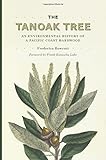
Frederica Bowcutt. The Tanoak Tree: An Environmental History of a Pacific Coast Hardwood. Seattle: University of Washington Press, 2015. xvi + 219 pp. $35.00 (cloth), ISBN 978-0-295-99464-2.
Reviewed by Peter Crane (Yale University)
Published on H-Environment (February, 2016)
Commissioned by David T. Benac (Western Michigan University)
There are an increasing number of books devoted to documenting and exploring the cultural history of a particular kind of tree. Oak (William Bryant Logan, 2006), Hemlock (ed. David Foster, 2014), American Chestnut (Susan Freinkel, 2009), and Ginkgo (Peter Crane, 2013) are some of them, but this is an especially good one. Frederica Bowcutt’s thoroughly researched and meticulously documented book focuses on the tanoak, Notholithocarpus densiflorus, a distinctive and beautiful cousin of the true oaks, native only to Pacific coast of western North America. From southwestern Oregon almost to Los Angeles, the tanoak occupies a broadly similar range to redwoods and other majestic conifers. Both literally and figuratively it has been overshadowed by them. But as Frederica Bowcutt shows us, the tanoak is a tree with many uses and has a correspondingly rich cultural history. Importantly too, while the tanoak offers much to hold our interest, this book also has a deeper purpose: to add specificity to the broader conversation around how to understand and manage human-induced environmental change. Through the lens of the tanoak Bowcutt vividly brings home how carelessly and how rapidly our own species has exploited and manipulated nature, and how devastating our impacts have been.
The core chapters of the book follow the changing fortunes of the tanoak over the past few hundred years. Prior to the arrival of European immigrants the tanoak, as a reliable and often prolific producer of acorns, was foundational in the ecosystems of which it was part. Its acorns in particular played a pivotal and cascading role, including as food for the acorn woodpecker, Steller’s jay, and many other birds, as well as a range of mammals large and small. Tanoak acorns were also a staple in the diet of many Californian Indian tribes, who used fire to manipulate the tanoak landscape to ensure future supplies. Tanoak acorns were harvested in large numbers and through knowledge built up over generations, the tribes knew how to store them, process them, and cook them. This was a time when the tanoak, and the people who stewarded it, lived in relative isolation, little impacted by broader national or international economic forces.
The situation began to change with the arrival of the Spanish, who appropriated tanoak landscapes for grazing their livestock. But it changed still more rapidly with the arrival of large numbers of immigrants from the eastern United States and elsewhere in the later nineteenth century. Since then, increasingly exposed to a burgeoning human population and the influence of far-off markets, the tanoak has moved rapidly along a depressing trajectory: from valued food for people, to animal feed stock, to industrial raw material, to weed tree, to a plant of conservation concern. Tanoak acorns fed to pigs provided pork for miners of the California gold rush. Then, from the late nineteenth century until about 1930, the tanoak was relentlessly abused for its bark, harvested to support tanneries in Santa Cruz, San Francisco, and elsewhere. And finally, with the spread of industrial forestry, and despite its beautiful and useful wood, the tanoak became a tree to be suppressed. Softwoods gave more rapid profits, bent more easily to the demands of industrialization, and were therefore more desirable. In the natural process of ecological succession the tanoak was a competitor that impeded the growth of a valued timber crop and it had to be removed. The methods were brutal and included large-scale and indiscriminate poisoning, often with little regard for the people who lived nearby. And today the tanoak faces a new assault, the threat of sudden oak death syndrome, which is further compounded by thepervasive challenge of climate change. The fear is that the tanoak, like its cousin, the American chestnut, may soon be lost from almost all its native range.
Frederica Bowcutt provides careful documentation of the tanoak’s cultural trajectory and much insightful detail. Through her exhaustive original sources and well-selected photographs she documents the relentless exploitation that brought this “sovereign oak” to its knees. And the backdrop, the broader story of landscape change on a massive scale, comes through clearly. Today the tanoak is still harvested and remains of great cultural importance in many Native American communities, but like all of us, it is no longer isolated. It lives in an interconnected world and an era of rapid,pervasive, and continuing environmental change.
The short timescale over which we have so dramatically and comprehensively changed the world of the tanoak contrasts dramatically with the thousands of years in which the tanoak was exploited sustainably by native peoples, or the millions of years that the tanoak evolutionary lineage has existed on our planet. And the tanoak is far from “just another oak.” In an evolutionary sense it is something special, as signaled by its unusual and distinctively fringed acorn cup. Our modern understanding implies that the tanoak is the single last survivor of an evolutionary lineage that has persisted for more than forty million years. Its long tenure on this planet, and the abuse it has suffered at our hands, as is so thoroughly documented in the book, should stimulate reflection on the ethics of how we use our power to change the natural world.
If there is additional discussion of this review, you may access it through the network, at: https://networks.h-net.org/h-environment.
Citation:
Peter Crane. Review of Bowcutt, Frederica, The Tanoak Tree: An Environmental History of a Pacific Coast Hardwood.
H-Environment, H-Net Reviews.
February, 2016.
URL: http://www.h-net.org/reviews/showrev.php?id=45427
 | This work is licensed under a Creative Commons Attribution-Noncommercial-No Derivative Works 3.0 United States License. |

