



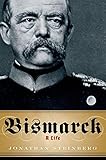
Jonathan Steinberg. Bismarck: A Life. Oxford: Oxford University Press, 2011. 577 S. $34.95 (cloth), ISBN 978-0-19-978252-9; (cloth), ISBN 978-0-19-959901-1; ISBN 978-0-19-997539-6.
Reviewed by Stephen Morgan (Grand Valley State University)
Published on H-German (September, 2015)
Commissioned by Nathan N. Orgill
Bismarck and the Power of Personality
Jonathan Steinberg’s masterful account of Bismarck’s larger-than-life personality and its place in German and European history begins where previous biographers have left off. As he explained in an interview with New Books in History in 2011, other biographers have asked what Bismarck did and about his impact on nineteenth-century Europe. Steinberg, on the other hand, asks, how did he do it?[1] This, according to Steinberg, is the central problem in understanding Bismarck’s profound influence on Germany and the balance of power in Europe. Thus, Steinberg makes no great alteration to the well-known dramatic arc of Bismarck’s story. It ranges from the personal discovery of his political gifts against the backdrop of 1848 to his triumph of German unification, achieved through cunning political maneuvering. It follows him in decline as Bismarck struggled to tame the beast he had created, fiddling with institutional structures on the one hand and, on the other hand, shifting political allegiances in an attempt to manipulate some parties in the Reichstag and crush others, often without the hoped-for success. At the same time, we see him weaving a bewildering tangle of alliances to maintain the European balance of power in Germany’s favor, and finally being dismissed by Kaiser Wilhelm II.
But if the events themselves are familiar, the means by which Bismarck held sway over diplomats and domestic politicians alike has remained poorly understood. Steinberg’s entry point for exploring the how of Bismarck’s career is to foreground sources that other scholars have left in the background. Steinberg illuminates his study with the reports and recollections of Bismarck’s friends, acquaintances, colleagues, subordinates, and enemies who, whether up close or at a distance, occupied unique vantage points from which to observe and record the charismatic power of his personality in private and professional life. It is not that Steinberg’s sources are truly new; his contribution instead is to shift away from those who report on important events to those “who experienced the power of Bismarck’s personality up close and recorded the impact,” be they socialites like Hildegard Freifrau Hugo von Spitzemberg or Bismarck’s university friend and later diplomat John Lothrop Motley (p. 9). In other words, Steinberg relies heavily on sources that previous biographers have used only slightly. Consider, for example, the importance Steinberg places on Bismarck’s friendship with “little Hans” von Kleist-Retzow, a mutual friend of the Gerlachs and an eventual Reichstag delegate. Although his career itself was not of tremendous significance, Kleist-Retzow’s years-long friendship with Bismarck made him an important part of Bismarck’s life and an intimate observer of his personality. Thus, whereas Kleist-Retzow appears nine times in the index of Otto Pflanze’s three-volume, 1,500-page biography of Bismarck, he shows up on nearly one out of every thirteen pages of Steinberg’s study. Through their diaries and letters, these witnesses do more than add colorful anecdotes to a retelling of Bismarck’s life; they offer windows onto the many ways that Bismarck shaped politics through the sheer force of his persona as exerted on the people around him, and most importantly on King/Emperor William I.
Bismarck’s achievements are remarkable in part because he could not use the usual tools of other politicians or statesmen. Steinberg reminds the reader that even at the pinnacle of his success, when Bismarck unified Germany, he did it “without commanding an army, and without the ability to give an order to the humblest common soldier, without control of a large party, without public support, indeed, in the face of almost universal hostility, without a majority in parliament, without control of his cabinet, and without a loyal following in the bureaucracy” (p. 257). Rather, the key to Bismarck’s influence in the absence of traditional power mechanisms was his “sovereign self” (p. 3). Steinberg employs this concept to capture the largeness of a personality supremely confident of its own abilities, with the kind of inexplicable and nearly inescapable magnetism that never failed to mesmerize friends, enemies, and those in between, but which was combined with a ruthless pursuit of control. This “sovereign self” so impressed Albrecht von Roon, Prussian minister of war from 1859 to 1873, that he committed himself to Bismarck’s ascent and considered him an irreplaceable “historic genius” (p. 6).
And Roon was in many ways correct, as Steinberg repeatedly demonstrates. Bismarck was a kind of genius with an uncanny ability to anticipate all the possible moves of his opponents and a knack for seeing all the options (although some of the options he had anticipated, such as his assumption that universal manhood suffrage would bolster the monarchy with the support of masses who were naturally inclined to support the established order, failed to materialize). Moreover, he was indeed irreplaceable. From the tenure of his successor, Caprivi, on to the end of the Reich, no imperial chancellor was equal to the task in the way Bismarck had been, because Bismarck had built a framework of rule over the years on an ad hoc basis, with the sole purpose of thwarting threats to his power, rather than building the necessary institutions for stable governance. It was a system that required Bismarck in order to function properly.
Bismarck’s unique gifts, however, were mixed with extraordinary vindictiveness, bouts of rage, hypochondria, and episodes of wild histrionics. Some measure of his propensity for displays of outrage and offense can be seen in his genuine conviction at one point that the Reichstag stenographers were conniving against him to record his comments improperly, or in his threat to resign because his preferred candidate for postmaster general was turned down on perfectly reasonable grounds. Indeed, his relentless preoccupation with political scheming meant that his first reaction to the news that the Kaiser had been hurt in an assassination attempt was to ponder how it would help him dissolve the Reichstag and decimate the Liberal Party (p. 367). By the end of his career, he was even willing to dismantle the system he had built in order to eliminate the Reichstag and its pesky, non-pliant constituents.
Of course, none of these details about Bismarck’s life and character are new; they have been covered amply in other biographical studies. Steinberg’s interpretive framework, however, allows his Bismarck to transcend the processes and structures already in place without retreating to a typical “great man history.” In fact, while there is much about Bismarck in Steinberg’s telling that is impressive, there is little greatness. In part, this results from many of his motives remaining either shrouded in mystery or continuing to be tainted by vanity, maliciousness, and his cold and calculated opportunism. Steinberg perceives no grand ideology nor any fixed principles underlying Bismarck’s political strategies. Regarding what would become his central political project—the preservation of a strong, semi-absolutist Prussian monarchy at the center of a unified Germany—it is never really clear whether Bismarck was motivated by genuine conviction (if he even had genuine convictions) or if he was driven primarily by an unquenchable thirst for power to control the destiny of Prussia and Germany.
On the whole, this is an outstanding biography. Its depth will satisfy the expert even as its style and clarity give it a broader accessibility. The central interpretive device, the “sovereign self,” proves to be a useful tool for understanding how someone seemingly unfit for exerting influence (the hypochondria, the sudden rages over trivialities) could manage to dominate almost totally the politics of one of the most powerful states in European history. Moreover, Steinberg astutely and consistently draws attention to the fact that so many of the dilemmas and difficulties that Bismarck faced throughout his career were, in fact, the unintended consequences of his own decisions.
Yet this also draws attention to the limits of the thesis. For all the power Bismarck had to manipulate events and so shape history, there were always crucial factors beyond his control that either threatened to thwart his designs or were central to him remaining in power. In order for his “sovereign self” to have its way, Bismarck had to meet with a great many pliant or less powerful individuals. “If William I had had the decency to die” at a reasonable age, Steinberg muses, things almost certainly would have turned out differently, and likely would have ended with Frederick III dismissing Bismarck, possibly saving Europe considerable bloodshed (p. 7). This highlights the murkiness of the otherwise useful concept of the sovereign self, raising the question of its limits when faced with another persona of equal or greater force, or with circumstances that simply will not yield the right opportunities.
I would also take issue with one small point. Repeatedly throughout the book, Steinberg calls Pietists evangelicals, equating them with America’s “‘born-again’ Christians” (p. 56). A comparison could help the reader, but to call them equivalents obscures more than it clarifies; they are historically connected, but not the same thing.
But this is only a very minor quibble about an otherwise remarkable scholarly achievement and a truly fascinating study of one of the most consequential statesmen of the past two hundred years.
Note
[1]. Jonathan Steinberg, interview by Marshall Poe, New Books in History, podcast audio, May 24, 2011, http://newbooksinhistory.com/2011/05/24/jonathan-steinberg-bismarck-a-life-oxford-up-2011/.
If there is additional discussion of this review, you may access it through the network, at: https://networks.h-net.org/h-german.
Citation:
Stephen Morgan. Review of Steinberg, Jonathan, Bismarck: A Life.
H-German, H-Net Reviews.
September, 2015.
URL: http://www.h-net.org/reviews/showrev.php?id=42582
 | This work is licensed under a Creative Commons Attribution-Noncommercial-No Derivative Works 3.0 United States License. |

