

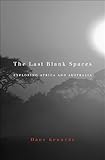
Dane Kennedy. The Last Blank Spaces: Exploring Africa and Australia. Cambridge: Harvard University Press, 2013. Illustrations. 368 pp. $35.00 (cloth), ISBN 978-0-674-04847-8.
Reviewed by Toby Harper (Providence College)
Published on H-Empire (November, 2014)
Commissioned by Charles V. Reed (Elizabeth City State University)
Rough Terrain
All too often, academic history in general and imperial history in particular take a subject that sounds like it should be a fascinating study of past societies and individuals and render it into a bland (even if worthy) paste of overanalyzed detail. This has not been the case with Dane Kennedy’s work, however. His previous book on Richard Burton (The Highly Civilized Man: Richard Burton and the Victorian World [2006]) combined entertaining narratives, historiographical sophistication, and a core innovative idea about the relationship between Burton’s life, imperial ideologies, and our understanding of late Victorian British culture. Can Kennedy deliver a similar combination with the broader (and intuitively if not necessarily fascinating) topic of British exploration in Australia and Africa?
The Last Blank Spaces is organized around nineteenth-century exploration in two major areas of the world that were still largely unknown to British geographers at the end of the Napoleonic Wars. Kennedy defends the choice of comparison by pointing out that Africa and Australia were literally blank on the maps of British geographers at the beginning of the nineteenth century. In Africa’s case, on the one hand, this was the outcome of the erasure of a patchwork of ideas about politics of that continent gleaned from travelers, second-hand accounts, speculation, and sources from the Islamic world from existing maps of Africa. The cultural and geographical complexities of the Australian interior, on the other hand, were invisible to European geographers at the beginning of the century. Nineteenth-century explorers were trying to fill in these “blank spaces” in a way that differed in method (if not always in execution) from earlier attempts at accumulating knowledge about continental interiors. In general, the comparison proves fruitful: there were significant political, geographical, and cultural differences between Australian and African exploration, and these differences serve to both qualify and illuminate the overarching frameworks and mentalities of exploration in the text.
Kennedy organizes the book in a way that intentionally mimics the chronological progress of an idealized Victorian expedition. Across eight chapters, he moves through the epistemologies of exploration, the professional (or unprofessional) characteristics of European explorers, the logistics of exploration, the experience of difficulty and cultural contact, and finally the reception of expeditions once they were concluded. In doing so, he introduces a wide range of characters in the early chapters, then revisits many of them in different ways later on.
The first part of The Last Blank Spaces stresses the importance of scientific measurement to the authority of Victorian overland explorers as explorers, rather than travelers, tourists, spies, or mercenaries (even though they were often also these things). This was born of both optimism about the ability of science to render clear what was once obscure on the maps of Europeans and also the success of scientifically trained sailors in charting the world’s oceans in the preceding centuries. To access resources for what were usually expensive trips, land explorers needed to convince organizations like the Royal Society and the Royal Geographic Society that they had the training and the temperament to record accurate, consistent measurements while in the field. This was also a defense against “armchair geographers”: critics who never traveled to the places about which they speculated, but who were quick to attack claims by explorers who made claims unsupported by detailed observations. The new profession of “explorer” (a word that, Kennedy points out, was an innovation of the early nineteenth century) had many gatekeepers.
These claims to authority through experience and measurement bore little resemblance to what explorers actually encountered and did in Australia and Africa. At its core, the book is about the encounter between the ideal and the reality of exploration, where British and colonial theories about the world were forced into contact with situations that often seemed to counteract those theories. These theories were not just about the geographical nature of Africa or Australia but also about racial and class difference. Once out in the field, Kennedy shows, power within exploring parties often shifted to those with the skills or wit to deal with unexpected situations (which were often disasters). Even if they discovered nothing else, expedition leaders found that people whom they classed as racially or socially inferior usually possessed local knowledge or survival expertise that they themselves lacked. Explorers were not, as their mythology presents them, lone heroes triumphing over unknown land. Instead, they usually had to get help from locals and were engaged in a desperate, often ignominious and sometimes masochistic struggle for survival that many of them lost. In a key passage toward the end of the book, Kennedy points out that during many expeditions in Africa the power of the “gaze” was more in the eyes of locals than explorers, who often felt harassed by Africans’ interest in seeing them. Explorers’ claims to scientific objectivity had more power in London than in West Africa.
Aside from the slow, careful introduction, The Last Blank Spaces is energetically and clearly written, and the later sections only get better in terms of drawing the reader into both the stories and the argument. Impressively, Kennedy revisits many of the same explorers and expeditions multiple times without often repeating anecdotes. John Hanning Speke, Charles Stuart, Robert O’Hara Burke, and the other explorers never become boring. They should not, but it is unusual for historians with a primarily academic audience who choose a thematic approach over a narrative one to be as careful about the balance between analysis and story as Kennedy is. This is also a well-produced book with good illustrations within the text and helpful appendices, including a time line and generous notes. The cover, which depicts a gray sunset or sunrise over trees that could be either generically Australian or generically African, looks great.
The Last Blank Spaces is particularly worth a read for historians of other nineteenth-century empires. While Kennedy focuses only on explorers sponsored by British or British colonial institutions (there are a number of Germans involved), there are intriguing parallels with other parts of the world, such as western North America and Siberia. Their relative absence is less a problem with the book than it is an invitation to consider whether the common character of the encounters in Australian and African exploration was a global phenomenon beyond those areas in which British and colonial publics took an active interest.
Most New Zealand readers will be dismayed at an error in the epilogue where that nation’s most popular hero, Edmund Hillary, is called an Australian. Hopefully this was an isolated piece of carelessness. Samuel Baker’s wife, Florence, who accompanied him on his expeditions, is also strangely absent from relevant parts of the narrative, especially given that Kennedy suggests that the emergence of women travelers like May French Sheldon and Mary Kingsley at the end of the nineteenth century undermined the ideal of exploration as a lonely, masculine enterprise. But the woman who was to become Florence Baker was already participating in her husband’s expeditions in the 1860s.
Overall, however, this is an entertaining study. The metaphor of the historian “path-breaker” is sometimes overused, but it seems appropriate in this case: The Last Blank Spaces at once surprises and makes the reader wonder why no one has thought to look at this subject in this way before. Kennedy has been one of the most forceful and fluent defenders of the “new imperial history.” It is apt, then, that this book should have few of the defects, such as a polarized view of the evils of empire and inattention to contextual detail and tone, that critics typically assign to such work. In avoiding these pitfalls, Kennedy raises new and provocative questions in the long and often fraught conversation about power, class, and race on the margins of the British Empire.
If there is additional discussion of this review, you may access it through the network, at: https://networks.h-net.org/h-empire.
Citation:
Toby Harper. Review of Kennedy, Dane, The Last Blank Spaces: Exploring Africa and Australia.
H-Empire, H-Net Reviews.
November, 2014.
URL: http://www.h-net.org/reviews/showrev.php?id=42508
 | This work is licensed under a Creative Commons Attribution-Noncommercial-No Derivative Works 3.0 United States License. |

