

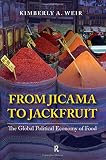
Kimberly A. Weir. From Jicama to Jackfruit: The Global Political Economy of Food. International Studies Intensives Series. Boulder: Paradigm Publishers, 2014. 222 pp. $25.95 (paper), ISBN 978-1-59451-931-4; $143.00 (cloth), ISBN 978-1-59451-930-7.
Reviewed by Erik Phillips-Nania
Published on H-Socialisms (December, 2014)
Commissioned by Gary Roth (Rutgers University - Newark)
The Failure of Industrialized Food
The book From Jicama to Jackfruit: The Global Political Economy of Food by Kimberly A. Weir is, strangely enough, not really about jicama, jackfruit, the political economy, or, arguably, even food. There are only three paragraphs each about jicama and jackfruit. And the terms “economics,” “economy,” “politics,” and “policy” are notoriously missing in the index because the book is not about the economics of states—despite the title. The use of the term “political economy” reflects the author’s Chicago school of economics’ worldview that promotes economic liberalism and free markets. The book is about the production, trade, and consumption of a few selected agricultural commodities—namely, spices, cocoa, soymeal for meat production, tomatoes, and tuna—and examines why the free market is best. The book is promoting an obsolete food and economic system.
The book is targeted to college students with a perspective that is explicitly anti-organic, anti-local, anti-consumer protection policy, anti-environmental policy, pro-GMO (genetically modified organism), and highly favorable toward industrial expansionism. The only way to resolve various issues in the agricultural sector, the author says, is through neoliberal free market policy and voluntary pledges by multinational corporations. This is the book that industrial agriculture wants people to read. The corporations that benefit from things as they are tell us that industrialized, genetically modified farming is the only way to feed the world, half of which is starving anyway. From Jicama to Jackfruit is a great example of the deceitful maintenance of the current order.
In the broader context, the book is an anemic antithesis of Michael Pollan’s The Botany of Desire: A Plant's-Eye View of the World (2002), which is a look at apples, tulips, marijuana, and potatoes, and Paul Roberts’s The End of Food (2009), which illuminates the failures of the food system. From Jicama to Jackfruit is an apologist for a catastrophic failure in globalized agriculture. The “free market” that Weir supports is Orwellian newspeak that helps to rationalize a capital- and energy-intensive agriculture that is making the planet and its people sick.
Food is generally defined as any nutritious substance that people eat in order to maintain life and growth. However, spices are for flavoring foods; cocoa is described by Weir as basically a luxury drug and not a food; eating tuna is known to cause disease and deteriorate life; soymeal is a feed for animals and machines and not a food for humans; and the GMO, chemical-saturated way that soy and tomatoes are grown make these things poisonous food-imitating toxins and not nutritious substances to maintain life and growth. Current practices that use systemic pesticides, where the pesticide is spread throughout the plant’s tissues—which the author enthusiastically supports—technically and legally turn these products into pesticides, which are defined in the dictionary as “substances for destroying organisms.” Are these foods? This book, like the “foods” it covers, is saturated with a biased regurgitation of corporatist dogma.
However, if you are looking for solid support for this extreme ideological agenda, do not look to From Jicama to Jackfruit for persuasive arguments. Weir resorts to perpetuating a long string of misleading statements. One of the biggest weaknesses of the book is the common mistake of not looking beyond the sticker price of a food, thereby claiming that conventional industrial food is cheaper, when in fact it is more expensive because the true costs are hidden and “externalized.” The ostensible “cheapness” of the “food” does not reflect the health, labor, social, and environmental costs, nor does it consider government subsidies and other costs of production. These external costs are key defining features of “free markets” that lead many experts, including Alan Greenspan, to conclude that the free market ideology has failed.
The author considers big agribusiness, as opposed to localized organic farming, a “far more efficient producer of food” that leaves “a smaller carbon footprint,” despite overwhelming evidence to the contrary (p. 125). She also repeats the common myth that livestock produce greater methane and greenhouse emissions than is produced by all modes of human transportation, referring to the widely cited Livestock’s Long Shadow: Environmental Issues and Options’s (2006) estimate of livestock’s 18 percent greenhouse gas footprint. However, this statistic is outdated and inaccurate. While methane from livestock is about 11 percent of global emissions, two related factors—land use from deforestation and animal respiration—are even larger sources of livestock-related emissions. Cumulatively, livestock produce some five times as much greenhouse gas as do the many and varied systems of human transportation (about 51 percent, according to Robert Goodland and Jeff Anhang’s updated analysis, Livestock and Climate Change [2011]).
The first student exercise included in the book promotes the USDA’s food plate and food groups, a template established by the people that sell those same meat and dairy products because they are the easiest to produce on an industrial scale. And so the system tells us that’s what we should consume. But it is an obsolete system. Books like Colin Campbell’s Whole: Rethinking the Science of Nutrition (2014) tell the opposite story and the disturbing inside story about how industry wrote these guidelines for the USDA.
From Jicama to Jackfruit says, “only a pact between [corporations] ... will eliminate [child labor] abuses” (p. 168). There is no role for government policy in the neoliberal free market ideology because it undermines businesses offering “the best product at the lowest price” (p. 25). The opposite viewpoint is that the current system’s largely unregulated products are inferior in quality and that the low retail price hides a high social cost—an externalized cost amounting to over three times the retail price for meats mostly due to health and environmental costs, or over four hundred billion dollars. This is explained by David Simon’s Meatonomics: How the Rigged Economics of Meat and Dairy Make You Consume Too Much - and How to Eat Better, Live Longer, and Spend Smarter (2013).
Furthermore, Weir argues that global South “countries benefit as corporations seek out cheaper labor and land sources for production, ensuring job creation ... [despite the] increasing number of strikes and protests ... for better conditions” (p. 169). It is difficult to see how southern countries or even very dissatisfied workers are benefiting when corporate profits are mostly captured by northern shareholders. This is criticized by the social justice movement as the “race to the bottom,” where, thanks to government deregulation, the results are oftentimes substandard wages, bad working conditions, few environmental protections, and fewer jobs in northern countries. This is related to the tragedy of the commons, where corporations, acting out of a legal obligation to maximize profit, behave in a way that is contrary to the best interests of society. From Jicama to Jackfruit does not consider these types of important counter-arguments to globalization or free trade.
The author claims that “US cotton farmers received $561 billion in direct payments and crop insurance in 2012!” citing a source that reports that subsidies were 32.9 billion dollar from 1995 to 2012 (p. 101). Even more strange, this information is in a “Recipe Box” in the soy chapter. There is obviously not a half a trillion dollars in cotton subsidies. This is just one example of poor editing. But the bigger issue is that the problems of subsidies are, quite ineffectually, marginalized as an aside whereas the problem really should be emphasized and more thoroughly explained in a book about the economics of food.
The underwhelming analysis of the 2008 financial crisis fails to mention that over one hundred million people were, thanks to market speculation, driven into hunger. Weir describes the 40-trillion-dollar economic loss in the 2008 crisis as simply “market volatility” (p. 52). She fails to make the connection between using crops for biofuel and problems inevitably arising when the price of food crops thereby varies with the price of fuel, causing significant hardships.
Weir says confusing things, such as, “only when [multinational corporations] uniformly adopt standards, such as pledging to buy only ethically sourced cocoa, do they have an economic incentive to change” (p. 168). So, they will only have an incentive to change, if they voluntarily change? It is easy to see how this type of circular argument leads to a free market ideology, where government regulation is not a consideration as a legitimate tool for change. Practically speaking, governments will not make corporations change because of what is known as “regulatory capture,” where corporations dominate the governments that are charged with protecting public interest, but instead protect corporate interests that are harmful to the public. Simon’s Meatonomics exposes this problem in the food industry.
Corporations that produce deadly products also change when they are forced to by meaningful laws, regulations, and court decisions or settlements. The best comparable example is how cigarette companies were knowingly killing their customers with deadly and addictive products and misleading and fraudulent advertising. Industrial food consumers are likewise just as swindled and addicted to meat, dairy, fat, sugar, and salt—just as the companies are addicted to money and profit at any cost. To extend the tobacco analogy one step further, it is critically important for the 99 percent of non-vegan food consumers to know that meat and dairy are in fact more addictive and more deadly than cigarettes. While smoking accounts for an estimated 25 to 30 percent of cancers (87 percent of lung cancers), the industrially processed meat and dairy diet accounts for an estimated 30 to 35 percent of all cancers, killing millions of people.[1] A whole food plant-based diet is estimated by experts to be able to prevent 95 percent of all cancers, prevent nearly all heart attacks and strokes, reverse severe heart disease, prevent and quickly reverse Type 2 diabetes, and have numerous other benefits that could reduce U.S. health-care costs 80-90 percent if widely adopted—thus saving trillions of dollars and millions of lives annually. Campbell’s Whole explains this and the corrupting regulatory capture that makes it difficult to implement this common-sense change. Nevertheless, a plant-based diet (veganism) is now recommended by almost all physicians to almost all patients of the largest health insurance company in the United States, Kaiser Permanente.[2] It is likely that food companies will soon have an economic and ethical incentive to dramatically change, just as tobacco companies did, due to government regulation and not because food corporations will voluntarily change.
The author considers soy and livestock’s responsibility for over 70 percent of Amazonian deforestation as an “arguably unsustainable practice” while most all experts consider this situation catastrophic. Similarly, she praises Brazil’s industrialization of the Amazon and refers to the Amazon as “vast, undeveloped land” (pp. 98-99, 172). Weir blames salmonella and E. coli on fresh produce and not the true source: untreated industrial animal excrement fertilizer that is sprayed onto produce. Most people are unaware that industrial animal excrement is not only the source of almost all food-borne illnesses, but also the single greatest source of water pollution in the United States. Important facts like this are not conveyed. The author reports that corn is used in corn syrup and biofuel (11 percent and 40 percent of all corn use, respectively) but omits that 37 percent of corn goes to animal feed. This is another example of bias and omission of facts about the wastefulness of the industrial animal food production system.
It is clear that the author is strangely antagonistic to climate change, despite her concerns about weather conditions, natural disasters, and food security. Weir only mentions climate change as an aside and does not appear to be aware of the very worrying trend toward a significant increase in the frequency and severity of natural disasters and the catastrophic impact this is having on the food system. However, for the author, climate change and food security are only related because, she says, food security depends on more energy-intensive industrialization of the food sector—policies that would obviously exacerbate climate change and food insecurity. A more effective solution, however, would contradict her infatuation with industrial globalization. If climate change were a serious issue, which it is, then this would undermine many of the author’s conclusions promoting an industrialized free market neoliberalism. Meanwhile, most other experts come to the opposite conclusion as From Jicama to Jackfruit. For example, Dale Allen Pfeiffer’s Eating Fossil Fuels: Oil, Food and the Coming Crisis in Agriculture (2006) explains how the industrial system, on average, uses ten calories of fossil fuel energy to produce one calorie of food energy—and over fifty calories of fossil fuels to produce one calorie of beef. This defines the unsustainability of the industrial system, which substitutes fossil fuels for solar energy and human and animal labor for food production. Pfeiffer and others conclude that there is an urgent need for a transition to re-localize agriculture due to energy and climate change issues.
Weir concludes that the populations of all countries should shift away from relying on agriculture to earn a living. Although this trend toward fewer people being involved in localized organic agriculture is seen as beneficial by the industry that benefits from the shift, most experts in food security see this trend as catastrophic. The book’s thesis is in opposition to the growing consensus supporting decentralized and sustainable farming based on the concern about civilization being on the brink of famine, which is explained in excellent books, such as Julian Cribb's The Coming Famine: The Global Food Crisis and What We Can Do to Avoid It (2011) and Richard Oppenlander's Comfortably Unaware: What We Choose to Eat Is Killing Us and Our Planet (2012).
Weir identifies the need to increase GMOs and decrease agrochemicals as top environmental and sustainable development priorities—omitting issues of emissions, deforestation, soil erosion, and water pollution in the concluding environmental analysis. The author claims that if the United States used only organic fertilizer, then five to six billion more cows would have to be raised to supply enough manure—citing an article entitled “Norman Borlaug, Happy 95th Birthday!” (p. 126). This claim is absurd for numerous reasons, the first of which is that cows, although their manure is a fertilizer, do not create but destroy soil fertility. This is explained in Jenny Halls’s Growing Green: Animal-Free Growing Techniques (2007). Despite the almost universal myth that animal manure is necessary for soil health, it would be thermodynamically impossible for soil fertility to originate from animals. Animals do not have the ability to create new plant fertility. Plants alone are the producers of food energy and of soil. All animals are net consumers. Animals may concentrate food energy, and thus fertility, in our wastes, but we are net destroyers of it. No one denies that animal manure fertilizes soil. However, the fertility originates from plants that the animals eat, and the animals destroy the greatest part of that food energy by digestion, metabolism, other life processes, and the muscle and milk that people consume. It is possible to use green manures and better agricultural practices to increase soil fertility, whereas raising billions of more cows would result in even more catastrophic environmental impacts. Other recommendations for addressing the soil crisis include Joseph Jenkin’s The Humanure Handbook: A Guide to Composting Human Manure (2005), F. H. King, Farmers of Forty Centuries (2004), and David Montgomery’s Dirt: The Erosion of Civilizations (2012).
The author is inconsistent in advocating for industrial animal food production and also advocating for a more healthful, plant-based vegan diet. The introduction describes a plant-based diet as a “poverty-based diet,” yet the book’s conclusion is that a vegan diet is optimal because “the biggest threat to sustainable development comes from the growing demand for meat ... [and this is] the simplest solution to saving the planet [and addressing] any number of global issues, ranging from food shortages to climate change, from chronic disease to water scarcity. The impact of an animal-product-based diet is staggering” (pp. 16, 172). In other words, Weir mirrors rather than critically challenges society’s inability to reconcile the magnitude of the crisis with the magnitude of the necessary solution.
The food system that From Jicama to Jackfruit promotes is hugely profitable for the economic elite; exacerbates economic inequality; and, without proper regulation, is devastating the environment and flooding the world with inferior and harmful products that are killing people and the planet. We are at a pivotal time in the history of our species, in no small part due to the industrialization of food. The destructiveness of this system is obfuscated by books like From Jicama to Jackfruit and other representatives of the dying political economic system that requires a population that is ignorant and docile.
For anyone interested in learning about jicama, jackfruit, or the global political economy of food, I strongly suggest that you look elsewhere. The book serves the agenda of big business to the detriment of the planet and its people.
Notes
[1]. Preetha Anand et al., “Cancer Is a Preventable Disease That Requires Major Lifestyle Changes,” Pharmaceutical Research 25, no. 9 (2008): 2097-2116, http://www.ncbi.nlm.nih.gov/pmc/articles/PMC2515569/, cited in Brenda Davis and Vesanto Melina, Becoming Vegan: Comprehensive Edition, The Complete Reference to Plant-Based Nutrition (Summertown: Book Publishing Company, 2014); and Michael Moss, Salt Sugar Fat: How the Food Giants Hooked Us (New York: Random House, 2014), which describes the addictiveness of foods compared to cigarettes.
[2]. Philip J. Tuso et. al., “Nutritional Update for Physicians: Plant-Based Diets,” The Permanente Journal 17, no. 2 (Spring 2013): 61-66, http://www.ncbi.nlm.nih.gov/pmc/articles/PMC3662288/.
If there is additional discussion of this review, you may access it through the network, at: https://networks.h-net.org/h-socialisms.
Citation:
Erik Phillips-Nania. Review of Weir, Kimberly A., From Jicama to Jackfruit: The Global Political Economy of Food.
H-Socialisms, H-Net Reviews.
December, 2014.
URL: http://www.h-net.org/reviews/showrev.php?id=42262
 | This work is licensed under a Creative Commons Attribution-Noncommercial-No Derivative Works 3.0 United States License. |

