

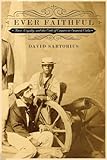
David A. Sartorius. Ever Faithful: Race, Loyalty, and the Ends of Empire in Spanish Cuba. Durham: Duke University Press, 2014. 336 pp. $24.95 (paper), ISBN 978-0-8223-5593-9; $89.95 (cloth), ISBN 978-0-8223-5579-3.
Reviewed by Gregg French (Western University)
Published on H-Caribbean (June, 2014)
Commissioned by Audra Abbe Diptee (Carleton University)
Challenging the Study of Race and Loyalty on La Siempre Fiel Isla
Traditional assumptions surrounding the study of race and empire in Cuba during the nineteenth century have continuously presented readers with a narrative that makes it appear that an individual’s race defined their loyalty to either Cuban independence or Spanish imperialism. In reality, as David Sartorius argues in his book Ever Faithful: Race, Loyalty, and the Ends of Empire in Spanish Cuba, loyalty to the Spanish Empire was not solely reserved for wealthy, landingholding Cubans. Rather, as racial and imperial identities competed with one another and continued to change throughout the nineteenth century, many free and enslaved individuals of African descent, traditionally believed to have predominantly supported the movement for Cuban independence, supported the existence of the Spanish Empire in Cuba and attempted to show their loyalty to Spain through military service and public articulation.
Written as a revisionist approach to the study of race, loyalty, and imperialism in Spanish Cuba, Sartorius begins the work by arguing that independence was not preordained in Cuba, nor did colonial rule “slowly fizzle throughout the nineteenth century, paving the way for the empire’s demise” (p. 2). Instead, the imperial foundations of the Spanish Empire shifted and changed during the nineteenth century, particularly after the conclusion of the Ten Years’ War in 1878. As Sartorius argues, free and enslaved members of the African diaspora did not voluntarily submit to imperial rule but rather, “they discovered and tested the limits of empire,” allowing for it to continue to exist (p. 4). Through an investigation of a variety of locations where “mutual and reciprocal interests [were] articulated by the Spanish government and its subjects,” such as meeting halls, military barracks, plantations, and public squares, Sartorius takes up the mantra of historian Frederick Cooper by questioning not how colonists envisioned themselves within an emerging nation but how they worked to define their end goals by “think[ing] like an empire” (pp. xi, 9). This practice was made more convoluted by the political instability that existed in Spain during the nineteenth century, as Spain attempted to define itself as both a nation and an empire, thus making members of the African diaspora question their political status as citizens, loyal subject, and slaves.
Drawing on a variety of historical sources, including periodicals, literary sources, and proceedings of public, political, and military associations, located in repositories throughout the United States, Spain, and Cuba, Sartorius organizes his book in a chronological fashion, giving special attention to the residents of Havana, Santiago, and Cienfuegos. In the first body chapter of the work, Sartorius begins his narrative by analyzing how the Napoleonic invasion of Spain, which led to the subsequent independence movements in Spanish America and the liberal Spanish Constitution of 1812, affected how individuals in Cuba grappled with the sudden political shift in their highly structured hierarchical society. In chapter 2, Sartorius examines how, despite the failure of the liberal Constitution of 1812 and the abolishment of most local militia units, Cubans of African descent worked to present themselves as loyal subjects of Spain in the hopes of increasing their social mobility and privileges within Cuban society.
The final four chapters of the work focus on the period from 1868 to 1898, a period in Cuban history that witnessed three wars of revolution, the end of Spanish imperial rule, and the beginning of Cuba’s quasi-independence, all of which were overseen and sometimes controlled by the U.S. military. In chapter 3, Sartorius explains to the reader that despite the ongoing Ten Years’ War in Cuba, there was a rebirth of loyalty toward Spain, as free and enslaved Cubans of African descent began to join militia groups again, in the hopes of bettering their position in colonial society. The final three chapters shift to the post-Ten Years’ War era and examine how Cubans of African descent used the extension of Spanish constitutional protections to increase their say in public life through writings in newspapers and their involvement in political organizations and parties, both before and after the abolition of slavery in 1886.
By arguing, from the perspective of the colonized, that empire can inspire affection, rather than only fear and resentment, Sartorius has gone beyond the works of earlier postcolonial historians who previously only presented colonial subjects who contested imperial rule. Instead, in this ground-breaking work, Sartorius has labored to show the way in which Cubans of African descent used their political imaginations to show their loyalty to Spain, a practice that Sartorius argues was a transnational phenomenon that occurred throughout colonial society, not just on the island of Cuba. By introducing the reader to a variety of different historical characters throughout the work, Sartorius allows the reader to understand that the existence of the Spanish Empire in Cuba was a continuously changing entity to which many Cubans of African descent declared their loyalty. However, there is still work to be done. Within the work, Sartorius briefly mentions women of African descent, as well as Chinese workers on Cuban plantations, but does not thoroughly discuss either group. His work leaves an opportunity for future academics to further integrate these individuals into the imperial narrative. Overall, Sartorius has presented a thought-provoking and enlightening work that challenges the traditional narrative surrounding the topic under discussion and will force historians to reconceptualize the relationship between racial identity and politics in Spanish Cuba during the nineteenth century. This is an excellent work that should interest any academic concerned with the study of race and loyalty in the imperial context.
If there is additional discussion of this review, you may access it through the network, at: https://networks.h-net.org/h-caribbean.
Citation:
Gregg French. Review of Sartorius, David A., Ever Faithful: Race, Loyalty, and the Ends of Empire in Spanish Cuba.
H-Caribbean, H-Net Reviews.
June, 2014.
URL: http://www.h-net.org/reviews/showrev.php?id=41303
 | This work is licensed under a Creative Commons Attribution-Noncommercial-No Derivative Works 3.0 United States License. |

