

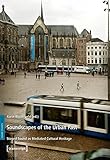
Karin Bijsterveld. Soundscapes of the Urban Past: Staged Sound as Mediated Cultural Heritage. Bielefeld: Transcript - Verlag für Kommunikation, Kultur und soziale Praxis, 2013. 232 pp. $40.00 (paper), ISBN 978-3-8376-2179-2.
Reviewed by Andrew Behrendt (University of Pittsburgh)
Published on H-Urban (June, 2014)
Commissioned by Alexander Vari (Marywood University)
Interdisciplinary Approaches to the Auditory History of Modern European Cities
It seems a reasonable wager to say that students of modern urban cultural history are not usually expected to learn to use their ears. They are trained to work with plastic images and architectural forms; to recognize the power dynamics of surveillance and the policing of spaces; to attend to the influence of economic systems on the disposition of society and the environment. They pore over reams of broadsheets and tabloids for snapshots of everyday life; they reconstruct forgotten lives and lost cityscapes from pictorial evidence and, if possible, tangible objects; they decipher silent, handwritten diaries in order to restore a voice to the marginalized. They are students of these and many other topics, applying many methods, but for the most part theirs is a visible world—a society, it might be said, of spectacle.[1] Less often, though, are they encouraged to equip themselves with methodological tools designed to analyze the representation of urban soundscapes. The volume under consideration here could be read as a corrective, however preliminary, to that imbalance. The outcome of a convincingly interdisciplinary project spearheaded by scholars from Maastricht University joined by international collaborators, Soundscapes of the Urban Past offers a loosely joined but nonetheless thought-provoking collection of essays on how researchers and museum curators might tune in to the auditory history of city life.
As Karen Bijsterveld’s introduction emphasizes, the main objective of the book is not to somehow excavate or reconstruct the soundscapes of the past, but instead to explore the “mediated cultural heritage of sound” that comprises our textual (broadly defined) access to the ways in which historical actors staged their descriptions and interpretations of those soundscapes (p. 14). Bijsterveld explains that because “representations of sound, both in historical text and in radio play and fiction film, always imply a particular dramatization of sound,” one of the tasks of the book is to analyze the “particular repertoires of dramatizing sound” that historical actors have employed for that purpose (pp. 14-15). By understanding how historical actors applied their strategies of mediating sound, we can learn how the representation—as well as regulation and contestation—of urban environments changed over time; from there, so Bijsterveld’s introduction holds, we can understand how urban identities shifted, too.
The principal achievement of the introduction is in outlining the core analytical concepts applied throughout the volume: auditory topoi, keynote sounds, sound marks, sound icons, and, to a lesser degree, acoustic profiling. These concepts are not original to Soundscapes of the Urban Past, but rather are borrowed from earlier studies. From, in part, the work of Michael Cowan, Philipp Schweighauser, and Bijsterveld herself comes the idea of the auditory topos, a tool for understanding how historical texts have qualitatively described and “evaluated” sounds.[2] Bijsterveld names four ideal types of topoi, two “negative” and two “positive”—the intrusive, the sinister, the sensational, and the comforting—each of which can be further articulated in terms of quantity, distance, direction, and rhythm (p. 19). Thus, for example, a typically “comforting” sound is often described in a text as being produced by a singular source, arriving from a considerable distance away from the hearer, moving in no particular direction, and following a regular or unspecified rhythm. A “keynote sound,” a term originally coined by composer Raymond Murray Schafer, is one that forms part of the basic background of a “sonic environment,” such as the constant noise of urban vehicular traffic. “Sound marks,” also an invention of Schafer’s, are the “sounds that stand out in a particular environment, and are considered typical for a specific location,” for instance the London Underground’s recorded warning to “mind the gap” (to take Bijsterveld’s example, p. 15). “Sound icons,” are sounds that have undergone apotheosis, transcending their original peculiarity to become an instant cue for thinking of a place (e.g., “Hail to the Chief” for the White House) or to signal that a narrative has shifted (e.g., the arrival or departure of a character being denoted by a train whistle). Finally, “acoustic profiling” (p. 20) refers to the discursive association of certain kinds of people with certain kinds of sounds, usually for the purpose of demarcating group belonging and territoriality.
These terms stand as only the initial entries in what, by the conclusion of the book, becomes a potentially fruitful—if not easily manageable—vocabulary for the historical analysis of sounds. One of the volume’s chief contributions is precisely this act of collecting, explaining, and broadcasting this otherwise specialized terminology for the benefit of a wider audience. Any scholar unfamiliar with the field of auditory history will find here a useful “beginner’s dictionary” of concepts that will help him or gain purchase on the question how best to describe the cultural construction of sonic phenomena. However, despite its value as a kind of catalog of methodological tools, the introduction does not provide much in the way of a historiographical survey, even though the accompanying bibliography makes it clear that literature on (urban) sound studies has been maturing for several decades. Even a brief overview of the development of the field would have been welcome, if only to give the reader a fuller sense of where this volume fits into it—and to help guide nonspecialists toward its seminal works.
Beyond the introduction, the book is organized into three pairs of articles and three stand-alone articles. Each of the pairs consists of a focused historical study followed by a shorter “response” article offering reflections or expansions upon its larger partner. This approach lends the majority of the book a certain sense of cohesion otherwise characteristically lacking from edited volumes. Although the framework remains unsurprisingly loose-fitting, the contributors generally do make an effort to refer to the key concepts and typologies laid out in the introduction; this, in conjunction with the three pairs, provides at least a welcome (albeit limited) feeling that the different parts of the volume are in “conversation” with each other.
“Shifting Sounds,” the first “main” chapter by the four core members of the Soundscapes project (Karin Bijsterveld, Annelies Jacobs, Jasper Aalbers, and Andreas Flickers), grapples with what the authors call the “museum authenticity problem” (p. 31). By this they mean the double bind faced by museum curators when attempting to make the urban past accessible to the public: presenting, with relatively little scholarly mediation, artifacts as direct representatives of that past in se versus maintaining that such objects cannot be self-apparently “authentic” because present-day observers inevitably construct the past. The contributors propose that we study the ways in which historical texts staged sound in order to develop better methods of exhibiting them in the present. They observe that the “narrative repertoires used in text, film, and radio to articulate particular impressions of urban soundscapes” often staged sounds in a manner that reflected a sense of novelty, using “stark narrative transitions in time and space” to ascribe meaning to certain sounds and, by extension, the urban environments that produced them (pp. 35-36). From here, Bijsterveld et al. examine a number of films and written travel accounts to isolate three kinds of transitions: shifts across space, exemplified by scenes depicting an outsider’s arrival to a city; shifts in time, as shown in accounts of the “rhythm of everyday urban life” (p. 46); and juxtapositions of two spaces within a city (e.g., the sounds of one neighborhood versus another) or of two moments in a city’s history (e.g., peacetime versus wartime). Analyzing these narrative strategies, the authors argue, “provides a fresh angle on the constructed identities of cities and their residents” (p. 59). Understanding how an author staged an arrival scene or part of a workday can help recover a “period ear,” i.e., the sounds that were especially striking or meaningful to the historical agents in a particular era (p. 45); juxtapositions of neighborhoods can reveal class identity as constructed through “acoustic profiling” (p. 59); juxtapositions of the past and present can offer an author’s reflections on the absence or alteration of previously unremarkable sounds. By way of conclusion, the authors suggest that curators could design exhibitions that make use of these kinds of transitions, either by showing them at work in historical texts or by creating museum spaces that give visitors a simulated firsthand experience of them.
Mark M. Smith follows up the chapter with a short think piece, “Why Historians of the Auditory Urban Past Might Consider Getting Their Ears Wet,” in which he rightfully urges us to remember the central importance of aquatic spaces—rivers, harbors, etc.—in urban history. Water, he contends, “not only possessed its own soundmarks that people in cities listened to … but the seas and rivers also served as aquatic platforms for various technologies that produced their own sounds, thus enabling us to historicize how water—and what it carried—sounded at various points in time” (p. 69).
In the second full-length study, “Sounds Familiar,” Fickers, Aalbers, Jacobs, and Bijsterveld examine the staging of sound in four versions of Alfred Döblin’s 1929 novel Berlin Alexanderplatz: the original work, the 1930 radio play Die Geschichte vom Franz Biberkopf (The Story of Franz Biberkopf), the 1931 sound film directed by Phil Jutzi, and, naturally, Rainer Werner Fassbinder’s monumental 1980 television series. Their aims are twofold. They seek to investigate first “what … a systematic comparison between the different media forms in which the original novel has been performed … can tell us about the different ways in which the city has been staged as a symbol of modern conditions of life,” and, second, the “symbolic role and narrative function of city sounds” in these stagings (p. 78). Their methodological approach adheres to the concept of intermediality, and the authors adopt a tripartite definition based on the work of Irina Rajewsky: 1) medial transposition, i.e., adapting a work from one medium to another; 2) media combination, i.e., the mixing of different media forms in a single work; and 3) intermedial references, i.e., instances when a work in one medium “evokes” the techniques of another medium (pp. 79-80).[3] Here Fickers et al. point out that intermediality is not merely a “theoretical category,” but also “a lived reality in which new cultural practices emerge” (p. 81). To this end they the present late Weimar-era Berlin as a time and place deeply fascinated by the dynamics of intermediality, conditions woven into the fabric of the novel by Döblin’s Kinostil imitation of cinematic montage and use of written sound effects.
This sustained comparison across media and historical context is an informative one. It provides a convincing demonstration of how attention to the staging of sound in historical texts—as opposed to uncritically regarding the evocations of sound as “raw” empirical data about the past, or else mere artistic ornament—can shed light on the place of sound at different moments in the history of culture. Its most interesting result is not that the four versions of Berlin Alexanderplatz all operate according to various modes of intermediality. Rather, argue the authors, it is that while the three adaptations of Berlin Alexanderplatz used the capacity of their respective media to stage the city per se as cacophonous, hectic, even unforgiving environment, only the original text truly gave it a voice. Whereas the novel privileged Berlin as its narrative subject and acted as the city’s “megaphone” through the use of “onomatopoeic language” and representation of local dialect, the conventions and restrictions of film and radio “downgraded” Berlin to little more than an urban setting for the protagonist’s travails (p. 111). The relatively more complex and innovative staging of sound in the written text (and, to an extent, the radio play, which hewed closer to Döbling’s initial creative vision) gave rise to a richer sonic environment than the media equipped to reproduce it.
In her reply to the chapter, however, Patricia Pisters mounts a defense for the use of sound in Fassbinder’s television adaptation, arguing that it may be more significant than Fickers et al. have suggested. She posits that it would be more correct to hear the series’ soundtrack as expressionistic, rather than simply realistic, and that doing so might yield an even more fruitful comparison to the other versions. She urges us not to overlook the gendered staging of sounds, suggesting that the way in which Fassbinder “embodied” the female voice in the “diagetic world” of his series would offer welcome complications of our understanding of its Berlin soundscapes, revealing, for example, how sounds are used to denote different kinds of spaces, including a sense of “home” (p. 121).
Carolyn Birdsall’s contribution, “Sonic Artefacts,” is a particularly deeply researched study of the practical and conceptual problems that faced Weimar-era radio producers in their attempts to deliver sonic portrayals of the urban. Birdsall frames her investigation within a discussion of the contemporaneous debates over what cinematic/phonic conventions, or “reality codes,” were thought to transmit the truest reflection of reality: those which strove to maintain “fidelity to usual perception” (the phonographic) versus those which emphasized “vocal clarity or intelligibility” (the telephonic) (p. 134). She identifies three defining “currents” within these early attempts to make urban life come alive on the airwaves. In analyzing the first current, documentary, Birdsall focuses on the evolution and staging of Hörbilder, or “acoustic portraits,” which explicitly sought to help audiences “visualize” the characteristic features of certain German cities. She finds that although technological limitations kept these projects largely studio-bound until ca. 1930, Hörbilder documentarians developed techniques that allowed them to move (literally or figuratively) around a city to captures various facets of its nature. One method was to produce a montage or “symphony” of on-location recordings, which would be aired later; another was the “wandering microphone” technique that loosely assembled series of live broadcasts from fixed locations to “explore” urban spaces through a kind of virtual audio flânerie. But because both of these strategies ultimately relied on a narrative arc, Hörbilder thus followed a “reality code” that resided somewhere on the line between fiction and nonfiction. Birdsall observes that the second current, actuality, or notions of “liveness” and “eventness” in radio reportage (p. 147), was immature and sensitive to political intervention. Although the intention was to stay up-to-the-moment, such broadcasts nonetheless relied on prerecordings of original sounds, montage, and “wandering microphone” tricks, as well as a “birds-eye” perspective technique that provided a mediated view of events “from above.” Birdsall’s examination of the third current, authenticity, focuses on interesting identity debates over radio’s proper role in reproducing the uniqueness of the Heimat for expanding audiences. As the national political situation into the early 1930s destabilized, radio representations of particularly local soundscapes (such as dialect) were increasingly absorbed into more nation-based discourses of identity.
In response, Evi Karathanasopoulou and Andrew Crisell offer some preliminary ruminations on what contribution Birdsall’s article makes to the volume. They contend that, as primary sources, early radio documentaries do not speak only to the history of the evolution of the medium; rather, they in fact reflect how radio itself was part-and-parcel of the development of a new “urban aesthetic,” in which the distant and novel instantly penetrates the familiar, meaning is derived more from medium than message, and the physical presence of radio hardware—aerial antennas—shapes the urban environment as much as portrays it.
The final three essays, all of them comparatively brief, constitute a mixed bag of topics and intentions. Jonathan Sterne’s “Soundscape, Landscape, Escape” makes the case for thinking of a soundscape as more than “the widely-understood notion that [it] is both a physical space and its representation.” He posits instead that we should imagine “soundscape” as a dynamic construct that “simultaneously indexes a set of sonic-spatial practices, the metadiscourses that describe them, and the cultural and sensory conditions that make it possible to—even passively—experience sonic space in certain terms” (pp. 183-184). Recognizing that the concept is itself “artifactual” (p. 184), Sterne performs an archaeology of the term, digging into the 1960s to find its coevolution with an elitist concern for consuming “pure,” hi-fi recordings of art music as a means of escape from “lo-fi” mass urban culture.” The exercise is (as Sterne calls it) schematic but illuminating, although one wonders slightly why a volume whose title leads with the word “soundscape” would not foreground a critical discussion of such a fundamental idea.
Perhaps the explanation for this is the fact that, like Sterne’s piece, Holger Schulze’s subsequent article on museum audio guides, “The Corporeality of Listening,” also explores the embodied praxis of hearing soundscapes. Specifically, Schulze argues that typical implementations of audio guides reflect little awareness of how visitors, as hearing anthropological subjects, actually process the experience of walking through a museum while receiving auditory information through a special device. Drawing on the recent work of Rolf Großmann on performance practice, Schulze posits that the experience is corporealized by way of three “auditory dispositives”: the spatial, the temporal, and the narrative.[4] By paying attention to how listeners experience the interaction of space and sound, the rhythm and pace of their movements through a gallery, and how they might be directed towards—or liberated from—following a particular narrative structure, curators and architects alike might be enabled to design museum spaces that better suit lived practices of hearing.
Returning to the city itself, Ross Brown’s contribution, “The Eleventh of the Eleventh of the Eleventh,” meditates not on staged urban sound, but on a grand urban silence: the annual observance of Remembrance Day in London. He convincingly interprets the ceremony, in which those assembled in Whitehall at 11:00 a.m. every November 11 keep silent for three minutes to commemorate the end of World War One, as being less about the absence of sound than about “being, presence, and community” (p. 210). The silence to memorialize the dead is in fact a “celebration of liveness” (p. 211), because it only serves to amplify the unintended (and intentional) intrusion of noise produced by the still-living world into a sacralized sonic space apportioned to the fallen. Brown, in conversation with Schulze’s essay, proposes that the “memorial silence is representative of a fourth kind of auditory dispositive,” a ritual dispositive, in which “one’s auditory experience (and the event’s audience) is subsumed by the performance and becomes part and parcel of a whole system of enactment” (p. 214). Here, then, we are given cause to consider how urban soundscapes can be shaped—if only momentarily—by orchestrated efforts to disrupt them, as well as by the unorganized multitude of sounds that make them what they are. This final essay is driven more by impression and reflection than by cohesive argument, but that does not make it any less provocative. It is, to be sure, an appreciably eloquent conclusion to the volume.
The patently, solidly European focus of Soundscapes of the Urban Past should not dissuade scholars working in other geographical areas from probing the volume’s methodological insights. Indeed, it would be a worthwhile enterprise to pursue comparisons of diverse “mediated cultural heritages” on an intercontinental or global scale. Nor should those working outside of media studies, narrowly defined, consider the staging of sound to belong only within the precincts of recorded sound, film, or literary texts. If—as especially demonstrated in the essays on Berlin Alexanderplatz and “auditory portraits” of German cities—investigations into historical soundscapes reveal a basic interest in defining urban identities and defining a sense of place in particular urban settings, then historians of tourism should consider adding sound to their analytical repertoire. All too often, tourists are studied solely as agents of vision and tourist spaces as overwhelmingly visual environments. But tourists had ears as well as eyes, and so traveled aurally as much as optically; and Weimar-era Hörbilder reveal that even non-travelers were intrigued at the prospect of hearing the places they could not visit.
Notes
[1]. Guy Debord, The Society of the Spectacle: Annotated Edition, trans. Ken Knabb (n.p., Bureau of Public Secrets, 2014)
[2]. Alexander Cowan, “Imagining Modernity through the Ear,” Arcadia 41, no. 1 (2006): 124-46; Philipp Schweighauser, The Noises of American Literature, 1890-1985: Toward a New History of Literary Acoustics (Gainesville: University Press of Florida, 2006); and Karin Bijsterveld, Mechanical Sound: Technology, Culture, and Public Problems of Noise in the Twentieth Century (Cambridge, MA: MIT Press, 2008).
[3]. Irina Rajewski, “Intermediality, Intertextuality, and Remediation: A Literary Perspective on Intermediality,” Intermédialités 6 (2005): 43-64.
[4]. Rolf Großmann, “Verschlafener Medienwandel: Das Dispositiv als musikwissenschaftliches Theoriemodell,” Positionen 74 (2008): 6-9.
If there is additional discussion of this review, you may access it through the network, at: https://networks.h-net.org/h-urban.
Citation:
Andrew Behrendt. Review of Bijsterveld, Karin, Soundscapes of the Urban Past: Staged Sound as Mediated Cultural Heritage.
H-Urban, H-Net Reviews.
June, 2014.
URL: http://www.h-net.org/reviews/showrev.php?id=40648
 | This work is licensed under a Creative Commons Attribution-Noncommercial-No Derivative Works 3.0 United States License. |

