



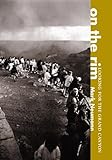
Mark Neumann. On the Rim: Looking for the Grand Canyon. Minneapolis and London, England: University of Minnesota Press, 1999. xi + 373 pp. $22.46 (cloth), ISBN 978-0-8166-2784-4.
Reviewed by Angela Blake (Department of History, American University, Washington, D.C)
Published on H-Environment (April, 2000)
Mark Neumann's book is the result of ten years' study of the Grand Canyon: ten years of camping trips, conversations with tourists, park officials and workers, and ten years of listening to and watching how a range of people make sense of the Grand Canyon. The author sets out to examine "the significance of the Grand Canyon as an American icon and its cultural and historical production" and "as contemporary cultural theater dramatizing collective and individual pursuits for the meaning of nature, family, self, and freedom" (p.10). Neumann thus argues for a reading of the Grand Canyon as a complex text of layered narratives and images, continually added to since the late nineteenth century by successive generations of scientists, government surveyors, artists, journalists, and tourists.
A professor of communications at the University of South Florida, Neumann approaches the topic somewhat differently from most other scholars of Western landscapes and places. While drawing on books and periodical articles by a range of late nineteenth-century and early twentieth-century writers, Neumann's argument is driven most often by his contemporary interviewees and their anecdotes about the Grand Canyon, and by the work of French and American social and critical theorists, such as French sociologist Henri Lefebvre, American art historian Jonathan Crary, early twentieth century German cultural theorist Walter Benjamin, and even French Situationist Guy Debord, best known for his theory of the "society of spectacle." Neumann structures his book into seven chapters, addressing the appropriation of Native American cultures by railroad companies and other developers of tourism at the Grand Canyon, the tension between scientific and spiritual interpretations of the canyon, the construction of the silent autonomous observer as the ideal human figure to contemplate and appreciate the sublime landscape, popular culture representations of the Grand Canyon, the ways tourists use the canyon as a site for self-realization, and a final chapter looking at the cracks in the conventional images and narratives of the Grand Canyon.
Neumann's accounts of conversations with park rangers, tourists from the United States and overseas, maintenance workers, local Native Americans, and a variety of people hired as entertainers at the tourist sites around Grand Canyon, provide the most engaging material in the book. Neumann offers an unusually detailed interpretation of tourist experiences at the Grand Canyon, quoting verbatim his conversations with Canyon visitors of various backgrounds and nationalities. These passages help Neumann bring to life some of quite abstract points he wishes to make about the canyon's "textuality" or the ways the place functions as a repository of national mythology, and so on. His conversations with park employees revealing their frustration with, and occasional disgust for, the "tourons" they serve are especially memorable, bringing out the other side of the tourist enterprise. But these same anecdotes and stories at times get in the way of following Neumann's argument. After having read the first two chapters, I frequently found myself skipping over stories about yet another tourist couple or another encounter with a park ranger extending over several pages. I became impatient for Neumann to state his thesis, make his points, and muster his evidence in a more succinct manner.
On the Rim is extensively illustrated with photographs, mostly of tourists at the Grand Canyon. The photographs comprise perhaps the most confusing content in Neumann's book. The majority of the images are not discussed or even referenced in the text. None have captions indicating date, place, subject, who took the photograph, and the archival source (if any) of the image. On occasion Neumann provides a photograph of an individual or a couple with whom he spoke, though the photograph is not referenced or captioned as such. While some photographs seem to be portraits of tourists at the Canyon, and are posed in the manner of a typical snapshot recording a person's visit, other images suggest a comment, a narrative, or seem to be ironic. For example, Neumann includes a photograph (p.130), taken from a ground level viewpoint, of tourists at what one assumes is look-out point at the Canyon. In the center foreground of the image is the lower half of a woman's body. She wears a dress or skirt, and high-heeled, almost stiletto, strappy sandals. Behind her legs one can see other tourists walking to and fro carrying cameras, backpacks, and babies, dressed in tee shirts and sneakers. This image was clearly composed from a particular angle to include specific subject matter, but Neumann offers no information about the photograph. The silence surrounding the photographs is especially odd since Neumann discusses at length the proliferation of painted, photographic, cinematic, and televisual images of the Grand Canyon and the importance to tourists of the acquisition of snapshots recording their visits.
Neumann's book exhibits some other odd silences, namely any serious discussion -- or even mention in some cases-- other studies addressing Western history, the cultural construction of nature, and tourism. The most glaring omissions include Hal Rothman, John Urry, Anne Farrar Hyde, Barbara Kirshenblatt-Gimblett, and William Cronon.[1] Unfortunately, Neumann displays no such hesitation in incorporating and quoting the work of critical and social theorists who have written few if any words about the American West, the Grand Canyon, or the evolution of tourism. However, Neumann's book, with its multiple characters and voices, provides a refreshingly populated account of the tensions and contradictions inherent in the relationship between people, nature, and landscape at one of North America's most famous tourist sites.
Notes
[1]. Hal K. Rothman, Devil's Bargains: Tourism and the Twentieth-Century American West (Lawrence: University of Kansas Press, 1998); John Urry, The Tourist Gaze: Leisure and Travel in Contemporary Societies (London, England: Sage Publications, 1990); Anne Farrar Hyde, An American Vision: Far Western Landscape and National Culture, 1820-1920 (New York: New York University Press, 1993); Barbara Kirshenblatt-Gimblett, Destination Culture: Tourism, Museums, and Heritage (Berkeley: University of California press, 1998); William Cronon, ed., Uncommon Ground: Toward Reinventing Nature (New York: W.W. Norton and Co., 1995). Neumann might also have referenced the dissertation by Marguerite Shaffer, "See America First: Tourism and National Identity, 1880-1940," Harvard University, 1994, and Jennifer Price, Flight Maps: Adventures With Nature in Modern America. (New York: Basic Books, 1999).
Copyright (c) 2000 by H-Net, all rights reserved. This work may be copied for non-profit educational use if proper credit is given to the author and the list. For other permission, please contact H-Net@h-net.msu.edu.
If there is additional discussion of this review, you may access it through the network, at: https://networks.h-net.org/h-environment.
Citation:
Angela Blake. Review of Neumann, Mark, On the Rim: Looking for the Grand Canyon.
H-Environment, H-Net Reviews.
April, 2000.
URL: http://www.h-net.org/reviews/showrev.php?id=4001
Copyright © 2000 by H-Net, all rights reserved. H-Net permits the redistribution and reprinting of this work for nonprofit, educational purposes, with full and accurate attribution to the author, web location, date of publication, originating list, and H-Net: Humanities & Social Sciences Online. For any other proposed use, contact the Reviews editorial staff at hbooks@mail.h-net.org.

