

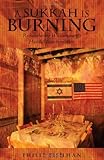
Philip Fishman. A Sukkah Is Burning: Remembering Williamsburg's Hasidic Transformation. Minneapolis: Mill City Press, 2012. 186 pp. $13.00 (paper), ISBN 978-1-938223-31-0.
Reviewed by Jeffrey Gurock (Yeshiva University)
Published on H-Judaic (March, 2013)
Commissioned by Jason Kalman (Hebrew Union College - Jewish Institute of Religion)
Jewish Williamsburg: Remembered and Lamented
The Orthodox community of Williamsburg, Brooklyn, has long interested American Jewish sociologists and historians. Some have been captivated by the anti-modern and anti-Zionist Satmar group, which in the post-World War II period came to dominate the neighborhood scene. Others have analyzed its remarkable history--from at least 1910 on--as a hub for immigrant and later generation Jews who resisted, to lesser and greater degrees, the lures of Americanization. A few scholars have noted and plotted geographically the migration of Williamsburg Jews from their Brooklyn origins. For generations, its Hasidic and “yeshiva world” streets and institutions provided grounding and springboards for constituencies that eventually infiltrated and ultimately occupied other parts of Greater New York City and areas beyond the metropolis. Indeed, it had been pointed out that the presence of “frum Jews,” on the move from tenements and rundown brownstones to salubrious other borough and suburban settings, suggests that affluence can sometimes be obtained without a high measure of acculturation. Most critically, it has been argued that during its century of Orthodox predominance the community has never been monolithic in either its rejection or its nuanced accommodation to the outside world. In the interwar years, for example, the Agudath Yisrael competed for the allegiance of religious young people against the Religious Zionists and the Young Israel movement. The community’s great yeshivas--Mesivta Torah Vodaath and Chaim Berlin, so proud of their minimalist approaches toward teaching the secular next door to the religious--served thousands of devoted students. But that same insular curriculum has been shown to have not retained others whose religious values were no less punctilious that those who stayed in the Beth Midrash (House of Study) off Bedford Avenue. For these “renegades”--in the opinion of school officials--there were bridges to be crossed into Manhattan on the road to the modern yeshiva in Washington Heights. And for some, the evidence has indicated that the ultimate address for advanced religious studies was the Jewish Theological l Seminary in Morningside Heights.
Philip Fishman’s A Sukkah Is Burning does not contribute much that is not known conceptually to prior observations and analyses of Williamsburg. What his heartfelt memoir surely provides, though, is some useful vignettes that deepen the existing literature--much of which he does acknowledge--about this quintessential Orthodox enclave in America. Some of his nice touches include his description of life and commerce in a neighborhood candy store as well as a depiction of young people strolling through the neighborhood on Friday evening, choosing among a range of synagogues offering Oneg Shabbat activities. It is also interesting to read of a near riot that almost ensued in the 1940s when ticket holders eager to enter the Hawes Avenue Shul to hear cantor Moishe Oyser lead the Saturday morning services were accosted by others in the neighborhood who objected to these worshippers carrying their tickets in public domains in violation of a rabbinic prohibition. Meanwhile, the star performer arrived “by limousine (on Sabbath morning!) and as was his custom, had the car discreetly parked two blocks away” (pp. 79-80).
Fishman is also effective in taking us inside the walls of his alma mater--Torah Vodaath--where secular faculty members offered their pupils, somewhat surreptitiously, a broader sense of the culture around them. He also points to, provocatively, the efforts of school officials to control what appeared in the student yearbook, which Fishman helped edit. He might have commented here on the significance of the very existence of such a “prep school’ publication for what it says about youngsters’ desires to be far more American than their religious mentors. For Fishman, the most redolent incident in, and metaphor for, his years in Williamsburg is suggested by the title of his book. As he tells it, when he was growing up, a communal sukkah served all Jews of many religious stripes in his building. But when this temporary holiday structure, which was graced by both an American and an Israeli flag--reflecting the neighbors’ patriotism toward the United States and comfort with the Jewish state--burned down, it was replaced by several competing sukkahs graphically reflecting severe ideological splits within Williamsburg. To this day, when Fishman recites the prayer imploring God to “spread his sukkah of peace upon us and all his people Israel,... I am invariably reminded of the vanished sukkah of my childhood where seemingly for a brief moment in time, Jews from all backgrounds could share meals together in peace and harmony” (p. 44).
For me, this account makes for interesting and disturbing reading but is ultimately less useful to scholars who want a new perspective on Williamsburg Jewish life. Fishman frequently expresses his sadness and anger both about his family history and the directions the Orthodox community has taken. Twice we are told about the splintering of his relatives over religious values and twice we learn about how his uncles appropriated his poor, disabled father’s invention and made substantial fortunes. (Generally the book could have used better editing as several stories are repeated as many as three times.) His pique is even more profound toward what he sees as the endemic unethical, immoral, and sometimes illegal activities of elements within the right-wing Orthodox community. He bemoans the continuation of the “us vs. them” culture--which may have been necessary in hostile Europe--that has persisted over multiple generations in a tolerant United States, which has led to the protection of criminals in their own midst. Frankly, his polemics here add little to the ongoing current discussion about “mesirah” (a Jew turning over a fellow Jew to the authorities), though in one sensitive area, his staunch denunciation of leaders who have shielded sexual predators through intimidation of witnesses is fully understandable since Fishman was victimized as a youngster.
Still in all, Fishman’s memoir can be valued on two different levels. It provides texture to a community’s century-long saga and presents a voice that cries out for a more tolerant and self-effacing Orthodoxy in an era where those values are often in decline.
If there is additional discussion of this review, you may access it through the network, at: https://networks.h-net.org/h-judaic.
Citation:
Jeffrey Gurock. Review of Philip Fishman, A Sukkah Is Burning: Remembering Williamsburg's Hasidic Transformation.
H-Judaic, H-Net Reviews.
March, 2013.
URL: http://www.h-net.org/reviews/showrev.php?id=38091
 | This work is licensed under a Creative Commons Attribution-Noncommercial-No Derivative Works 3.0 United States License. |

