



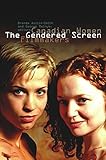
George Melnyk, Brenda Austin-Smith, eds. The Gendered Screen: Canadian Women Filmmakers. Waterloo: Wilfrid Laurier University Press, 2010. ix + 270 pp. $29.95 (paper), ISBN 978-1-55458-179-5.
Reviewed by Sylvie Jasen (Carleton University)
Published on H-Canada (January, 2013)
Commissioned by Jane Nicholas (University of Waterloo/St. Jerome's)
The first anthology on women filmmakers in Canada, Gendering the Nation: Canadian Women’s Cinema, was published in 1999. Following its predecessor, Brenda Austin-Smith and George Melnyk’s The Gendered Screen is a much-needed update that surveys the recent developments and contemporary field of Canadian women’s cinema. A number of essays in the collection offer reassessments of familiar filmmakers whose bodies of work have been the objects of considerable theorization and debate: Alanis Obomsawin, Patricia Rozema, Joyce Wieland, and Lea Pool. In most cases, the authors review the entire careers of these major figures, along with the critical discourse on their films and the central themes that continually occupy their filmmaking. While the contribution of these early women practitioners in documentary, experimental, and narrative filmmaking is certainly worth revisiting, an especially significant dimension of this collection is the attention to filmmakers whose work has been largely neglected by critics and scholars. This is the case with Ann Wheeler and Sylvia Hamilton, whose particular authorial voices have developed over long careers in the industry and numerous projects over the years. Yet race or region, along with the defiance of traditional definitions of feminist and Canadian cinema, have been key factors in their marginalization.
The Gendered Screen at once recognizes the important role of pioneering figures while concentrating more on the new and younger generation of women filmmakers, including Mina Shum, Andrea Dorfman, and Lynne Stopkewich, along with recent work from Quebec, and how their films build on, speak to, and transform the tradition of women’s filmmaking in Canada. In these essays, the foundational practices of Anne Poirier and Studio D at the National Film Board (NFB) are frequently mentioned, and their significance in establishing early programs of training and support for women is made apparent throughout the entire collection. This indicates the institutional framework of support provided by the NFB, with Studio D, Studio One, Office national du film du Canada (ONF), and such regional centers as NFB Atlantic Canada. Many examples of early women’s filmmaking came out of this context, with projects that involved all-female production crews and politicized agendas for women’s voices. Most of the essays, however, move beyond these initial practices to focus on more recent commercial and independent production, including work made for television. This attention to both institutional and industrial practices addresses a central concern throughout the collection: how women’s authorship, their agency as cultural producers, has been facilitated, limited, or shaped by factors specific to the nation or its various regions.
Women’s cultural agency emerges as a theme across a number of essays that focus on the way certain filmmakers use artistic production or crafts as recurring motifs in their films. Representations of such artisanal activities as knitting and quilting draw attention to a history of women’s creative expression and artistic imagination. While craft is here associated with domesticity and tradition, it also takes on political meanings and connects to a collective past within which women’s filmmaking is situated. In “The Art of Craft: The Films of Andrea Dorfman,” Andrew Burke examines the “craft aesthetic” consistently employed by Dorfman, especially in Parsley Days (2000) and Love That Boy (2003), which has marked her films and characters as “quirky.” Burke argues for an understanding of this quirkiness as a political stance, a kind of resistance against contemporary capitalist culture by giving value to forms of creativity that are marginalized and associated with the past. Kay Armatage also identifies craft as a feature in Wieland’s experimental films, which are concerned with themes of domesticity and women’s creativity but also broaden their scope to address such political issues as environmental conservation, the Vietnam War, and the FLQ (Front de libération du Québec) crisis. In Wieland’s final film, the narrative feature The Far Shore (1976), the protagonist is a woman artist, a figure that Agata Smoluch Del Sorbo, in her essay, notes is common in Canadian women’s cinema and a constant focus in Rozema’s films. In response to critics who posit Rozema’s relationship to feminism as ambiguous, Smoluch Del Sorbo sees the filmmaker’s commitment to foregrounding women’s self-expression within her fantasy-driven narratives as a firmly feminist project.
If the previous examples address filmmaking within a broad sphere of women’s creative practice, other essays place emphasis on cinema’s industrial and commercial context. In particular, the authors consider the opportunities and limitations for representing female characters and feminist perspectives within entertainment media. Kathleen Cummins recovers the critically neglected work of Alberta filmmaker Wheeler, whose long career has concentrated on such conventional forms and traditionally women’s genres as melodrama and romantic comedy. Cummins demonstrates that although Wheeler’s films may not belong to a women’s counter-cinema on a formal level, they nevertheless express a feminist sensibility by always privileging the experiential knowledge of older maternal figures. By contrast, Lee Parpart looks at the commercial context for women’s films as marked by constraints and negotiations when developing strong female characters. This is demonstrated with Stopkewich’s films Kissed (1996) and Suspicious River (2001), both of which were adapted from women-authored novels. By attending to the differences between the films and their source texts, Parpart sees Stopkewich’s taming of the central character, sexual deviance, and cultural critique found in the novels as a response to the demands of cinema as a commercial medium.
While most of the essays in The Gendered Screen concentrate on individual filmmakers and their bodies of work, some contributors extend their analysis to outline larger trends or identify several filmmakers as part of broader practices with shared features or common interests. In “The Art of Making Do: Queer Canadian Girls Make Movies,” Jean Bruce considers three examples of video art from 1999 that appropriate and transform material from popular culture into commentaries on lesbian desire. Anthony Adah examines the ways in which documentaries by the First Nations women filmmakers Obomsawin, Loretta Todd, and Christine Welsh make the figure of the warrior a central concern, especially in the context of conflicts between First Nations communities and the Canadian state. Here, the definition of the “warrior” is extended to include women involved in the Oka crisis and war veterans. Jerry White addresses developments by women filmmakers in Quebec since the 1990s. With attention to commercial film and television, art narratives, and avant-garde documentaries, White demonstrates how the recent practices belong to traditions in Quebec cinema but also expand on them in new ways.
The remaining essays in the collection attend to filmmakers who foreground themes of alienation, hybridity, and invisibility in relation to national identity and history. Florian Grandena sees the work of Pool, a key figure in Quebec cinema since the 1970s, as marked by her own experience as a Swiss immigrant. By concentrating on the representation of same-sex relationships across Pool’s oeuvre, he demonstrates her continuous effort to transcend conventional categories of identity and posit a universalism reminiscent of European art cinema. As Austin-Smith notes, Shum also rejects familiar labels, specifically by referring to herself as an independent filmmaker rather than a Canadian one. Austin-Smith identifies Double Happiness (1994) and Drive, She Said (1997) as examples of a transnational genre that express a tension between traditional Chinese culture and a postmodern Canada, toward which Shum herself is rather ambivalent. Christina Stojanova locates a similar tension in both the Indian and Canadian films of Deepa Mehta, where women characters are caught between traditional Indian and modern Western values, neither of which are privileged by Mehta, whose films critique both. A much-less-known filmmaker discussed by Shana McGuire and Darrell Varga is Hamilton. Hamilton is an African Canadian filmmaker from Halifax who seeks to redress the absence of black experience from official national history with her documentaries on such topics as Africville, segregated education, and the opera singer Portia White.
As The Gendered Screen demonstrates, women’s filmmaking in Canada has a long history that includes a diversity of practices. Although a study of this sort certainly cannot cover the entire spectrum of its subject, a rather unfortunate omission in this anthology is a discussion on the work of Arnait Women’s Workshop in Igloolik, Nunavut. Established in 1991, Arnait is a collective committed to addressing Inuit women’s experiences, concerns, and history through video production, with their first theatrically released feature, Before Tomorrow, produced in 2008. The editors mention Arnait in their introduction as an example of the way collective film or video making problematizes conventional notions of authorship. But collective practices and northern or Inuit women’s productions are the few areas not actually covered in the essays that follow, although they would have been a valuable addition in a collection that otherwise aims for breadth on its topic.
Nevertheless, the essays together do address a wide cross-section of women’s media production in this country. They examine the specificities of different regional contexts and address a variety of media approaches, from experimental film and video to independent features, television, and documentary production. More significant, the book investigates feminist and Canadian cinema beyond counter-cinema forms and art house aesthetics, respectively. The studies here attend to women producers not only working within the mainstream entertainment cinema but also presenting women-centered narratives and using humor as a means of critique. They demonstrate how the commercial sector, traditional women’s genres, and comedy can function as sites of resistance that express feminist attitudes and politicized positions. In this way, The Gendered Screen expands the definitions of both feminist and Canadian cinema, contributing significantly to scholarship in both fields.
If there is additional discussion of this review, you may access it through the network, at: https://networks.h-net.org/h-canada.
Citation:
Sylvie Jasen. Review of Melnyk, George; Austin-Smith, Brenda, eds., The Gendered Screen: Canadian Women Filmmakers.
H-Canada, H-Net Reviews.
January, 2013.
URL: http://www.h-net.org/reviews/showrev.php?id=36292
 | This work is licensed under a Creative Commons Attribution-Noncommercial-No Derivative Works 3.0 United States License. |

