



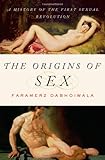
Faramerz Dabhoiwala. The Origins of Sex: A History of the First Sexual Revolution. New York: Oxford University Press, 2012. xi + 483 pp. $34.95 (cloth), ISBN 978-0-19-989241-9.
Reviewed by Cristian Berco (Bishop's University)
Published on H-Albion (December, 2012)
Commissioned by Jeffrey R. Wigelsworth (Red Deer Polytechnic)
Sexual Modernity and the English Enlightenment
In The Origins of Sex, Faramerz Dabhoiwala argues that our modern attitudes toward sexual freedom, autonomy, and privacy date back to broad-ranging social and intellectual changes in the eighteenth century. Focusing on England as a case study, Dabhoiwala traces the breakdown in the long-standing Western culture of sexual discipline and the ensuing rise of a multiplicity of attitudes toward sex. The Enlightenment, therefore, brought about enduring shifts, including sexual freedom, urban social cultures, and gendered understandings of libido that persist today and shape our world.
The structure of the book merges the chronological and the thematic. The prologue and chapters 1 and 2 take the reader from a medieval world where sexual discipline constituted an unquestionable ideal, even if often broken or ignored, to an eighteenth century where a plurality of voices created spaces for sexual freedom. In these first few chapters, Dabhoiwala thereby examines the legal, social, and intellectual changes that made this possible. For instance, although the rise of puritanism in the seventeenth century led to renewed attempts to impose sexual morality, the eventual necessity of accepting a religiously pluralistic society meant that ideas stressing the primacy of the private sphere in matters of morality and conscience seeped into discourses on sex. Furthermore, by the eighteenth century, writers started to publicly articulate such views within the broader apparatus of Enlightenment thinking.
This is not to say that Dabhoiwala restricts himself to intellectual changes. On the contrary, he successfully weaves urban culture, sexual behavior, and various forms of media to bolster his case. Chapters 3 through 6, for instance, examine this rising understanding of sexual freedom through a variety of hot-button topics of the day, including the perils of seduction, polygamy, changing attitudes toward prostitution, the rise of libertines and sexual celebrities, and the effect of print culture on pornography.
Dabhoiwala engages in the kind of scholarship we do not often see given the current trends of overspecialization. He asks big questions and provides sweeping answers. And although such an approach can sometimes lead to a lack of nuance, Dabhoiwala does an admirable job of incorporating detailed historical scholarship on important subthemes--the effect of Protestantism on sexuality and changing attitudes toward prostitution, to name a couple--while still successfully weaving these complexities into his broader argument.
At the same time, the breadth of claims in The Origins of Sex do leave the argument open to critique. For example, as Dabhoiwala acknowledges that women continued to suffer through processes that sought to control and discipline their sexuality, one wonders to what extent the “sexual revolution” of the eighteenth century remained a mere liberation for propertied men. Indeed, while discussed, the travails suffered by women and gay men, for instance, seem to be swept aside in favor of the larger argument of developing sexual autonomy.
But these are matters up for engaged debate--the hallmark of good scholarship. Ultimately, The Origins of Sex contributes a welcome breath of fresh air to the field of the history of sexuality dominated since the linguistic turn by overtly pessimistic views on the effects of modernity. While pitting an early modern Taliban-like attitude toward sexuality against current behavior and culture might oversimplify the issue, Dabhoiwala provides a strong, if jarring, jolt of perspective. He thus highlights one of the central contradictions inherent to poststructuralist views of the history of sexuality: if modernity was so damaging, then why do the late medieval and early modern periods with their systems of public discipline, including execution, for wayward sexuality seem so out of tune with the objectives of personal autonomy on matters of sex? Granted, some may argue that modern autonomy is no more than a fiction built on the back of the insidious and effective disciplinary power of language and culture, but this is a debate worth having. The Origins of Sex has deftly started what promises to be a fascinating conversation.
If there is additional discussion of this review, you may access it through the network, at: https://networks.h-net.org/h-albion.
Citation:
Cristian Berco. Review of Dabhoiwala, Faramerz, The Origins of Sex: A History of the First Sexual Revolution.
H-Albion, H-Net Reviews.
December, 2012.
URL: http://www.h-net.org/reviews/showrev.php?id=36233
 | This work is licensed under a Creative Commons Attribution-Noncommercial-No Derivative Works 3.0 United States License. |

