



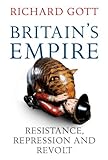
Richard Gott. Britain's Empire: Resistance, Repression and Revolt. New York: Verso Books, 2011. 480 pp. $34.95 (cloth), ISBN 978-1-84467-738-2.
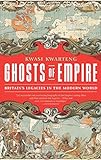
Kwasi Kwarteng. Ghosts of Empire: Britain's Legacies in the Modern World. New York: PublicAffairs, 2012. 488 pp. $29.99 (cloth), ISBN 978-1-61039-120-7.
Reviewed by Richard N. Price (University of Maryland, College Park)
Published on H-Empire (April, 2012)
Commissioned by Charles V. Reed (Elizabeth City State University)
The Dreadful British Empire
In Britain, the British Empire has always been the subject of soulsearching debate. From the moment that it began to dawn on the British that they had an empire--from about the middle of the eighteenth century--its character, virtues, and faults have consistently occupied a central place in public discourse. These two books fall into the well-established tradition of critics of empire, although from the attention they have received in the popular press in the United Kingdom, one could be forgiven for assuming that they were path-breaking works of major importance. Their arguments are easily described.
Kwarteng’s book is the anti-Ferguson (Niall, that is). Whereas Ferguson famously reprised the old justification of the British Empire as the source of social and political progress in the modern world, Kwarteng retorts that, to the contrary, the central legacy of the British Empire was the problems it left behind--problems that continue to haunt world politics. He starts with Iraq, continues through Kashmir, Burma, Sudan, Nigeria, all of which are always in the news; and he ends with the more ambiguous (for his argument) case of Hong Kong. Richard Gott’s argument is entirely captured in his subtitle. Gott’s empire is an empire entangled in violence and repression and resistance and revolt. In short chapters, sometimes a mere three pages long, we are marched through one example of armed struggle after another, beginning in the 1750s conflicts with American Indians and ending with the uprising of Indian Indians in 1857. And how can the story be left there? Surely the juicy violence of the next century is worth a similar catalog of shame.
Both of these books, then, make short shrift of any remaining smugness the British may have about their empire. But from a scholarly point of view, they have relatively little to offer. At best, as in Kwarteng’s case, they are a good read with some nice stories--such as the mad world of Hari Singh, the last Maharajah of Kashmir. At worst, unfortunately in Gott’s case, they present a view of empire that is shallow and jumbled. At the heart of Gott’s argument, of course, lies a fundamental truth: violence was implicit and a quotidian fact of empire. It is equally true that historians have not attended sufficiently to that fact. There is no volume in the Oxford History of the British Empire on violence, for example, although that series has spawned a series of “Companion Volumes” to accommodate what was left out of the original five-volume, century-by-century set. There is great virtue in forefronting the dirty underside of the British Empire. In both popular and scholarly discourse, this underside tends to be presented as occasional and accidental, and not as endemic and ingrained. Thus, the repression of the Jamaica “rebellion” of 1865 by Edward Eyre is treated as somehow aberrant, as not expressing what the empire was really about. Indeed, I think that Gott understates the case that the British Empire was in fact one vast system of violent encounters. One only has to spend a little time in the colonial records of the empire itself to realize that violence in the empire was an everyday affair. Historians are only just now beginning to grapple with the implications and dimensions of that reality. It is to Gott’s credit that he has catalogued as many examples of the collective expression of this violence that he can find, even if that still leaves unrecorded the day-to-day violence whose traces are much more difficult to uncover.
The problem with Gott’s account is not that he is wrong about the facts of violence and struggle. The problem is that he is totally lacking in subtlety and nuance. Gott understands this violence simply through the blunt and absolute categories of resistance, repression, and revolt. He fails to distinguish between the different kinds of violence in the empire--between full-scale, politicized revolt, for example, and more mundane struggles over resources. For Gott the relations between rulers and ruled are simply those between the dominant and the dominated. But social relations in the empire were always more complicated than this. Collaboration, for example, was an equally everyday fact of the British Empire; and it was not simply the obverse of resistance. Nor was collaboration confined to ornamentalist elites, as Gott seems to think. Who actually ran the British Empire? Who provided the clerks, the civil servants, and the soldiers that kept the empire running? Until the very end of the empire, Indian soldiers policed Britain’s Far Eastern possessions.
Similarly, social and political relations in empire were a lot more complicated and untidy than the binary and simplistic categories that Gott uses. And this is not simply a matter of a failure to properly read evidence. Even more disabling to the usefulness of his argument is that such categories do an enormous disservice to the subalterns of empire themselves. The subjects of empire were not simply victims struggling under the smothering weight of the British presence. It was never that simple. If they were local elites, for example, they were often clever, calculating, ruthless, devious politicians in their own right, for whom empire presented opportunities as well as threats. If they were outside of elite circles, they were constantly reaching for the weapons of the weak.
Gott has had a distinguished career as a journalist specializing in Latin America, and he is the author of a very readable history of Cuba. It is a surprise then to find his book turgid, plodding, and wearing. By contrast, Kwarteng’s potted histories of various hot spots of the world that the British Empire bequeathed to the twenty-first century is very readable. This book is a clever book, but not a particularly brainy one. As befits a Cambridge-trained historian (and now a Conservative MP), each of the essays in this book reads like a very good tutorial paper: erudite, smart, and elegant, but often not very profound and ultimately presenting a simplified view of empire history. Like Gott, Kwarteng operates with a similar set of simple-minded models as to what the British Empire was all about. He is concerned to dispel the notion that the empire was a concerted, planned affair and to argue that its structures and features were a pragmatic response to immediate problems and challenges. Most important for Kwarteng were the personalities whose foibles and quirks shaped policies and decisions that ultimately determined the course of the empire’s history.
Gott opens his book with a reference to Henrietta Marshall’s Our Empire’s Story, a popular history published first in 1908 and, like her more famous book, Our Island Story (1905), still widely read into the 1950s. And like Marshall, both Gott and Kwarteng have written books for the times. They each present a bill of indictment against the British Empire that is unlikely to surprise many people who have even the most casual acquaintance with recent writing on the empire. For the general reader, these books perform a useful service. Unfortunately, they are not much use for scholars.
If there is additional discussion of this review, you may access it through the network, at: https://networks.h-net.org/h-empire.
Citation:
Richard N. Price. Review of Gott, Richard, Britain's Empire: Resistance, Repression and Revolt and
Kwarteng, Kwasi, Ghosts of Empire: Britain's Legacies in the Modern World.
H-Empire, H-Net Reviews.
April, 2012.
URL: http://www.h-net.org/reviews/showrev.php?id=35775
 | This work is licensed under a Creative Commons Attribution-Noncommercial-No Derivative Works 3.0 United States License. |

