



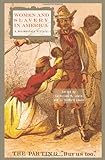
Catherine M. Lewis, J. Richard Lewis, eds. Women and Slavery in America: A Documentary History. Fayetteville: University of Arkansas Press, 2011. Illustrations. 330 pp. $59.95 (cloth), ISBN 978-1-55728-957-5; $22.50 (paper), ISBN 978-1-55728-958-2.
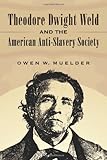
Owen W. Muelder. Theodore Dwight Weld and the American Anti-Slavery Society. Jefferson: McFarland, 2011. x + 225 pp. $45.00 (paper), ISBN 978-0-7864-6396-1.
Reviewed by Bonnie Laughlin-Schultz (Appalachian State University)
Published on H-CivWar (June, 2012)
Commissioned by Martin P. Johnson (Miami University Hamilton)
Antislavery in America
Theodore Dwight Weld and the American Anti-Slavery Society is a book that has two purposes. First, Owen Muelder, director of the Galesburg Colony Underground Railroad Freedom Center at Knox College in Galesburg, Illinois, looks to reclaim a crucial place for Weld and his lecturers (“the Seventy”) in the history of emancipation. Just as importantly, he strives to provide interested scholars and readers with a host of evidence, information, and resources from which they can expand his work. This book is not a biographical treatment of Weld, though portions of his biography appear in chapter 2. Rather, it asserts the importance of the American Anti-Slavery Society--and especially Weld and the band of abolitionists who lectured widely and at great cost for the society in the late 1830s--to the ultimate emancipation of American slaves. Weld and his lecturers are described as people who “created the momentum that ultimately led to emancipation” (p. 6).
The book is divided into five chapters. The first two provide background on the American Anti-Slavery Society, Weld, and the lecturers, while the last three offer data about and primary sources from the lecturers themselves. Chapter 3 features a compilation of material about individual lecturers, as many as Muelder could track down. (Though they were titled “the Seventy,” Muelder asserts that the number was likely sixty-seven.) Well-known figures such as Henry Stanton, the Grimkes, and James McKim appear, but most members of the group are relatively unknown. Muelder also highlights Jonathan Blanchard, one-time president of Knox College and AASS lecturer. Chapters 4 and 5 are compilations of written works by and about these lecturers--their accounts of slavery as well as their experiences in resisting it. Six appendices add to the wealth of materials, including a host of antislavery songs, poems, correspondence, reminiscences, tributes, and a list of the AASS officers.
In some ways this book feels old-fashioned, both for its subject matter and its detachment from contemporary abolitionist historiography. Its inclusion of long passages of text within body chapters adds to this effect. But Theodore Dwight Weld and the American Anti-Slavery Society offers much to researchers and students of American abolitionism. It reminds us, first and foremost, of the tremendous sacrifice that antislavery activists such as Weld and his lecturers made on behalf of their cause in the 1830s. By the mid 1840s, Weld himself had largely retired, his voice and stamina ruined by his exertions of the 1830s. A poignant letter from another of his lecturers recounts similar struggles. Moreover, this volume offers a lot of potential information and direction for future research. Muelder at one point questions the afterlife, so to speak, of “the Seventy”: what happened to all these zealots after the 1830s--and even the Civil War? As more work emerges on abolitionist memory, this could become an important avenue for exploration, and this book has offered plenty of material for interested scholars.
The second book under review also offers a wealth of material for scholars of nineteenth-century America and of women and slaves in particular. Women and Slavery in America is a well-edited documentary reader that examines the circumstances of women in slavery--the ones that compelled many of Weld’s lecturers to go into the field to agitate against America’s peculiar institution. It is also more than that, as it brings together the experiences of a diverse array of women, free and slave, Northern and Southern, rich and poor, and African American and white, to examine the effect of slavery upon women in particular.
A lengthy introduction by the editors introduces the five thematic divisions of the reader: law, custom, and tradition; work and daily life; building community; resisting slavery; and the meaning of freedom. The section on law and tradition, for example, offers a host of documents that show the evolution of broader European slavery into the particular form of eighteenth- and nineteenth-century American slavery. The remaining sections focus more on women’s experience of slavery. The “Work and Daily Life” section contains over twenty documents that highlight the experience of plantation and house slaves as well as mistresses and other workers in the slave economy. Letters, diaries, and narratives are included alongside plantation manuals, newspaper advertisements, and engravings of slave auctions. The juxtaposition of such a variety of sources proves especially revealing. The chapter on community building is equally impressive, showing how community was created in the face of the brutal reality of slavery. The section titled “Resisting Slavery” brings together women ranging from Abigail Adams to Harriet Tubman to a host of more ordinary women to look at the various reactions both white and African American women had to slavery--and at their attempts to create change. Finally, the last section looks at the Civil War and its immediate aftermath to see how freedom was debated and understood. It also illuminates how freedom was circumscribed for American women, for former slaves, and for African American women who were caught in this double bind.
Women and Slavery in America would work well in undergraduate classes on American women’s history, African American history, slavery, and similar topics. Each document is accompanied by information that provides students with the context they need to understand and interpret it, and the editors have collected a wonderful array of documents to allow readers to do some of the interpretative work themselves. The volume also could work well in graduate seminars on such topics, as it would expose students to historiography in the field (well covered in the opening essay) alongside the primary sources that have allowed historians to develop arguments about American women and slavery. The documentary reader ends with three appendices--a timeline, questions for thought, and classroom and research activities--that further enhance its potential use with undergraduate history courses. An annotated bibliography will also assist readers in following up on the topics and ideas presented in the reader.
If there is additional discussion of this review, you may access it through the network, at: https://networks.h-net.org/h-civwar.
Citation:
Bonnie Laughlin-Schultz. Review of Lewis, Catherine M.; Lewis, J. Richard, eds., Women and Slavery in America: A Documentary History and
Muelder, Owen W., Theodore Dwight Weld and the American Anti-Slavery Society.
H-CivWar, H-Net Reviews.
June, 2012.
URL: http://www.h-net.org/reviews/showrev.php?id=35434
 | This work is licensed under a Creative Commons Attribution-Noncommercial-No Derivative Works 3.0 United States License. |

