



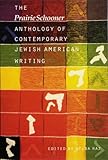
Hilda Raz, ed. The Prairie Schooner Anthology of Contemporary Jewish American Writing. Lincoln: University of Nebraska Press, 1998. 293 pp. $15.00 (paper), ISBN 978-0-8032-8971-0.
Reviewed by Charles Fishman (Distinguished Service Professor of English (emeritus), State University of New York at Farmingdale)
Published on H-Judaic (September, 1999)
In her introduction to The Prairie Schooner Anthology of Contemporary Jewish American Writing, Hilda Raz asks why this "venerable quarterly" decided "to gather a special issue on Jewish writing in America." Her reply, "Why not?" speaks to what is least satisfying in this otherwise noteworthy collection, namely, its lack of a presiding focus, consistent quality, or cohesion. Raz explains that this volume is part of a continuing series of special issues that was inaugurated in 1987 and that includes generous selections of new writing from countries as diverse as Australia, Japan, and Czechoslovakia. Unlike these earlier compilations, however, this anthology of work by Jewish American writers is meant to shine a light on aspects of post-Holocaust identity, viewed from within the shadow cast by the end of our current millennium. This work, says Raz, is marked by a need to remake the Jewish identity, to seek a kind of historical reconciliation with those who have harmed Jews, as with those Jews have, supposedly or actually, harmed. She assures us that the language of reconciliation and re-imagining used in this enterprise will be a spicy blend of American English, liturgical Hebrew, and the piquant notes and phrases that survive from our Yiddish-speaking bubbehs and zaydehs. That the Holocaust often looms just behind the shape of a gritty stanza or the sharp-edged dialogue in a tale is underscored by Raz who, in her brief introduction, does not neglect to tell us that "this issue went to press on the fifty-first anniversary of the Nuremberg Trials" (5).
It seems to me that two questions must be asked of Raz's selection of recent Jewish American Writing. The first, "Does this work constitute an impressive special issue of her journal?" can be answered in the affirmative. One is not likely to find a greater number of engaging offerings by writers of Jewish background in a solo issue of another current journal. However, the second question, "Is this a satisfying and necessary gathering of work by an outstanding contingent of today's best Jewish American writers?" is more problematic. There are only a handful of essays in this collection, while the poems -- though considerably more abundant -- include only a baker's dozen that are both technically impressive and moving. Moreover, many of the finest contemporary Jewish American writers are not represented. You will not find here either an essay or a story by Philip Roth or Cynthia Ozick, a story or a poem by Grace Paley or Marge Piercy, a poem by Gerald Stern or Philip Levine. Of course, it is highly possible that none of these wonderful writers ever sent work to the Schooner; there are many upscale markets for good writers, Jewish or not, including journals that pay better and have wider distribution. Even so, great writing, or at least good writing by great writers, can be solicited.
Sadly, for this reviewer, who relishes poetry and only reluctantly picks up a new novel or short story collection, fiction is the one genre in this anthology that consistently shines. In fact, much of the fiction in Raz's anthology is distinguished by a lyric clarity and intensity and by a mature vision, while many of the poems are not. I particularly like Eileen Pollak's fiercely realized tale, "The Pool," a delectable exploration of the need for identity and dignity that is razor-sharp and tender at once; Rebecca Goldstein's "Gifts of the Last Night," a lovely story of chance meetings on the last night of Chanukah that leaves us aching for more work written in this vibrant, economical style; and Janet Sternburg's two short-shorts, "Trochaic" and "His Regular Fare," the first a beautifully rendered meditation on personal and cultural history and the liberating power of language, the second a memory piece that reveals the complexities that underlie human character and relationships. There is a sense in these stories that the writers are reporting to us from the inner landscape of experience where what has been continues to shape and move us.
While I miss this quality in some of the other short stories collected here, there is an energy in Daniel Stern's "The Man on the Dump by Wallace Stevens" that is irresistible; although this story loses some juice in the final pages and could have benefited from judicious editing, it is nevertheless serious, witty, and current. Its protagonist is a rabbi who has abandoned his wife and his congregation and has fallen from the power and grace of the bema onto a garbage dump. In his fall, we sense our own loss of faith in the givens of religion . . . and in ourselves. Steve Stern's "The Sin of Elijah," which also deals with the life of the flesh and the spirit, though from the perspective of a somewhat wayward angel, is a vivid, over-the-top, and Singeresque tale that has moments of great comedic brilliance but that, in the end, grows tedious.
Although more than one hundred poems are included in Raz's collection, just over a dozen strike me as warranting special attention. Among these are Marilyn Hacker's tour de force, "Squares and Courtyards"; Cynthia Macdonald's "Vermeer's Lady Reading at an Open Window," a poem that, at once, is lucid, affectionate, harmonious, and subtle; "Jesus Returns," by the same poet; Doris Radin's warm, clear, and human poems that are centered on others, not on the conflicted self; and two strong selections from Marvin Bell's ongoing "Dead Man" sequence. S. Ben-Tov is represented by three excellent pieces, of which "The Last Minute," a tense and delicate rendering of a fleeting moment of love and mutual recognition shared by a father and daughter, is especially luminous and convincing. Other noteworthy poems in this Prairie Schooner anthology include three edgy and passionate pieces by Ruth Behar and "The Pillar," a visually arresting poem by Eleanor Wilner that merits the notice it is likely to receive as the concluding piece in the collection.
Unfortunately, this anthology, which might have sparkled with a rich vein of poetry, comes up with fool's gold far too often, and there is a disappointing absence of important work by luminaries like David Ignatow and Alicia Ostriker who are included here. At its worst, the choices are especially bizarre, as is the case with Roger Weingarten's poems, "An American Bubbe-mayseh" and "Paradise," and with Ira Sadoff's vicious "Hassids on the Subway." It is Ruth Behar who gives us the most appropriate response to the more mean-spirited entries that pepper this volume. In the final line of her poem, "Shaken after Receiving a Letter from a Miami Poet with a Mean Tongue Who Doesn't Want a Bridge to Cuba," she writes: "A poet cruel to history is cruel to poetry" (229).
The nonfiction selections in Ms. Raz's book are limited to two poignant, but overly brief, post-Shoah travel pieces by Michael Blumenthal; Robin Becker's rambling and intensely personal account of her attempt to deal with the psychological abuse that appears to have affected the formation of a strong female identity in nearly all of the women in her family; Sanford Pinsker's useful but abbreviated look at writers who are making fiction written by American Jews a viable commodity again; Irena Klepfisz's interesting, evocative, but not entirely persuasive, parable of Jewish female renewal; and Robin Hemley's funny and painfully familiar account of growing up in Slippery Rock, Pennsylvania.
Of these six non-fiction offerings, Hemley's "Jinx" is, by far, the freshest and most moving. When he was eleven, Hemley tells us, he sent a letter to Richard Nixon, after watching a TV news report that showed adults throwing rocks at black children being bused to school in Arkansas. He speaks directly to our own memories of the Sixties, and to our own frustrated longings for equal rights and justice: "The scene transfixed me. I couldn't understand how adults could throw rocks at little children. Wasn't childhood dangerous enough? Kids terrorized one another just fine -- they didn't need any help from adults. I didn't know a thing about busing or integration, and only a little about the civil rights movement, but I knew a lot about children feeling unsafe, feeling that death was right around the corner" (271). This is writing that does not depend on tossed-off Yiddishisms or skimpy allusions to survivors or other iconic elements of the Holocaust -- allusions that, typically, are slipped into a poem or story with a near-total lack of context, preparation, or development; that does not make a moral crisis of Jewish noses or depend on similar obsessions that border on self-hatred and antisemitism; and that does not take its impulse from bad-tempered ruminations on Jewish ritual and observances -- all to be found elsewhere in this anthology. I wish there was another entry by Robin Hemley to relish in this Prairie Schooner buffet.
Despite its shortcomings, I find myself liking a good deal of the work in Raz's collection but wishing she had been able to choose from more consistently excellent material (especially so with the nonfiction and poetry). One of the gifts she makes to us is her inclusion of multiple entries by most of the poets she features and by one fiction writer and one essayist. If I were to consider using this anthology in a course on contemporary Jewish American writers, I would regret that the work she has gathered is arranged in no clearly discernible order -- not by genre, theme, or chronology. I would be conscious that some of this writing is offensive and that too much of it is second- or third-level work. Still, Raz has given us a collection that is rich in the voices of Jewish Americans who write in the deepening shadow cast by the closing decades of the millennium, who struggle with the ghosts and angels of Jewish identity in the Great Darkness that still hovers over us.
Copyright (c) 1999 by H-Net, all rights reserved. This work may be copied for non-profit educational use if proper credit is given to the author and the list. For other permission, please contact H-Net@h-net.msu.edu.
If there is additional discussion of this review, you may access it through the network, at: https://networks.h-net.org/h-judaic.
Citation:
Charles Fishman. Review of Raz, Hilda, ed., The Prairie Schooner Anthology of Contemporary Jewish American Writing.
H-Judaic, H-Net Reviews.
September, 1999.
URL: http://www.h-net.org/reviews/showrev.php?id=3414
Copyright © 1999 by H-Net, all rights reserved. H-Net permits the redistribution and reprinting of this work for nonprofit, educational purposes, with full and accurate attribution to the author, web location, date of publication, originating list, and H-Net: Humanities & Social Sciences Online. For any other proposed use, contact the Reviews editorial staff at hbooks@mail.h-net.org.

