



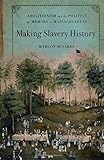
Margot Minardi. Making Slavery History: Abolitionism and the Politics of Memory in Massachusetts. Oxford: Oxford University Press, 2010. 240 pp. $49.95 (cloth), ISBN 978-0-19-537937-2.
Reviewed by Jeff Fortney (University of Oklahoma)
Published on H-CivWar (March, 2012)
Commissioned by Hugh F. Dubrulle (Saint Anselm College)
Remembering Slavery in Massachusetts
According to Margot Minardi in Making Slavery History, the history of the American Revolution taught in classrooms for generations, complete with a runaway slave as first martyr and an African poet as international celebrity, “owes as much to Massachusetts activists and historians in the nineteenth century as it does to Crispus Attucks or Phillis Wheatley themselves” (p. 12). Minardi embraces the framework of historical memory to revisit “the fundamental question of recent social history--‘who makes history?’”--including who disappeared, who reappeared, and what this meant for understanding ideology and identity in Massachusetts (p. 11). Over the course of five chapters, Minardi investigates stories about slaves and the founding of the country which were told and retold to fit the political as well as social motivations of the purveyor of each story. These include the often disguised or accentuated presence of blacks in paintings, the carefully choreographed memorial dedications, the vigilantly framed sensibility of Phyllis Wheatley, and the disappearance and resurgence of Crispus Attucks.
Historical narratives written by Jeremy Belknap and other early historians in the wake of the Revolution emphasized the extent to which abolitionism based on “popular sentiment” ended slavery in Massachusetts--while ignoring the large number of “Bay Staters (who) did not share his [Belknap’s] antislavery views” (p. 20). Further complicating this issue were accounts of census takers instructed to conduct their counts in such a way that slaves would not be recorded in the 1790 census. Moreover, a law passed in 1788 banning “African or negro” people from living in Massachusetts undermined the historical concept of liberty for all races espoused in Belknap’s historical narrative (p. 29). Yet, Balknap’s interpretation of emancipation and liberty by popular, Revolutionary sentiment was propagated in spite of these inconvenient facts, firmly placing itself within the popular memory of Massachusetts’ white citizens.
Minardi skillfully demonstrates that the significance of these events was not that historians continued to extol a slanted and incomplete history for ensuing decades, but that this history dictated the beliefs and actions of Bay Staters in future encounters with the slave question. No longer were they able to examine the Missouri question independently or in an unbiased way; their history, as they saw it, dictated that as heirs of a tradition of liberty they were obligated to lead the charge against slavery. When facing the question of whether Massachusetts was any different from Missouri, this history obligated Bay Staters to answer emphatically, “Yes!”
While sanctifying their own benevolent actions following the Revolution, Minardi demonstrates that Bay Staters commemorated the actual black population only within a selective framework of subservience and deference towards white Americans. A clear example comes from Primus Hall, a free black who enlisted in the 5th Massachusetts Regiment in 1776 and was present at the surrender of General Burgoyne at Saratoga. Hall himself was noted for his habit of regaling anyone present with stories of his wartime endeavors; however, printed materials after his death “reveal the persistence of the idea that black men’s primary role in the Revolution was a servile one” (p. 65). An oft-recited story of George Washington insisting that the bedless Primius Hall share his straw became the primary public recollection of the man--not as a story of Revolutionary soldiers ignoring racial identities, but rather of a generous General George Washington looking kindly upon a servant. Thus, “the mainstream press could praise Hall’s faithfulness as a servant and his association with Washington, but Hall’s work on behalf of ‘liberty of the race’ would at best pass unnoticed and at worst be scorned” (p .68). It would take fifty years and an official act of Congress to acknowledge Hall’s contribution to the Revolution as a soldier and not servant.
Aside from Hall, the variable historical status of better-known figures like Phillis Wheatley and Crispus Attucks demonstrate the ways in which black and white Bay Staters selectively shaped and reshaped historical memory to fit various ends. For whites, Wheatley could be used to represent the highest examples of white gentility and black respectability within socially mandated frameworks. For blacks and abolitionists, Wheatley’s sophistication and elegance demonstrated the potential for a post-abolition society. Therefore, the ways Attucks and Wheatley, among others, “made history were constrained by the ways in which others made history out of them” (p. 100). Nearly everything known about Wheatley originated from the rehearsed observations of others. Anecdotes about Wheatley frequently appeared in biographies which reveal perceptions of racial norms in Massachusetts. Each biographer characterizes Wheatley as a credit to her race. Yet, in the stories they present, it is clear that Wheatley’s masters’ descendants argued that Wheatley’s respectability originated with her humble and modest demeanor which led to her habit of accepting inherent exclusion from white social engagements (such as afternoon tea) until she received invitations from her betters. This model of reverence leading to respectability repeatedly appears in anecdotes regarding historical remembrances of “respectable” free blacks. Yet, Minardi notes that multiple interpretations of the historical accounts were drawn to fit varying goals. The same accounts that white readers associated with reverence, the abolitionist Liberator interpreted as ties of love binding master and slave--“an indicator of the transformation to come” following emancipation (p. 106).
Akin to Wheatley, selective and varying commemoration of Crispus Attucks allowed abolitionists to coopt the largely forgotten figure as a martyred symbol of ties between free blacks and of the fight for American liberty. This shift occurred during the tumultuous 1850s amid fears of the slave power and discontent regarding the fugitive slave law. An explosion of works in print and portrait recast Attucks as the first martyr for liberty, embracing artistic representation identical to John Trumbull’s iconic The Death of General Warren at Bunker Hill (1786). These images of Attucks charging British soldiers and lying wounded in the arms of comrades complete with accounts of black heroism in the Revolution were aimed at “rehabilitating black men’s image from the feminization of romantic racism” (p. 148). William Cooper Nell, a black activist in Massachusetts, recognized that these images served the purpose of connecting blacks--both past and present--with the act of fighting for American liberty. Therefore, exploiting the “mutually generative relationship between the past and the present,” Nell and other activists employed Massachusetts’ Revolutionary history to further an abolitionist agenda (p. 171).
Sources for Minardi’s work range from traditional historical accounts to portraits, pamphlets, and monuments themselves. Monument dedications, as well as the construction of the monuments themselves, Minardi argues, represented the efforts of sons and grandsons of revolutionaries to make their own history out of “parchment and stone” (p. 74). Examining the careful planning of each aspect of memorial celebrations, specifically those at Bunker Hill, reinforces the notion that celebrating and creating history frequently collided.
If anything, the only major drawbacks to this work are the author’s brevity and laser-like focus on constructed history influencing future historical events. To be sure, these features are in many ways commendable, only becoming shortcomings to the extent that the bigger picture of state and national historical context takes a back seat to memory. For example, the presence of slavery in Massachusetts is adeptly chronicled, but absent are the economic connections between Massachusetts, slavery, and the national economy. Economic considerations probably influenced conscious efforts to make slavery “disappear.” Additionally, Minardi’s exploration of emerging African American identity in the North within the context of reinterpreting historical accounts leaves readers wanting more on African American culture. Therefore, this reader would recommend reading Making Slavery History with and against Joanne Pope Melish’s Disowning Slavery (1998) and Shane White and Graham J. White’s Stylin’: African American Expressive Culture from Its Beginnings to the Zoot Suit (1998) for a more comprehensive perspective.
This book takes an important step forward in the field of historical memory. Those critical of the applicability of this genre will be hard-pressed to ignore the significance of memory on beliefs and subsequent actions of Bay Staters in the Revolution to the Civil War. Minardi conclusively demonstrates that for these people, memory--passed through biased stories, memorials, and staged celebrations--influenced how they found their own historical identity. Once this identity was constructed, the weight of history guided Bay Staters’ opinions and actions regarding slavery. Essentially, the constant presence and burden of history aided in forming new history. Skillfully written in a sweeping and engaging manner, this books deserves a wide readership among scholars of slavery, memory, and the antebellum and early republic periods. At the same time, this work could easily be incorporated into undergraduate courses and appreciated by general readers.
If there is additional discussion of this review, you may access it through the network, at: https://networks.h-net.org/h-civwar.
Citation:
Jeff Fortney. Review of Minardi, Margot, Making Slavery History: Abolitionism and the Politics of Memory in Massachusetts.
H-CivWar, H-Net Reviews.
March, 2012.
URL: http://www.h-net.org/reviews/showrev.php?id=33448
 | This work is licensed under a Creative Commons Attribution-Noncommercial-No Derivative Works 3.0 United States License. |

