



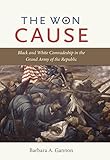
Barbara A. Gannon. The Won Cause: Black and White Comradeship in the Grand Army of the Republic. Chapel Hill: University of North Carolina Press, 2011. 288 pp. $39.95 (cloth), ISBN 978-0-8078-3452-7.
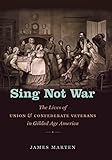
James Marten. Sing Not War: The Lives of Union and Confederate Veterans in Gilded Age America. Chapel Hill: University of North Carolina Press, 2011. 368 pp. $39.95 (cloth), ISBN 978-0-8078-3476-3.
Reviewed by Anne Sarah Rubin (University of Maryland, Baltimore County)
Published on H-SHGAPE (April, 2012)
Commissioned by K. Stephen Prince (University of South Florida)
Winners and Losers: Black and White Veterans in Post-Civil War America
Every once in a while, two books are published on the same topic that, taken together, force us to reassess what we thought we knew. This is exactly the case with the almost simultaneous appearance of James Marten's Sing Not War and Barbara A. Gannon's The Won Cause. Both books explore the lives of Civil War veterans during the Gilded Age; both seek to show that veterans' experiences were more diverse and complicated than we have previously thought. Although they approach their subjects from different angles, Marten and Gannon engage (to varying degrees) with the existing historiography regarding veterans, the Lost Cause, and the emergence of a reconciliationist as opposed to emancipationist narrative of the war. And they want to bring new voices to both the Gilded Age and current debates over the larger meaning of the Civil War.
The stereotypical Civil War veteran was a sort of happy warrior--eagerly donning his uniform for reunions and speeches, and literally parading his service down the streets of towns and cities, a marble monument come to life. He was a joiner, whether of the Grand Army of the Republic (GAR) or Military Order of the Loyal Legion of the United States (MOLLUS) for Union men, or the United Confederate Veterans in the South. He was politically engaged, either with the Republican Party in the North and West, fighting for pensions and benefits for former soldiers, their widows, and orphans; or as a conservative Southern Democrat, pushing for white supremacy, segregation, and disfranchisement under the banner of the Lost Cause. Many former Union and Confederate men became semi-professional veterans, writing and speaking their way around the reunified nation. Too, by the end of the nineteenth century, these men were supposed to be reconciled to one another, clasping hands and linking arms at joint Blue-Gray reunions.
These veterans are not the primary subjects of Sing Not War. Rather than focus on the joiners and the sentimental patriots, Marten looks at the forgotten men: the disabled who wasted away in institutions; the poor men who tramped across the West; and the men whose disaffection and sadness lingered and intensified, rather than abated, with the passage of time. Marten finds these "veterans on the margins" in a variety of places: not only in the expected veterans newspapers, memoirs, and pension records, but also in the pages of investigations into abuses at veterans' homes, in literature, and in medical reports (p. 11). And in so doing he finds a different stereotypical veteran, one "associated with addiction, failure, and fraud" (p. 18). He also finds regional differences, where southern veterans were valued and celebrated in ways that marginalized Yankees could only dream of. The sense of struggle and failure that many men felt was only exacerbated, Marten argues, by changing definitions of manhood and a new scale for measuring success and failure, one on which many veterans fell short.
Marten begins his study of veterans with the process by which soldiers were "veteranized"--their journeys home and struggles to return to civilian life. Many soldiers had changed from boys into men, becoming unrecognizable to their families. Their economic circumstances may have changed as well, with farms destroyed or livelihoods transformed. In New York, a group of philanthropists put together an employment bureau for unemployed soldiers, and ultimately established the Soldiers' Messengers Corps to help put veterans to work. Long before the creation of the Federal Pension system, former soldiers were seen as needing a form of economic and social protection.
One of the biggest problems facing veterans, and by extension the larger society in which they lived, was disability. Should veterans be pitied? Should veterans approach their changed lives with humor and perseverance or fall victim to angry despair? Armless and legless men reminded civilians that the war exacted a terrible cost, and many shied away in discomfort. Marten reminds readers that amputees often suffered continual pain and bleeding from their wounds, and he also endorses modern writings about the possible prevalence of mental illness and posttraumatic stress disorder among veterans. Veterans self-medicated with alcohol, which combined with their difficulties securing employment (especially in cities) led to popular portrayals of them as degenerates.
Both physically disabled veterans and their able-bodied comrades found themselves relying on charity and residing in federal and state-supported soldiers homes. Although designed to be places of respectability and respite, many homes proved to be anything but. Marten sensitively unpacks the mixed feelings that both veterans and the broader public had about the homes and the utter dependence that they implied. From the veterans' perspective, while the homes provided food and shelter, they also impinged on independence and masculinity. They complained about excessive discipline and poor conditions, and the homes' administrations were often rife with corruption.
Veterans and the general public were often at odds over what the veterans were owed for their wartime service. This debate, Marten points out, came to a head over the issue of pensions, particularly when the pensions were expanded to able-bodied men. Civilians wanted veterans to be grateful for government generosity; veterans felt that they deserved what they were given. And of course, Confederate veterans had no access to the expansive federal system at all, receiving support only from their states. This seems to have redounded to the benefit of southerners, who had an easier time getting their appropriations.
Marten closes by analyzing the ways that veterans, both Union and Confederate, both disaffected and enthusiastic, found themselves out of step with the currents of mainstream society, and as a result "spent much of the Gilded Age justifying their existence" (p. 248). Marten argues that the old soldiers emphasized wartime service and achievements, rather than their postwar problems, all in the service of both preserving the memory of the war and the relevance of themselves. And in the end, the veterans succeeded, for veterans, through their writings and sheer physical presence, came to dominate the broader historical memory of the war. The irony, however, is that in so doing, enthusiastic veterans wrote out their more troubled brothers.
Marten's argument is elegant and compelling, giving voice to the ignored tramps and invalids. What he does not do, openly and explicitly, is explore the lives of African American veterans. This omission, however, can be rectified by turning to Gannon's The Won Cause. Rather than accept the conventional wisdom which held that African American members of the GAR were stuck in segregated posts as second-class members, Gannon uncovered dozens of integrated posts, and instead argues for a genuine spirit of interracial cooperation and respect within the organization. She describes a world where African American men (and women through related organizations) participated fully and in so doing reminded white Americans of the significance of emancipation as a war aim.
Gannon divides her book into four sections, focusing on all-black posts, integrated posts, the relationships between black and white members, and finally the larger meaning of the war for GAR members. The sections about the all-black and the integrated posts are fascinating and deeply researched. Gannon delineates the ways that shared memories of wartime service and sacrifice bound black and white GAR members together. White members could easily blackball African Americans from membership, and the fact that so many posts integrated seems to show a willingness to share in the bonds of fellowship and camaraderie.
Gannon emphasizes the many ways that African Americans participated in the GAR, and the important community and social role that black posts filled. African American men and women took pains to remind others around them of the centrality of slavery to the Civil War, and the role that black soldiers played in winning the war. At the same time, however, she is careful to point out the limitations of interracialism. Specifically, "white veterans obviously believed that black veterans deserved a seat at the table, but usually not at the head" (p. 25). As a result, while African Americans might hold offices in integrated posts and even state organizations, they were never at the top of the chain of command. Too, integrated posts were more common in northern and western states than in the former slave states, implying that it was easier to socialize together in places where the color line was not so sharply drawn.
While the first half of Gannon's book focuses on rediscovering the place of African Americans in the GAR, the second half tries to make an argument about the shaping of collective memory. She is explicitly taking on such historians as David Blight and Stuart McConnell who have argued that the GAR was complicit in the creation of a narrative of postwar reconciliation which pushed emancipation to the margins. Gannon argues that the presence of African Americans in the GAR helped to create a "Won Cause," a counter to the southern Lost Cause. These sections are, frankly, less compelling and convincing than the first two. In part, this may be because her focus shifts away from African Americans specifically to a look at the GAR more broadly.
The other problem that Gannon must wrestle with is that ultimately GAR members did not place the virtues of interracial cooperation above all others. Many GAR posts refused to adopt resolutions against lynching, for example, despite their professions of brotherhood in arms with African Americans. As Gannon explains, "white veterans embraced black veterans as comrades but were not concerned with their equality because members of an imagined community need not be equals. In addition, African American veterans were referred to as 'Colored Comrades,' indicating that race mattered even among men who shared the bonds of comradeship" (p. 165). In the end, it seems, that race triumphed over shared suffering and memories.
Gannon's book is an ambitious one, and makes an important contribution to the literature on Civil War veterans. By demonstrating the ways that the GAR represented an interracial social and political institution, albeit a flawed one, she reminds us that alternative paths existed during the Gilded Age. Marten's work too shows an alternative path, though a darker one. Taken together, these two fine books complicate and deepen our understanding of the lives of "old soldiers," and both deserve a place on bookshelves and syllabi.
If there is additional discussion of this review, you may access it through the network, at: https://networks.h-net.org/h-shgape.
Citation:
Anne Sarah Rubin. Review of Gannon, Barbara A., The Won Cause: Black and White Comradeship in the Grand Army of the Republic and
Marten, James, Sing Not War: The Lives of Union and Confederate Veterans in Gilded Age America.
H-SHGAPE, H-Net Reviews.
April, 2012.
URL: http://www.h-net.org/reviews/showrev.php?id=33162
 | This work is licensed under a Creative Commons Attribution-Noncommercial-No Derivative Works 3.0 United States License. |

