



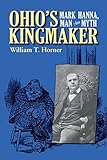
William T. Horner. Ohio's Kingmaker: Mark Hanna, Man and Myth. Athens: Ohio University Press, 2010. xi + 367 pp. $60.00 (cloth), ISBN 978-0-8214-1893-2; $29.95 (paper), ISBN 978-0-8214-1894-9.
Reviewed by Marc-William Palen (University of Sydney)
Published on H-SHGAPE (December, 2011)
Commissioned by Julia Irwin (University of South Florida)
Karl Rove's Ghost of Gilded Age Past
In Historian’s Fallacies (1970), historian David Hackett Fischer defined the “fallacy of the perfect analogy” as consisting of assuming an exact correspondence based on a partial resemblance between two people or actions.[1] Yet it is not the analogical crimes of historians that provoked political scientist William T. Horner to write Ohio’s Kingmaker, but the rampant recidivism of American journalists, who over the past decade consistently drew false analogies between Gilded Age political advisor Mark Alonzo Hanna and “Bush’s Brain,” Karl Rove. In correcting the longstanding inaccurate portrayal of William McKinley’s friend and advisor Hanna, Horner’s target audience is the U.S. media, not historians. Historians have already gotten the story right, and Horner relies heavily on previous accounts of McKinley and Hanna--particularly the work of Lewis Gould, Charles Calhoun, Herbert Croly, and H. Wayne Morgan--rarely, if ever, finding himself in disagreement with them. Rather, he takes great exception to both Gilded Age and present-day media portrayals of Hanna as “a sinister power behind the throne,” and seeks to correct the journalistic record for posterity (p. 98). In doing so, Horner argues that the “knee-jerk, spur-of-the-moment analyses” and inaccurate media portrayals of Hanna have controlled the narrative for far too long, as have the media’s fallacious, or at least faulty, comparisons between Hanna and Rove (p. 22).
Using mainly secondary sources, Horner traces the rise of Hanna and Ohio’s politicians in the last decades of the nineteenth century. It is a story of intrigue, partisanship, backstabbing, and infighting. Hanna himself was a successful businessman, amassing a small fortune that he enjoyed spending in support of various Ohio politicians: James Garfield, John Sherman, Joseph Foraker, and McKinley. But Hanna made many enemies along the way, including scorned newspaper owners, which, according to Horner, partly explains Hanna’s unfair treatment at the hands of an extremely partisan press. Amid incessant political attacks, Hanna remained first and foremost a devoted Ohio Republican. Horner emphasizes that he was also a pragmatist who believed government should support American business, rather than an influence peddler as some have claimed. He devoted his greatest wealth and effort to McKinley’s campaigns, helping McKinley become an Ohio congressman in the 1880s, Ohio governor in the early 1890s, and U.S. president in 1896 and 1900.
Horner clearly lays out Hanna’s route through the Gilded Age’s political labyrinth. He draws astute long-term connections, for instance, between McKinley obtaining the chair of the House Ways and Means Committee in 1889 (with Hanna’s help); the passage of the infamous McKinley Tariff in 1890; and McKinley’s ensuing congressional unseating, followed by his subsequent successful presidential run, owing in part to his ability to turn the tariff issue to his advantage. Horner then serves up an excellent play-by-play of the McKinley presidential campaign of 1896 and Hanna’s subsequent senatorial ambitions. Horner also argues that McKinley preferred the advice of Charles Dawes over Hanna’s, and ignored many of Hanna’s requests for political favors over the years, thereby illuminating McKinley’s control of the Hanna-McKinley relationship.
Ironically, the false Hanna-Rove analogies started in large part because of Rove himself, who had in multiple instances mentioned to journalists the political parallels between the turn of the nineteenth and twentieth century. On occasion, Rove even faxed to reporters copies of Gould’s The Presidency of William McKinley (1980). Journalists thereafter quickly drew parallels between Rove and Hanna, and began to insinuate that Rove was a great admirer of Hanna, a half-truth at best. Thus, unintentionally Rove--who granted Horner an interview for the book, as well as a ringing endorsement on the back cover--helped steer journalists to their later mischaracterizations. As a result, from 1999 to 2007, more than 150 articles and 15 books drew connections--many of them inaccurate--between Rove and Hanna.
In the heavy hands of American journalists, such connections were of course prone to exaggeration as, Horner frequently points out, was Hanna’s influence on McKinley. Hanna’s “role was overestimated and demonized by his critics at the end of the nineteenth century, and it continued to be overestimated and demonized by many who referenced him in the late twentieth and early twenty-first centuries as an example of where things started to ‘go wrong’ in American politics,” particularly the obscene growth of corporate influence within government (pp. 4-5). Thanks to partisan attacks from the likes of William Randolph Hearst, Hanna’s distorted legacy remains that of “Dollar Mark,” a cigar-smoking, obese representative of the “Trusts,” greedily leading a childlike McKinley by the hand on his path down the road of corruption. Such continued portrayals of Hanna today show that “when a myth is repeated often enough, it takes on the force of truth” (p. 250).
Horner admirably attempts to correct both the past and present journalistic record. Yet his chronicling of the many journalistic mischaracterizations of Hanna and Rove at times becomes overwhelming. Horner’s introduction and conclusion are particularly bogged down by lengthy lists of even the most minor of Hanna-related inaccuracies within the press over the last decade, unnecessarily slowing down what is otherwise a lively retelling of a complex era of Republican political history. Furthermore, although Horner effectively demonstrates that many of the parallels between Hanna and Rove remain false, he is remiss to ignore the media’s most faulty “perfect analogy”: the analogy of empire. Over the past decade, journalists have likened the Bush-Rove imperial presidency to McKinley and Hanna’s colonial acquisitions amid the aftermath of the Spanish-American War of 1898. Horner could have strengthened his concluding chapter and overarching argument by pointing out that, whereas Bush and Rove actively sought imperial adventure in Iraq, Hanna and McKinley took their imperial turn only with great reluctance.
Horner ably brings renewed attention to Hanna with a present-minded spin, emphasizing the man as he was in response to the recent journalistic resurrection of so many Hanna myths. Ohio’s Kingmaker is a notable addition to the Hanna histories, once again dispelling the myths and misunderstandings surrounding him and his relationship to McKinley. Horner also optimistically observes that history will similarly be Rove’s “true judge” (p. 122). Perhaps. Perhaps not. The Bush administration took pains to shroud itself in secrecy, delete hundreds of thousands of emails, and indefinitely seal off access to its historical record. Because of Bush and Rove’s secrecy, the judgment of history will have to wait for quite some time. Doubtless to the chagrin of Rove and Horner, Rove’s judgment--like Hanna’s--will therefore be handed down based largely on the journalistic record, inaccuracies and all.
Note
[1]. David Hackett Fischer, Historian’s Fallacies: Toward a Logic of Historical Thought (New York: Harper and Row, 1970), 247.
If there is additional discussion of this review, you may access it through the network, at: https://networks.h-net.org/h-shgape.
Citation:
Marc-William Palen. Review of Horner, William T., Ohio's Kingmaker: Mark Hanna, Man and Myth.
H-SHGAPE, H-Net Reviews.
December, 2011.
URL: http://www.h-net.org/reviews/showrev.php?id=33137
 | This work is licensed under a Creative Commons Attribution-Noncommercial-No Derivative Works 3.0 United States License. |

