



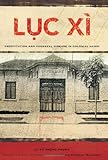
Vũ Trọng Phụng. Lục Xì: Prostitution and Venereal Disease in Colonial Hanoi. Translated by Shaun Kingsley Malarney. Honolulu: University of Hawaiʻi Press, 2011. x + 176 pp. $45.00 (cloth), ISBN 978-0-8248-3467-8.
Reviewed by Hazel Hahn (Seattle University)
Published on H-Urban (March, 2012)
Commissioned by Alexander Vari (Marywood University)
Medicalization of Prostitution and Its Urban Geography in Colonial Hanoi
Vũ Trọng Phụng, a very gifted and prolific writer who died in 1939 in his twenties, published Lục Xì in 1937 in a newspaper and then as a book. Written as a journalistic reportage popular in Vietnam in the 1930s, the text is based on his interviews with doctors, officials, and female sex workers, as well as the writings of French doctors. Lục Xì is an extraordinary piece of writing, for its scope, thoroughness, analysis, style, and what it reveals about the state of society and culture in colonial Hanoi as seen through the lens of the commercial sex industry.
Phụng’s starting points were the sheer scale of the sex industry in Hanoi, which encompassed 5,000 prostitutes; venereal disease as a major medical and social problem; and the question of whether moral corruption of women was the main cause of these phenomena. Prostitution was widespread in all major cities in Vietnam at the time. Comparing the figure of 5,000 out of Hanoi’s population of 180,000 to that of 60,000 prostitutes in Paris, which was about ten times the size of Hanoi, Phụng exclaimed: “Those numbers more than eloquently tell us that we have indeed ‘progressed’ very fast!” (pp. 45-46). At the same time, Phụng got at the broader issue of colonization without mentioning it by name, by ironically referring to the rhetoric of progress used as a justification for colonization. As Shaun Kingsley Malarney notes in his excellent introduction, prostitution has been frequently associated with sociocultural or national decay. Phụng’s initial approach fits into this pattern.
The establishment of Hanoi as a municipality in July 1888 was soon followed by the passing of the legislation to regulate prostitution in December 1888. In Hanoi, a territory of “French concession” unlike the rest of Tonkin which was a French protectorate, French laws regarding prostitution were followed. About a hundred women worked legally as prostitutes, regulated by the Police des Moeurs--known as the “Girls’ Squad” in Vietnamese--and female sex workers with venereal disease were held and treated at the medical facility called the Dispensary (Nha Lục Xì). In 1918 the Dispensary was actually located in a shrine. The notoriously secretive Dispensary, since 1926 located in the colonial district of Hanoi, was at the heart of Phụng’s investigation. Its central location indicated that the colonial regime sought to make it a symbol of scientific and humanitarian endeavor. Under the Popular Front government, reforms had been made at the Dispensary, and the authorities were seeking to change its reputation from one of “a terrible prison, a place of torments, abuses of power, and cruel acts committed by public officials” to a place where anyone could have venereal disease treated for free (p. 65). The term “Lục Xì” seems to come from the English expression “Look see,” meaning to check for disease (p. 50). This explanation underlines the association of the Dispensary with the idea of visual exposure of the female body to the medical eye through gynecological examination, which was viewed by the Vietnamese as imposing “physical indignities” (introduction, p. 19).
Phụng quickly learned that the system for regulating prostitution and containing the spread of venereal disease was woefully inadequate. Ả đào singers, considered by the authorities as prostitutes, were not examined at the Dispensary because they worked at establishments outside Hanoi, where French laws did not apply. Phụng compared two main policy camps regarding prostitution, the “regulationist” camp and the “abolitionist” camp. The latter sought to liberate prostitution based on individual rights and called for establishing a venereal disease hospital, advocating sex education, and eliminating establishments and habits facilitating the venereal disease problem. In reality, the existing regulations added up to “just a formality” because the five or six members of the Police des Moeurs controlled 5,000 clandestine prostitutes (p. 63). The most the authorities were able to do in their attempts to educate a large number of sex workers about hygiene was distributing “The Ballad of Eros” poem for them to learn to recite (p. 53).
In the meantime venereal diseases were taking a catastrophic toll. Exposure to the germ that causes gonorrhea accounted for 70 percent of blindness among the population of Hanoi, and syphilis was a major cause of a high rate of infant mortality. However, it is the statistic of 5,000 that Phụng kept coming back to, a number that was overwhelming to him. Although, thanks to the reforms, women at the Dispensary were treated in “a much more humane” manner, the system was a failure in dealing with the wider problems (p. 74).
For Phụng the cause of prostitution had much to do with dangerous effects of modernization. He agreed with French authorities that ill-conducted Westernization, being interested in “thoughts of liberation, free marriage, Europeanization etc.,” led to moral corruption, not least because of ruthless men, such as “the boys in the seedy hotels, the pimps, or the nighttime rickshaw drivers,” all too ready and willing to push women down the slippery slope toward prostitution (p. 82). Phụng also agreed with the French on what he saw as the broader problem of the unmooring of traditional “family morality,” the very foundations of the society (pp. 84, 122). He cited H. Coppin’s observation of higher rates of divorce and “illicit relationships”; and noted that scandals “caused by passion” filled the newspapers (p. 122). Here both Coppin and Phụng seemed to be confusing the issue of the rise in domestic conflicts with the issue of the increased visibility of such conflicts due to the new power of the mass media. Madam Limongi, the chief supervisor at the Dispensary, however told Phụng that destitution was the main cause of prostitution and that most prostitutes were unemployed women from the countryside.
Phụng began to see sex workers more as misguided victims. The extremely regimented life at the Dispensary included studying about hygiene at the School of Sexual Prophylaxis, which the teacher Nguyên Thị Nghĩa described as a truly “strange school, the most bizarre in Indochina, if not the most bizarre in the whole world” (p. 101). Phụng’s sympathy for those confined at the Dispensary grew with the realization that a class hierarchy existed among sex workers. “Upper-class prostitutes” were “protected” by those in power (p. 86). He used Georges Clemenceau’s argument about the hypocrisy of singling out prostitutes as symptomatic of moral depravity, when “proper marriages” were frequently motivated by access to wealth. Phụng took this position to its logical conclusion, that marriage, as long as it involved some kind of financial dependency, was a form of prostitution, that “only the women who have a profession, or who have jobs, can avoid the label of ‘working as prostitutes’” (pp. 86-87). This provocative stance had the benefit of integrating prostitutes into the society rather than marginalizing them. Phụng also detailed the violence that sex workers were often subject to.
The authorities’ classification of prostitutes, treated in chapter 10, reveals a rigid stratification of society according to race and class. Asian sex workers, distinguished from whites, were differentiated into five groups, including “women married to Frenchmen,” which shows the negative view of such women held by Vietnamese society (pp. 107, 102).[1] There were no legal French prostitutes in Tonkin, yet, as Bernard Joyeux, the director of the Dispensary, put it, clandestine French prostitutes were “protected ... to such an extent that by simply seeing their faces” the police were “stricken with terror, so they think it is better to close their eye and ignore them” (p. 121).
Chapter 12, in which Phụng investigated the reasons for the difficulty for a prostitute to stop being one, is one of the most remarkable. A young student brought a petition to the Dispensary to protest against the arrest of his girlfriend, a daughter of his landlord, as a clandestine prostitute by the Police des Moeurs after they spent a night at a hotel. According to detailed police reports, the young woman “had gone into four different seedy hotels with four different young men” in a period of a few months. Joyeux declared that the arrested woman was “very suspicious because a woman who is completely upstanding would never in her life go into a seedy hotel” “even if she was going with her real husband!” (pp. 137-138). Any Vietnamese woman entering a “seedy hotel” with a man, then, was subject to potential arrest even if she were “from a respectable family”; no proof of financial transaction was required. The Girls’ Squad was at times ironically extremely effective in the voyeuristic surveillance of the private lives of young women.
Phụng ended his reportage by outlining a clear set of aims. The “splendid ideal” of abolition seemed extremely difficult to attain as it required good institutions and intellectual standards, very challenging in a country with inadequate institutions and a high rate of illiteracy. The last paragraph underlines his anguish; he wondered if and when “men who genuinely want to liberate women will appear” (p. 150). Thus holding men responsible for the wayward Westernization of gender relations, he again obliquely referred to the destructive effects of colonization. Although he came to see poverty as a significant cause of prostitution, rapid modernization remained the overriding concern for him.
Even when treating the often grim topics at hand, Phụng was often hilarious. His acerbic humor was often a comic relief but also what helped him convey a sense of irony, by indirectly highlighting the absurdity of certain situations rife with hypocrisy and paradoxes. When Limongi admonished journalists for using the term “prostitute” and suggested a “gentler word” like “demi-mondaine” (woman supported by a wealthy man), Phụng had to laugh because “if they have been stuck in here, how can they be in the ‘demi-monde!’” (p. 83). Phụng’s tone of exaggerated politeness toward the authorities he interacted with contrasted jarringly with the fearless frankness with which he revealed his own thoughts and feelings toward the reader.
The text is also full of priceless vignettes of information. A rickshaw driver said that Joyeux “sometimes rides [a rickshaw] around the entire night, looking around the side streets and alleyways to check on the work of the Girls’ Squad” (p. 136). There is something absurd about the image of an elite French doctor looking into alleyways all night long to check on the police attempting to control elusive prostitutes in Hanoi’s urban spaces, as a way of complementing his work at the Dispensary. The text also provides a great deal of information on the urban geography of Hanoi. The central location of the Dispensary contrasts with the locations of the “seedy hotels” and related establishments in the indigenous areas and outside the city proper, and the large proportion of women of rural origins among sex workers reveals a pattern of migration. Lục Xì is an invaluable primary document that also provides a profoundly affecting encounter with a fascinating mind.
Malarney’s introduction, drawn from archival research as well as published sources, provides a social, cultural, and intellectual background to Phụng’s text and also situates it in the history of reportage as a journalistic, social, and intellectual phenomenon. The essay, which includes a brief analysis of Phụng’s novel Làm Đĩ (Prostitute) (1936), contributes to the scholarship on both reportage and Phụng’s work.[2] Malarney’s annotation of the text is also helpful, and the translated text is elegant.
Notes
[1]. See Vũ Trọng Phụng, The Industry of Marrying Europeans, trans. Thúy Tranviet (Ithaca: Cornell University Southeast Asia Program Publications, 2006). First published in 1934.
[2]. See Greg Lockhart, “Introduction: First Person Narratives from the 1930s,” in The Light of the Capital: Three Modern Vietnamese Classics, trans. Greg Lockhart and Monique Lockhart (Kuala Lumpur: Oxford University Press, 1996); Peter Zinoman, “Introduction: Vũ Trọng Phụng’s Dumb Luck and the Nature of Vietnamese Modernism,” in Vũ Trọng Phụng, Dumb Luck, ed. Peter Zinoman, trans. Nguyễn Nguyệt Cầm and Peter Zinoman (Ann Arbor: University of Michigan Press, 2002), 1-30; and Thúy Tranviet, “Introduction: ‘Vũ Trọng Phụng’s The Industry of Marrying Europeans: A Satirical Narrative,’” in The Industry of Marrying Europeans, 9-21.
If there is additional discussion of this review, you may access it through the network, at: https://networks.h-net.org/h-urban.
Citation:
Hazel Hahn. Review of Phụng, Vũ Trọng, Lục Xì: Prostitution and Venereal Disease in Colonial Hanoi.
H-Urban, H-Net Reviews.
March, 2012.
URL: http://www.h-net.org/reviews/showrev.php?id=32214
 | This work is licensed under a Creative Commons Attribution-Noncommercial-No Derivative Works 3.0 United States License. |

