



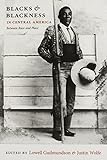
Lowell Gudmundson, Justin Wolfe, eds. Blacks and Blackness in Central America: Between Race and Place. Durham: Duke University Press, 2010. 400 pp. $89.95 (cloth), ISBN 978-0-8223-4787-3; $24.95 (paper), ISBN 978-0-8223-4803-0.
Reviewed by Andrew Fisher (Carleton College, History Department)
Published on H-LatAm (October, 2012)
Commissioned by Dennis R. Hidalgo (Virginia Tech)
Locating Blackness in Central American History
“What happened to the slaves of the colonial period?” (p. 334). As Mauricio Meléndez Obando notes in the concluding essay to this volume, one is tempted to treat this common query regarding Central American history as simply a curiosity about the lives of African slaves and their descendants. But, he argues, the question more often conceals a troubling assumption: that blacks and their history are not central to the nation, that the “we” of the present are distinct from the “they” of the past. A generation of scholarship has confronted this historical amnesia for much of Latin America, but the Central American republics have largely been relegated to the margins. This might be considered a mere oversight, a consequence of the inability to perceive blackness as such in contemporary society. As Lowell Gudmundson notes for western Nicaragua, racial differences had become “relatively subtle” by the late nineteenth century, and thus those of partial African descent “were far less the bearers of stark demographic distinctiveness” than elsewhere in Latin America (p. 214). Yet more than illuminating the well-known process of social whitening (blanqueamiento), the story of “what happened” to Central America’s black populations requires an interrogation of national narratives of race and place. Following the work of Jeffery Gould and others, the contributors show how this seemingly innocuous question reflects the persistence of racial ideologies that continue to (mis)inform understandings of Central American history and culture. They do so by revealing how racial identities and alterities have long been defined diametrically and through multiple lenses, including labor regimes, locale, language, kinship, and political alliances.
Based on an international conference convened at Tulane in 2004, the volume succeeds where similar collaborative endeavors often stumble. On the whole, it provides a healthy temporal and geographic balance. Six out of the eleven chapters deal with post-independence history, while the remainder is grounded in the colonial past. Likewise, while a majority focuses on three modern-day nations (Guatemala, Nicaragua, and Costa Rica), other areas of the region are incorporated into the volume in meaningful ways (excepting El Salvador). Most refreshingly, several chapters offer a transnational framework that at times extends the analysis into the Caribbean basin and beyond. Achieving this sort of balance and breadth is difficult enough, but the contributors and editors are to be especially congratulated for how well the volume speaks to a common set of questions and themes. In this case, the whole is greater than the sum of its parts. There is much to be learned about the history of race in Central America, but more importantly the contributors underscore how race (and its associative discourses and uses) is essential to understanding Central American history.
Part 1 on the colonial era deals centrally with slavery, emphasizing the diversity of labor regimes, the connections between local economies and the greater Caribbean and transatlantic trade systems, the exceptional degree of autonomy slaves often secured, and the strategies they employed to integrate into larger social networks. Through estate and matrimonial records, Paul Lokken examines the seventeenth-century sugar zone surrounding Lake Amatitlán, where slaves and their descendants entered the racially mixed free population and came to dominate the emerging ladino category. Catherine Komisaruk’s study of late colonial Guatemalan court records reveals the erosion of slavery from within, as slaves utilized their autonomy, the market, the courts, and Hispanic social networks to gain their freedom. The latter is especially important for the claim that a “kind of social mestizaje” reinforced the notion that Ladinos constituted a “Hispanicized” rather than “Africanized” society (p. 170). Rina Cáceres Gómez identifies a similar process spurred by slaves laboring at the port of Omoa, where once again official abolition comes as a fait accompli.
Russell Lohse’s and Karl Offen’s essays on enslaved cacao workers in Costa Rica and the Mosquito of Honduras and Nicaragua, respectively, are the most compelling of the group. They focus on a stretch of coastline and interior valleys that would enter the collective imaginations of later nation-builders as zones associated with racial and national alterities. Lohse treats the commercial development of the Matina Valley, where colonial fears of tropical disease and privateers left not only the production of cacao in the hands of the enslaved, but also the region’s transport and credit networks, its civil defense, and its access to contraband. Again we find a high degree of exogamy at play, in this case due to both skewed gender ratios and the willingness of many poor women to marry slaves thanks in part to the resources the latter controlled. As highlighted throughout these chapters, the distinction between enslaved and free became all the more porous, which facilitated entry of blacks into a growing “mestizo” population. Offen’s treatment of the Tawira and Sambo Mosquito examines the English side of the frontier, emphasizing how colonial dependence on these multiracial groups against both Spanish attack and their own slaves subverted racial hierarchies. Micro-regional geographical variations also helped to shape settlement patterns and economic activities that in turn informed “social elaborations of racial difference” (p. 94). Most intriguing is the notion of Mosquito exceptionalism. Offen argues that awareness of their own importance, along with sustained interaction with the English, facilitated the emergence of a “Mosquitomen,” an identity akin to other territorially based nationalities and backed by an assortment of flags and regalia.
Part 2 untangles the legacies of these developments. A major unifying theme is how nation-building entailed marking off poorly incorporated regions as black and foreign, which supported the simultaneous erasure of racial differences within the nation’s core. Framed within a narrative of mid-nineteenth-century Nicaraguan political history, Justin Wolfe unpacks the fate of the black population in its interior. He argues that leaders of traditional black communities embraced “deracialization,” reinforcing a coalescing place-based identity as radical republicans, that was strengthened through alliances and marriages to other liberals (p. 184). These networks were torn asunder following the rise of a revitalized oligarchy in the late nineteenth century. Gudmunson examines a curious artifact of that era, a census from 1883 that went against the prevailing current of conceptualizing the nation around an Indian/non-Indian dichotomy by asking officials to re-inscribe racial differences among an increasingly mixed population. The concurrent projection of blackness onto the Mosquito Coast is the subject of Juliet Hooker’s chapter. Here, the Nicaraguan elite employed racial claims--or, in the case of Wolfe’s black republicans, the thinly veiled rhetoric of civilization versus barbarism (p. 273, n. 23)--to defame a region they considered compromised by foreign (English and later Jamaican) influence and where the “native” Mosquito had allegedly abrogated their political rights by permitting an inferior black, or Creole, population to attain positions of political leadership. Subsequent racial anxieties and tensions concerning the coast round out the volume. Lara Putnam makes wonderful use of missionary accounts, diplomatic sources, and newspapers to show how pan-Caribbean circuits of West Indian migrants were disrupted, starting in the late 1920s, by Central American governments eager to collaborate with hemispheric eugenics projects. As Ronald Harpelle’s chapter reveals, this policy reversed the effects of U.S. corporations operating along the coast, as West Indian labor had been favored by the American housewives sent abroad with their husbands to populate “white zones” that were to serve as a new beachhead of colonial tropical extraction. Relying on oral interviews and memoirs, Harpelle provides a final variation on the theme of racial binaries at play in the region’s history.
This brief review hardly does justice to such deeply researched and intriguing work. Nonetheless, two criticisms might be raised. First, a couple of the chapters offer a somewhat impressionistic or scattered presentation of their findings, suggesting that they would have benefited from a firmer editorial intervention. Second, while all of the authors are attuned to the contentiousness of race-making, some could occasionally be more forthright about how they interpret and employ specific racial nomenclature and the extent to which colonial valences informed later use. What does it mean, for example, to reconstruct a nineteenth-century genealogy by describing some individuals with colonial terminology, such as mulato, and others with modern, academic parlance, like afromestizo (pp. 337-347, passim)? Or, what are the implications of labeling multiracial individuals as Afro-Nicaraguans, when they themselves “appeared to deny, or at least sublimate a racialized sense of self” (p. 184)? Of course, this tension is hardly novel, for scholars of race have long confronted the challenge of balancing the need for global interpretations (i.e., “what happened” to the region’s black population) with their recognition of the complex, often contradictory subjectivities of their subjects.
A trailblazing effort, this volume represents an important contribution to Central American historiography and African diaspora studies. It should be considered required reading for students and specialists alike.
If there is additional discussion of this review, you may access it through the network, at: https://networks.h-net.org/h-latam.
Citation:
Andrew Fisher. Review of Gudmundson, Lowell; Wolfe, Justin, eds., Blacks and Blackness in Central America: Between Race and Place.
H-LatAm, H-Net Reviews.
October, 2012.
URL: http://www.h-net.org/reviews/showrev.php?id=31707
 | This work is licensed under a Creative Commons Attribution-Noncommercial-No Derivative Works 3.0 United States License. |

