



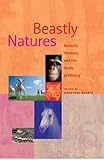
Dorothee Brantz, ed. Beastly Natures: Animals, Humans, and the Study of History. Charlottesville: University of Virginia Press, 2010. 296 pp. $39.50 (cloth), ISBN 978-0-8139-2947-7; ISBN 978-0-8139-2995-8.
Reviewed by Sandra S. Swart (Stellenbosch University)
Published on H-Environment (November, 2011)
Commissioned by Dolly Jørgensen (University of Stavanger)
Historians and Other Animals
A feast awaits the hungry and omnivorous readership of Beastly Natures. It is designed to be consumed by an interdisciplinary network, in the kind of complex polyphagous web of feeding relations to be found in the field of animal studies. Concomitantly, the prose translates academic concepts into jargon-free analysis, making it available to an intelligent readership from various disciplines within the human sciences (and, indeed, the natural sciences, although, disappointingly, they are less likely to read it). The focus is most strongly on history, however.
In an erudite and simultaneously accessible framing chapter, Dorothee Brantz sets up the key threads holding the essays together. One can disagree with some of the ideas: I dispute, for example, that “Descartes’ notion that animals are mere automata laid the foundation for the exploitative attitudes toward animals that have been so dominant in the modern period” (p. 1). (I would suggest “symptomatic of” rather than “laying a foundation” since most people who historically exploited animals never heard of Descartes or felt the need for his intellectual legitimization of their actions). Brantz adds to the argument that has been made for workers’ history and women’s history: you cannot just “add animals” and carry on as before. Taking them seriously requires a rethinking of the historical project. As Brantz suggests, the central force animating social history--“agency”--needs reframing.
I think this is a profoundly significant question for historians, as I have argued in my own book.[1] Debates over “agency” have been central in writing the history of the silenced and the oppressed, which accepts that such groups are not passive victims--they acted in their own right even though not in circumstances they chose. But if one is to take animal agency seriously, one may have to reassess the idea of agency itself. Indeed, some have argued that the failure to question agency in the telling of history actually reproduces familiar forms of power. Efforts to reassess the histories of labor, women, the subaltern, childhood, and so on, attack prevailing hegemonic notions of agency predicated on the idea of an autonomous individual who follows the imperatives of rational choice, fully aware of how the world works. Instead, one can search for more subversive traditions. Compellingly, on the issue of agency, historically humans involved with animals frequently recognized the animals as offering resistance: that is, there was contemporaneous identification of (animal) agency. For example, for equine insurgence deemed incorrigible there remained capital punishment, as in the case of rogue horses executed. On a very obvious level, animal agency surfaces with the very constraints that humans have had to apply to them: the instruments of control--reins, stables, whips, bits, chains, curbs--tell their own story about the need for control. Horses and other animals working closely under human control, exhibited what James Scott called (in a very different context) the “weapons of the weak.” [2] He argued that the displays of public domination by the elite differ from the camouflaged protest of weak humans--millennial visions, gossip. I would argue that the non-human "weak," domesticated animals, engage in even less conspicuous acts. Acts of rebellion might be quotidian, like the horse’s flattened ears as the girth of the saddle is done up and a dog’s bared teeth at the command to stay. As Eric Hobsbawm observed, after all, most subordinate classes are less focused on transforming society than in “working the system ... to their minimum disadvantage.”[3] These small, private protests can be overlooked easily by historians. Like other powerless groups historically, some animals were exploited, they labored, they produced, they followed (and sometimes disobeyed) human orders: they were a force in social change. In the final analysis, it is hard to refute their agency.
Aside from agency, some of the other core debates within animal studies are addressed. After all, animal studies purports to be a discipline, and what is a discipline without its internal controversies? The argument between empiricists and culturalists (or poststructuralists) over the “Real Animal” vs. the “Represented Animal” is rehearsed again. This is an internecine war--or rather policing action--that never ends and has no clear goal; it is the Vietnam of animal studies.
Overall, this book is a pleasure to read; every chapter offers interesting thoughts and empirical data. Susan Pearson and Mary Weismantel offer a witty and self-deprecating theorization of social life with (rather than of) animals. Nigel Rothfels explores the expression to “see the elephant,” which was common slang during the mid nineteenth century and is still used today to mean one has seen something out of the ordinary.[4] Rothfels pushes us to conceptualize a history of the senses in relation to animals: the visual and the tactile in humans’ long-time obsession with elephants. In a particularly stimulating and nuanced piece, Garry Marvin offers insights from cultural anthropology on humans and wolves in Albania and Norway.
In part 2, “Acculturating Wild Creatures,” Oliver Hochadel explores the use of European zoos in popularizing evolutionary thought in the wake of Charles Darwin’s writings. In a richly detailed discussion, Hochadel shows that zoos and the “monkey house” generated scientific debates and public obsessions, fantastical imaginings and real corpses. (When Ernst Haeckel postulated the “missing link” theory, zoos even offered their punters “little Krao” from today’s Laos, who suffered from hypertrichosis, and was displayed as “hairy girl” in Frankfurt, Desden, and London.) In a more experimental chapter, Kelly Enright explores how rhinos had a strange life in a country utterly foreign to them: nineteenth-century America. Finally, Mark Barrow gets his hands dirty in a wonderful swampy chapter on alligators. He shows how this scaly survivor of a 230-million-year lineage that weathered the Cretaceous-Tertiary mass extinction of over three quarters of the world’s species, has had a hard time surviving suburbia.
The third section focuses on “animals in the service of society”: domesticated creatures. Peter Edwards offers a thoughtful and elegant comparison between the advice given to aristocrats on horsemanship and the evidence of court records and statistics. This provides a lens into both the relationship between humans and animals but also the relationship between human classes. Helena Pycior offers another view of the intimacy of power. She uses the dogs of the White House as potential windows into how humans represent themselves, focusing on Warren G. Harding’s Laddie Boy and FDR’s Fala, who was pivotal in the 1944 election. In a very different political context, Amy Nelson describes “Laika’s legacy”: the dogs of the Soviet space program. Back on earth, Clay McShane and Joel Tarr write with their customary robust, energetic prose on the urbanization of American cities, predicated in part on horse power. Like Edwards’s chapter, their work offers insights into class relations. Thus these two chapters are especially appealing to historians interested in mainstreaming “species” alongside race, class, gender. Uwe Lübken writes of the friability of the state of domestication. His context is the anthropogenic changes to the Ohio and Mississippi floodplains, and the floods that displaced and killed thousands of animals. He makes the intriguing point that animals are more vulnerable than humans to such events and the bonds between humans and animals become disrupted: animals become “untamed.” Finally, Harriet Ritvo discusses with her usual intelligence and wit, the way in which certain tamed animals carry human ideas about the land. She uses Britain’s foot-and-mouth epizootic of a decade ago as a way in to unpacking ideas around the Herdwick sheep, icons of Cumbria.
This anthology has a subtextual lament that history is written by humans alone. But I have a slightly different regret. It may be true that history is written by the winners. It is largely true that it is written by the tenured. Judging from this collection, it is also apparently only written by the metropole. This collection is untouched by writings from the global South and these essays stem from Europe and North America. Yet the collection’s title is broad, referring to all animals, all humans, and, sweepingly, “the study of history.” It might have made sense to do one of two things: either add a sense of place to the title and introduction or include essays from a broader global array (to add the diversity implied in the sweeping title). Instead, the North becomes proxy for the whole world. I would have chosen the first option: instead of adding token “southern” chapters, I would suggest the anthology should simply have considered a sense of its own locatedness.
Raewyn Connell and others have spoken out increasingly against the one-way dissemination of knowledge production.[5] Southern researchers are, as Connell argues, often ignored or used simply as a data mine for extraction. A related problem is that metropolitan writers tend to locate themselves as placeless, producing “readings from the center,” which make universalizing claims and do not reflect enough on their own geopolitical and historical specificity. Indeed, in one of the most intriguing essays, Marvin makes the point in discussing humans and wolves in both Albania and Norway. He cautions us to speak only of the relations between specific groups of people and specific animals at particular times. His contention, and mine, is that we must abandon the universalizing tendency and write our “human-animal histories” in the plural and not try to subsume them in overarching rubrics.
For example, in citing Berger, who has argued that industrial capitalism led to urbanization which then “removed animals from humans’ daily experience,” Rothfels is too sweeping. This is certainly not the case in Cape Town, South Africa, certainly a city experiencing rapid and intense urbanization: it is a city of 20,000 feral dogs, and herds of cows, horses, and goats roam and are ridden, driven, milked, and slaughtered in the city. I do not think one can say glibly that industrial capitalism has caused the “once-profound connections between animals and humans” to be “reduced to artificial representations” (p. 47). This kind of error comes from generalizing, which is dangerous in the idiographic art of history.
(After such a rich feast one might be allowed such a small dyspeptic outburst.)
Notes
[1]. Sandra Swart, Riding High: Horses, Humans and History in South Africa (Johannesburg: Witwatersrand University Press, 2010).
[2]. James Scott, Weapons of the Weak: Everyday Forms of Peasant Resistance (New Haven: Yale University Press, 1985).
[3]. Eric Hobsbawm, “Peasants and Politics,” Journal of Peasant Studies 1 (1973): 3–22.
[4]. He has explored the etymology but maybe missed a saucier meaning: the “Elephantine Colossus,” or colloquially, the Coney Island Elephant, was a 12-storey pachyderm-shaped hotel (and some say brothel). Jon Sterngass, First Resorts: Pursuing Pleasure at Saratoga Springs, Newport, and Coney Island (Baltimore: Johns Hopkins University Press, 2001), 95.
[5]. Raewyn Connell, Southern Theory: The Global Dynamics of Knowledge in the Social Sciences (Sydney: Allen and Unwin, 2007).
If there is additional discussion of this review, you may access it through the network, at: https://networks.h-net.org/h-environment.
Citation:
Sandra S. Swart. Review of Brantz, Dorothee, ed., Beastly Natures: Animals, Humans, and the Study of History.
H-Environment, H-Net Reviews.
November, 2011.
URL: http://www.h-net.org/reviews/showrev.php?id=31301
 | This work is licensed under a Creative Commons Attribution-Noncommercial-No Derivative Works 3.0 United States License. |

