



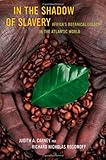
Judith Ann Carney, Richard Nicholas Rosomoff. In the Shadow of Slavery: Africa's Botanical Legacy in the Atlantic World. Berkeley: University of California Press, 2009. xiv + 280 pp. Illustrations. $27.50 (cloth), ISBN 978-0-520-25750-4.
Reviewed by Nicole von Germeten (Oregon State University)
Published on H-LatAm (February, 2012)
Commissioned by Dennis R. Hidalgo (Virginia Tech)
The History of Food in the Black Atlantic
With her book In the Shadow of Slavery: Africa’s Botanical Legacy in the Atlantic World (co-written with Richard Nicholas Rosomoff), Judith Carney makes an important contribution to the study of the history of African agency and Africa’s influence on the most fundamental elements of life in the Americas. A central goal in this work is to highlight the importance of everyday, basic subsistence food as opposed to further emphasis on export crops such as sugar. Secondly, Carney and Rosomoff seek to rectify the normal dismissal of these food crops as trivial or insignificant, as well as the modern vision of an Africa unable to feed itself, dependant on foreign crops or European guidance. Tied to the negation of African agency regarding food is the idea that Africans had little say in what they consumed while enslaved in the Americas. According to Carney and Rosomoff, the idea of the Colombian Exchange, as put forward by Alfred Crosby in 1972, downgrades the African contribution to American foodways.
Carney and Rosomoff provide bountiful evidence to the contrary. (It should be noted that this book draws evidence from a wide range of regions in the African and American continents, and presumably the authors take a shortcut by applying the word “African” to diverse cultures and geographic origins as they make their broader claims, although they are more specific when it comes to their case by case analysis.) To late medieval and early modern European observers, the African coast was bountifully stocked with cattle and a huge variety of grains and vegetables. Africans had domesticated these plants and animals thousands of years earlier. Even before the introduction of Asian rice, Africans had domesticated their own indigenous rice. After the rise of Islam, products such as Asian rice and sugar came to Africa, but Muslim traders also exported African foods, most famously coffee, to the Middle East and Europe. Parts of Islamic Spain depended on African crops, including sorghum, for subsistence.
Despite the prevalence of hunger on board slave ships, Europeans did have to stock up for their journey with thousands of pounds of African foods and livestock (as well as feed for the animals) by negotiating with food sellers in ports and along the coast. In this way, African preferences molded onboard food and Europeans, despite their tastes, could not depend on wheat bread or other familiar non-tropical food staples. During the Middle Passage, African women on board ships prepared African foods using their customary methods. On a smaller scale, Africans advised Europeans to add kola nuts, tamarind, or hibiscus flowers to improve the taste of their stale water and even fight scurvy. Without knowing it, these ships transported seeds and rootstock that flourished in the American tropics, especially in the food given to livestock on board for food. Slave ships carried African foods in the form of small surpluses that might lead to the gradual development of new crops upon arrival in America. Many of these crops took root in the Americas because African staple grains and hardy grasses were tolerant of the hot but arid conditions common in the Caribbean. However, they required African expertise to flourish.
Oftentimes the African role in bringing basic staples to the New World has been de-emphasized by stressing or even inventing non-African origins. For example, Carney and Rosomoff point out that African input led to rice becoming an export crop in Carolina, despite its Asian origins. This erasure of African contributions even goes so far as to omit the African influence on bringing bananas (an African word) and plantains (from the Spanish word for banana) to the Americas. Because the plant originated in Asia, it has been assumed that Polynesians spread this popular food. Instead, Carney and Rosomoff point out that ancient African seafarers used banana stems (necessary to grow new plants) as food on long trips, because they did not rot as quickly as the fruit. The stems fed onboard livestock and provided rootstock upon arrival. When this process was repeated in the Atlantic slave trade, it led to a new high-yielding crop that fed many slaves and eventually entire populations outside Africa, including in the Atlantic islands where the Portuguese grew sugar in the fifteenth century. African stories of food origins also compete with European claims. European intellectual traditions give particular individuals (for example a certain friar or slave trader) credit for bringing key foods to the Americas, while in contrast African oral traditions highlight equally legendary slaves (frequently women) who struggled to establish their own favorite crops in the face of European doubts and opposition.
Carney and Rosomoff argue that the widespread adoption of certain American foods in Africa, most notably manioc, maize, and the peanut, did not occur because Africa lacked better staple foods, but because these foods helped fuel the Atlantic slave trade. Maize was the easiest food to grow and requires virtually no processing, so its domination symbolizes African enslavement. However, some slaves rejected maize, demanding their traditional staples of plantains or yams.
The second half of the book tells the story of African agency in terms of food options in the Americas. Throughout the entire continent, maroon communities created their own subsistence economies, setting up agricultural systems heavily influenced by African practice, but also selecting from useful American crops. As reported by the leaders of European expeditions (who concentrated on destroying these resources), maroons chose to plant rice, manioc, maize, and beans. Rebel slave settlements also raised herds of cattle, sheep, and goats. Evidence for the continuing importance of African foods such as palm oil, yams, and sesame comes from their modern importance in religious ceremonies including candomblé. According to the authors, in areas where the indigenous population declined rapidly, Africans helped preserve traditional American agricultural methods, including the knowledge of natural medicines and herbs.
Outside maroon settlements, the authors point out that European settlers in the Americas often lacked subsistence experience, especially in a tropical environment. In early eras and also later, when export crops were the focus, colonists literally might have starved without African agricultural expertise and initiative. Some European observers noted that Africans provided the seeds to start certain crops, and day-to-day conversations acknowledged this by assigning plants the descriptor “guinea” (p. 103). Africans had a say in choosing their own foods as the system of slave-managed gardens became customary. In this setting, Africans continued their own methods and learned about the most useful indigenous foods and herbal medicines, creating a new subsistence food economy out of bananas, peanuts, yams, rice, manioc, and other staples. Many of these foods are now seen as traditional or regional “memory dishes” throughout the Americas, with the African contribution forgotten. For example, in the United States, we think of “Jamaica” or “tamarindo” as typically Mexican sweet drinks, even though their names suggest their African origins.
This book is easy to read and aimed at a popular audience, as it synthesizes a wide range of secondary sources, although it has useful footnotes, an index, and a bibliography for researchers looking to go further with the topic. It would be perfect for a course on Atlantic history or the history of Africans in the Americas, especially given the superb illustrations. My only complaint is the tendency towards repetition. With plenty of convincing evidence, Carney and Rosomoff give readers an enthusiastic account of the critical role of African agricultural traditions in the Americas.
If there is additional discussion of this review, you may access it through the network, at: https://networks.h-net.org/h-latam.
Citation:
Nicole von Germeten. Review of Carney, Judith Ann; Rosomoff, Richard Nicholas, In the Shadow of Slavery: Africa's Botanical Legacy in the Atlantic World.
H-LatAm, H-Net Reviews.
February, 2012.
URL: http://www.h-net.org/reviews/showrev.php?id=31178
 | This work is licensed under a Creative Commons Attribution-Noncommercial-No Derivative Works 3.0 United States License. |

