



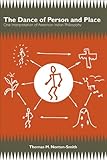
Thomas M. Norton-Smith. The Dance of Person and Place: One Interpretation of American Indian Philosophy. Albany: State University of New York Press, 2010. 164 pp. $60.00 (cloth), ISBN 978-1-4384-3133-8; $19.95 (paper), ISBN 978-1-4384-3132-1.
Reviewed by Jessie Embry (Brigham Young University) and Farina King (University of Wisconsin)
Published on H-Environment (October, 2010)
Commissioned by David T. Benac (Western Michigan University)
American Indian Worldviews
Thomas M. North-Smith, a professor of philosophy at Kent State University-Stark and a Shawnee Indian, wrote The Dance of Person and Place as part of the Living Indigenous Philosophies series published by the SUNY Press and edited by Agnes B. Curry and Anne Waters. Curry and Waters uphold Vine Deloria’s belief that “academic philosophers have long been held out as those who hold keys to the gates of philosophy, the ‘capstone discipline’ of the Western academy.” But the editors argue that the “Western academy” has excluded “traditional indigenous philosophers” except on an informal basis. This series is an attempt to open a dialogue between these groups (p. xii).
Norton-Smith begins his volume by introducing his tribe and clan, and then explains this is “one possible interpretation of American Indian philosophy.” He recognizes that he offers only one interpretation of American Indian philosophy from a distinct bias of a Shawnee educated man. However, since the numerous American Indian tribes in North America differ in their biases and philosophies, Norton-Smith risks misleading his readers that they can understand “American Indian” philosophy in its entirety from his book. The term “American Indian” that Norton-Smith discusses and chooses to use refers to over five hundred tribes, representing many diverse world versions.
Norton-Smith then looks at four “themes ... that seem to recur across American Indian traditions: two world-ordering principles, relatedness and circularity, the expansive conception of persons, and the semantic potency of performance” (p. 1). He contrasts Western philosophy with his American Indian views and explains the impact of this synthesis when American Indians and European Americans interact. This approach raises several questions. Do American Indians have to prove the authenticity of their philosophies to a Western perspective? Do American Indian philosophies have to fit the classical philosophical tradition? Would most American Indians, especially the traditional ones, understand these classical views? What does Norton-Smith think of American Indians today, who are mostly “non-traditional” and now have a new conscience after American conquest and colonization? Some scholars argue that Euro-Americans colonized native peoples in thought, replacing indigenous traditional ways of thinking.
To demonstrate the difference between American Indian and Western philosophy, Norton-Smith describes how he asks his classes of mainly European Americans to make two lists--one of animals and one of people. The students list a variety of animals, but they never include humans in that list. They often portray people in terms of physical characteristics, ethnicity, and language background. Norton-Smith points out, by contrast, “traditional Native list makers ... would include ‘human being’ on the list of animals without a second thought, and, remarkably, would include nonhuman beings on the list of persons” (p. 11). Not all tribes would see man as a subcategory of animal and animals as human. For example, many tribes use animals as their clans and maintain a close relationship with animals. But Navajos describe the places where they come from, such as the region of “Bitter Water,” as their clan names. The uses of the land represent the most important aspect to some tribes, and their relationship to the land and environment stems from how they maneuver it rather than simply relating to nature as equal beings.
Norton-Smith also shows that European Americans focus on chronological time and see the world moving along a straight line. American Indians, however, see a circular pattern in activities where people, animals, and nature all work together in perfect harmony. He uses his backyard bird feeder to explain how American Indians would not view the birds and a squirrel according to the time they arrived but in their relationship. These simple illustrations help Western readers detect the differences in their own and the indigenous worldviews. For some tribes and instances, his synopsis fits appropriately. Certain tribes do characterize their world this way to “successfully convey these values through [the] telling” (p. 50). The Navajo rehearse a prayer that tells them to “walk in beauty” in all they do and at all times and in all places, a world version of balance and harmony in life (as they would explain to maintain the ideal hozho).
Norton-Smith does a good job illustrating how worlds are created through language and how language itself contains philosophy. But he fails to demonstrate the impact [of] “Pan-Indianness” on Native American philosophy and explain how the tribal philosophies have lost their pure meanings over time. He also does not clarify the significance of this current discussion of American Indian philosophy. His thesis and book would have had a stronger effect among a previous generation when many Western scholars did ridicule and overlook American Indian world versions and philosophy. But is that the case today? Scholars are more accepting of the Indian views.
Given these more positive attitudes toward American Indian philosophy, it is not clear who Norton-Smith envisions as his audience. Is he writing for philosophers? Then he probably does not need to elaborate on the background of Nelson Goodman. If he is writing for other scholars, more information on Goodman’s theories would make Norton-Smith’s views easier to follow. On the other hand, philosophers may not be aware of historian Vine Deloria’s views of “relatedness” (p. 10). The argument about relatedness is on the edge of becoming a stereotypical portrayal of American Indians as protectors of nature and earth-lovers who do not harm the land. Other historians, especially William Cronon and Richard White, have shown that American Indians did exploit and manipulate the land for their own purposes.
In addition, the author overemphasizes the point that American Indian philosophy is “internally consistent, equally privileged, well-made actual worlds and so it is worthy of philosophical treatment--and respect--from the Western perspective” (p. 55). He stresses that his book is too controversial because of such a statement (p. 138). Yet, he fails to answer some essential questions. Does the Western perspective today really overlook and disrespect the American Indian world views? Why is it necessary to earn the respect of the Western perspective? It may be a greater endeavor to encourage American Indians to learn and regain a sense of their traditional world views, because they are now mostly of the Western perspective. Norton-Smith concludes with a final apology (p. 139), addressing those who may be offended or disappointed by his work. Could he have done more in his book to address such qualms other than simply apologize? If his book appears irrelevant to American Indians, is there more to do than apologize?
With these concerns in mind, we do believe this book is a good introduction for non-Indian readers who are well versed in philosophical studies to sample some of American Indian world versions and philosophy. Norton-Smith is especially successful in chapter 5 with his model of the American Indian kinship group (p. 92) and in chapter 6 as he explains the semantic potency of performance (p. 95). The focus on “dance of person and place” stands well in his work. Since this is the first book in the series, we wonder who will be the audience for other books. Will the following works help Western and indigenous philosophers communicate? Will they focus on American Indians or Western philosophers and ideas? We look forward to reading the series and finding out.
If there is additional discussion of this review, you may access it through the network, at: https://networks.h-net.org/h-environment.
Citation:
Jessie Embry and Farina King. Review of Norton-Smith, Thomas M., The Dance of Person and Place: One Interpretation of American Indian Philosophy.
H-Environment, H-Net Reviews.
October, 2010.
URL: http://www.h-net.org/reviews/showrev.php?id=30974
 | This work is licensed under a Creative Commons Attribution-Noncommercial-No Derivative Works 3.0 United States License. |

