



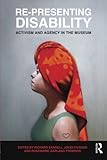
Richard Sandell, Jocelyn Dodd, Rosemarie Garland-Thompson, eds. Re-Presenting Disability: Activism and Agency in the Museum. New York: Routledge, 2010. 304 pp. $125.00 (cloth), ISBN 978-0-415-49471-7; $42.95 (paper), ISBN 978-0-415-49473-1.
Reviewed by Pat Reynolds (Surrey History Centre)
Published on H-Disability (May, 2012)
Commissioned by Iain C. Hutchison (University of Glasgow)
Manifest and Manifesting: Museums and Me
This is a stimulating collection of essays looking at the intersection of the cultures and practices of museums, and the cultures and practices of disability. The focus of all papers is the lived experiences of disabled people. Among the many strengths of the collection is its breadth: at least one paper from each continent; a balance of museum practitioners and disability studies and museum studies scholars, plus an artist; and disabilities manifesting themselves in many ways.
Many make reference to the international nature of the audiences, as at World Heritage Sites. Elizabeth Mariko Murray and Sarah Helaine Jacobs’s paper, “Revealing Moments: Representations of Disability and Sexuality,” gives a thoughtful account of different attitudes of disability activists in the United Kingdom and United States, which were not fully appreciated by a museum bringing a touring exhibition from the former to the latter.
The papers cover museums of many types. The differences between them are highlighted in Chia-Li Chen’s “Disability, Human Rights and the Public Gaze: The Losheng Story Museum” (comparing a voluntary-run independent museum to a major public art gallery); in Hanna Mellemsether’s “A Museum for All? The Norwegian Museum of Deaf History and Culture” (comparing a voluntary-run independent museum (VIM) to a local-authority-run open-air museum encompassing a national museum); and by Kathryn Church, Melanie Panitch, Catherine Frazee, and Phaedra Livingstone in “'Out from Under': A Brief History of Everything,” all of which chart the changes needed as an exhibition moved venues from classroom to national museum). However, the balance of sites feels uneven. There seems to be an over-emphasis on “museums of conscience” (including Holocaust memorial museums), and remarkably few on the locality museums, such as the Museum of Croydon which is the subject of Helen Graham’s “To Label the Label? 'Learning Disability' and Exhibiting 'Critical Proximity.'” However, the Museum of Croydon takes a bricolage, rather than narrative, approach to the locality, and this is atypical of locality museums--few papers address the invisibility of disability within more traditionally interpreted locality collections, which are covered in Victoria Phiri’s paper “See No Evil,” which looks at national museums in Zambia.
My experience is that for many people with disabilities, pain, poverty, and other parts of their disability mean that the museums and heritage sites we visit tend to be those that are within easy reach of our homes. The nearest, physically, may be smaller institutions which may have less access to funding for the hardware of ramps and accessible toilets than large ones. However, the closer personal relationships between visitors, staff, and management means that attitudes and accommodations may be much more forthcoming. I wish that there had been an opportunity to include a full study of “5 Ways to Hartheim,” a small exhibition demonstrating the barriers and difficulties encountered by five individuals as they attempted to get from Linz (Germany) to Hartheim Castle, which was an inspiration point for work in the Holocaust Memorial Museum in Washington DC in 2006 (mentioned in Shari Rosenstein Werb and Tari Hartman Squire’s paper, “Transforming Practice: Disability Perspectives and the Museum”), and to draw out some of the perspectives and issues that follow from this observation.
Some of the approaches seem a little naive when it comes to museum politics. For example, a number of papers make the point that museums often have their origins or development in political action--building the image of the nation or region--and argue that museums today should embrace activism, too, but do not acknowledge that those nineteenth-century institutions were being funded from a locus of power that wanted that political action, whereas disability activists tend not to be in a position to set budgets or endow museums. Another example is the model presented by Heather Hollins in her paper “Reciprocity, Accountability, Empowerment: Emancipatory Principles and Practices in the Museum,” where museum management is seen as the highest power-base in the museum, a position which most museum directors can only fantasize about.
One of the downsides of focusing on activism is that the museums, histories, and individuals considered are largely those of the twentieth or twenty-first century. The exceptions are David Hevey’s paper “Behind the Shadow of Merrick” and Rosemarie Garland-Thomson’s “Picturing People with Disabilities: Classical Portraiture as Reconstructive Narrative.” It is perhaps significant that neither Hevey (a filmmaker and photographer) nor Garland-Thompson (a professor of women’s studies) is museum staff or an academic historian. Including more studies taking a longer view also would have balanced the focus on the individual actor. Archaeological perspectives, which tend to work with groups and societies rather than individuals, could also have enabled more examples where disability is not the focus of an exhibition, but not excluded from it.
Many of the papers are about temporary exhibitions (or a single lecture or art intervention). It is somewhat disturbing to find in the twenty-first century that so many examples are about such first steps with activism. The honesty and clarity with which museum practitioners are charting their own, and their institutions’, development makes this an important book, but I long for the next chapter. For example, Joanna Besley and Carol Low's “Hurting and Healing: Reflections on Representing Experiences of Mental Illness in Museums” anticipated that the visitors to an exhibition about life in a Queensland (Australia) mental hospital would be emotionally engaged, and at first it was planned that it would be continuously staffed so that support was available to people. When this proved unsustainable, a “chill out” room, domestic in feel, was provided, to give audience members a “living room” to move to where they could find contemporary, practical materials about mental health issues. Murray and Jacobs are not alone in not mentioning financial or intellectual access to an exhibition. Similarly, in “The Red Wheelchair in the White Snow,” Geraldine Chimirri-Russell, in a case study on the first exhibition at the Nickle Arts Museum, University of Calgary (Canada), to display “both the artist and his work,” and also the first exhibition of the works of a disabled artist (Everett Soop), notes that “emotional trauma” can be debilitating, but does not explain how visitors who had such traumas reacted to the exhibition, and what the museum had done that facilitated--or hindered--their visit. The museum had previously--as many do--seen access in terms of providing physical access to exhibit spaces and accessible toilets. The author concludes that the process of exhibiting Soop’s work and life had led to realization that the institution’s self-satisfaction had been rocked.
Dodd et al. note in their paper “Disability Reframed: Challenging Visitor Perceptions” that while such projects--manifesting the marginalized--are part of a global trend, audience reactions to them are rarely studied. While audiences are a focus of many of the papers, they tend to be viewed as homogenous, or the paper is concerned with a particular section of the visiting public with disabilities. It was not the purpose, or need, of this collection to be an examination of how to make museums, exhibitions, and other programming accessible--there is a literature dating back to the early twentieth century, although that does seem to have escaped Hollins, who sees it all as being in recent years.
However, it is noteworthy that the presence of people with disabilities in audiences often passes unremarked: for example, the audience for the exhibition about a mental health hospital curated by Besley and Low “was aimed not solely at professionals with a specialist interest in the subject matter--lawyers, doctors or government officials--but at the wider community” (p. 133), yet the authors' description of the practices they carried out makes it clear that former patients and others with mental health issues were seen as an important audience segment. There is an assumption that the museum is a space where activists can address non-disabled people: a safe, supportive, neutral space where dialogues can begin, or be continued; where consciousness can be raised. There is remarkably little about museums as spaces which can be appropriated by activists, and used to build communities of disabled people, not on the occasion of a special exhibition or one-off event, but every day.
The book is organized into three sections, which provides coherence. The first, “New Ways of Seeing,” introduces some current theoretical perspectives. The second, “Interpretive Journeys and Experiments,” is a series of case studies where authors reflect on their experience of exhibiting disability, with a particular focus on interpretation. The final section, “Unsettling Practices,” is also a series of case studies, with more disparate themes.
The opening paper, “Activist Practice” by Richard Sandell and Jocelyn Dodd, is an exploration of the rise of activist practice in museums: that is, action “intended to construct and illicit support amongst audiences (and other constituencies) for alternative, progressive ways of thinking about disability” (p. 3). This is well paired with the second essay. In “Picturing People with Disabilities,” Rosemarie Garland-Thomson presents a teaching essay providing supportive access to art theory. The third paper, Lian Hart’s “Agents at Angkor,” is less convincing: the author concludes that academic studies of Cambodia should pay more attention to marginalized groups in order that their capacity to “interpret the past and author the future” is better understood (p. 51). This seems rather at odds with the first two papers, which stress the potential of activism, and of academia, to play from their own strengths.
“Agents at Anchor” and the following papers in this section place museum settings as ones that both work with the desires of activists for social change, and support images and narratives of the culture which are the very targets for change. Victoria Phiri’s paper “See No Evil” considers, in particular, two aspects of this: the challenges behind making people who are very evident in the landscape of Zambia equally manifest within the museum, and the challenge museums take on when they conceptualize themselves as institutions for and of objects (rather than for and of society, or for and of a group of individuals). In “Ghosts in the War Museum,” Ana Carden-Coyne uses the construct of “dark tourism” to explore the functioning of war museums. Using the this perspective, war museums can be seen to provide “ways to confront death,” (p. 64) and that if this is the case, then their service is enhanced if disablement--including mental illness--is in conflict with ideas of heroism and national duty. Carden-Coyne, like Hart, considers the Land Mine Museum at Angkor, but comes to a much stronger conclusion: that lack of social inclusion practice at the museum weakens its ability to speak with authority.
The section concludes with “Disability Reframed: Challenging Visitor Perceptions in the Museum” (Jocelyn Dodd, Ceri Jones, Debbie Jolly, and Richard Sandell), an exploration of a large, multipartner project in the United Kingdom where museums and galleries worked with people with disabilities to explore methodologies for supporting audiences in new ways of “understanding, thinking and talking about disability” (p. 92). Using a simple response card, suitable for use in a variety of settings, with a variety of exhibits audiences, they were asked, “How does this display change the way you think about disability?” The authors note that, as with earlier studies, there are “negative” responses (i.e., ones where the answer is “nothing has changed, for me”). They also note “contradictory” responses (ones where the visitor feels that the exhibition would change other people, but not them). The authors suggest contradictory responses are prompted by “benevolent prejudice.” Since it can be assumed that many of the audience had an interest in disability from personal, family, friends’, or work experience, might it not be that they had already assimilated the messages in the exhibition, or have been aware of prejudices in others--and the significant change in their thinking was not about people with disabilities, but about their thinking of museums as agencies of social change? The need to explore “benevolent prejudice” responses in more depth, to understand why many visitors did not answer the question, but instead “felt able to discuss and respond to the issues that they themselves had found important” (p. 97), is illustrative of the potential for exciting further audience research, which this paper, and others in the book, highlights.
Phiri’s thoughts about manifestation and object primacy are considered in more detail in the following section, where the “labeling” of objects to utilize them for activist or other purposes is considered. Hevey’s observation that previous interpretations of Merrick did not include those of disabled people is also taken forward by Dodd et al. who note in their paper that while museums rarely present narratives in which disability features, other media do--usually employing negative stereotypes. Perhaps as a result of that, they observe that the use of “real voices” was felt to be powerful, and valued, by many visitors. While attempting to avoid “condemning” visitors for using the “wrong” language, they nevertheless explore the language used by visitors, relating them to stereotypes such as victimhood and heroism. They found that visitors found it very difficult to deal with the dual concepts of “‘difference’ and an assertive political identity for disabled people, with the notion that disabled people are the ‘same’ as non-disabled people and equally deserving of rights” (p. 110).
In “To Label the Label? ‘Learning Disability’ and Exhibiting ‘Critical Proximity,’” Helen Graham takes as her starting point two objects on permanent display in the Museum of Croydon (United Kingdom) and their labels: one narrative makes explicit reference to the disability of the person choosing to display the object, the other does not. This exemplifies concern over labels--no longer seen as safely “descriptive,” but as “productive,” and part of displays which do not have a grand narrative (such as the “history of this place” typical for locality-focused museums). Labels (such as “disabled” ) are of special concern to those with disabilities as they are associated with classification and identity. The association of people with labels from which they took pains to disassociate themselves, or which would have had no meaning for them, is a further concern for those responsible for labeling in museums who wish identity to be “findable.” Graham argues this concern is rooted in Bruno Latour’s observation that categories are used with explicatory power: the example of a certificate of achievement in literacy, where “learning difficulties are not simply the meta-explanation of ‘finding it hard to read’, but rather segregation and discrimination are also evoked as ‘explanations’” (p. 121). Labels, to use Latour’s term, “stabilize” the categories. In contrast, with the example of theatre programs gathered in the course of employment, the labeling explores the history of the site and some complex issues in the account of the donor without using a disability label. Graham points out that the donor’s account does, however, point to difference.
Labels are discussed further by Julie Anderson and Lisa O’Sullivan in their article, “Histories of Disability and Medicine: Reconciling Historical Narratives and Contemporary Values.” Discussing labels which have changed their meaning, they note that people with disability have identified in the past using such words, in preference to others (e.g., “cripple” over “orthopaedic” ), and imply that museums should address this subject, rather than avoid it.
Graham argues for an approach, which by “neither treating individual people’s words as the locus of pure authenticity nor jumping to meta-explanation which erases specifity” removes the distance between museums and the people and events they (re)present (p. 117). In the theatre program example, starting with the specifics of an incident and “moving outwards to consider the political contexts which make a specific experience possible” would involve developing the questioning of the donor (p. 124). This methodology would mean taking care to use only the terms people use to describe their own lives, and to follow the “specific concerns of specific people” to “trace ... and represent” the networks between the specific incident and the wider political contexts.
Elizabeth Mariko Murray and Sarah Helaine Jacob’s piece, “Revealing Moments: Representations of Disability and Sexuality,” is one of the strongest in the collection, and warrants a review of its own. Although a case study--of an exhibition of photographs by Belinda Mason drawn from her series “Intimate Encounters: Disability and Sexuality,” presented at the Museum of Sex, New York (United States)--the issues covered in this article touch upon, and illuminate, those in others, in addition to providing one of a number of practitioner accounts and reflections on institutional history. The authors admit that the subject matter facilitated the avoidance of “medicalised discourses and narratives associated with the telling of more familiar ‘disabled tales’” (p. 159). However, it also made it difficult for the exhibition to find a North American venue as state and federally funded institutions can find it difficult to mention sexuality, and the sexuality of disabled people is still an occasion for surprise. However, for an independent museum, the question is whether the exhibition would attract enough paying customers. The material culture of disability presented was extremely limited--a Braille Playboy being the only object in the exhibition, but at the center of a powerful narrative about human rights. The author’s discussion of the museum’s failure to engage with disabled people in the planning stages is particularly important. Essentially the issue is one of cost; the institution does not have the funding to pay people to become involved professionally, and is reluctant to invite people in as volunteers because heritage professionals are aware that they are requesting a professional service and that those they would be asking to volunteer make their living from providing those services.
The third section contains a number of important case studies. The first, “‘Out from Under’: A Brief History of Everything,” is a collaborative paper by Kathryn Church, Melanie Panitch, Catherine Frazee, and Phaedra Livingstone that describes the creation of “Out from Under: Disability, History and Things to Remember,” an exhibit at the School of Disability Studies at the Keyerson University, Toronto (Canada) that later transferred to the Royal Ontario Museum (ROM). The exhibition was “activist in its content and orientation alike” and was created at the request of a local disability arts festival (p. 198). The stages of the exhibition creation were quite unlike those of a typical museum so are worth summarizing here. First, students undertook a special topics course, “Exhibiting Activist Disability History.” This limited access to finances, display, and historical materials, and limited the transfer of skills and learning from the student-curators to the museum. It did, however, provide them with a “buffer” from “political sensitivities surrounding disability” and from institutional practices (p. 199). It also meant that, rather than having a carefully structured referent group of community representatives, the curators were self-selected from the student body (many of whom also had worked in disability-related jobs), and grew to encompass others: alumni and other scholars who self-selected, and leaders of the disability movement who were invited. The exhibits were objects which the group members each contributed as being significant to disability history: the process of exhibit acquisition became an important part of the exhibition narrative. It was acknowledged that this method could produce an exhibition which, while rooted in the particular, failed to move to the general, could not be comprehensive, and perhaps would be elitist. On the other hand, there would be no attempt to “reflect or illustrate a pre-existing or pre-authorised history” (p. 201). A professional designer was brought in to transform the student project to the “top quality production” that the subject matter warrants.
The transfer to the museum was characterized by negotiation, with the issues covered being very revealing--for example, the exhibition was initially to be downsized, but the ROM came to understand that this would not only have implications for physical access, but in other ways fail to achieve their vision of the museum as “open” and would perpetuate the “second class” nature of service that the exhibitors had struggled hard to overcome. Great care was taken to provide an exhibit with accessibility considered in every aspect, from replicas of the objects for those wanting to access through touch, to easy-to-handle canapés. However, in practice, many of these alternative formats were not--or could not--be available to visitors all the time. The selection and training of volunteer staff had been overlooked. Visitors' familiarity with digital technology, and access to their own equipment, also proved to be overstated. This, however, did not detract from the accomplishment of the exhibition: “our presence was unmistakably consequential” (p. 211).
Chia-Li Chen’s paper, “Disability, Human Rights and the Public Gaze: The Losheng Story Museum,” is another paper that is a rich and powerful exploration of many of the recurrent themes of the volume. Chen’s paper, like the preceding paper by Church et al., is about changing perspectives. She compares The Losheng Story Museum (Taiwan) with a photographic exhibition displayed in at the Taipei Fine Arts Museum (Taiwan), both interpreting the Losheng Sanatorium, which treated people with leprosy (Hansen’s disease) in the mid-twentieth century, and which closed in the early 2000s. The sanatorium was to be demolished to provide space for the Mass Rapid Transport (MRT) maintenance depot. A Losheng Preservation Association was founded in 2002 with a wide spread of stakeholder/members. The early twenty-first century saw growing legal action to both protect and assert the rights of the residents. Advocates of the MRT depot positioned the struggle as one for the individual rights of residents against the rights of the millions who would benefit from the depot.
The Losheng Story Museum was created by students of the “Making Museum” group, who recognized the need to preserve artifacts, documents, and histories. Collecting was undertaken through “treasure hunts” and oral history recording, with visitors to the site participating. The displays in the permanent galleries are, as one would expect for an institution run by students and long-term hospital patients, without external funding, dependent on hand-me-down cases lit by household lights; the interpretation is handwritten. Volunteer-run institutions can work with people with disabilities far more easily than those with salaried staff, but which do not (as Murray and Jacobs illustrate) have the funding to employ people with disabilities as consultants: the inequality is removed.
The contrast between the two interpretations is great: where “A Moment in Time” concentrated on bodily difference, in an aesthetic setting, the Losheng Story Museum is centered on objects and the residents’ narratives. The audiences, too, are different: the photographic exhibition is arguably fungible with any other art exhibition; the Losheng Story Museum is largely viewed by people who are already concerned about the Losheng residents. Some residents feel that there is too much attention directed at things--buildings and objects--and not enough attention directed at people. However Cheng argues that the museum is aiming not to create a historic site, but to “create a public space for unmediated exchange and communication between the residents and the public” (p. 254).
In 2008, the Taiwanese government decided that part of the site would be a “Human Rights Park,” and part a “Museum of Medicine”: no provision was made for the Losheng Story Museum. Anderson and O’Sullivan observe that histories of medicine are often criticized for their treatment of the subject of disability, but suggest that histories of medicine which “are sensitive to power dynamics and inequalities” might still be presented, given the medical nature of much of the material culture of disability (p. 147). Its importance in the lives of disabled people is discussed and feminist critiques might be used as a model, and multiple voices used to counter the museum authorial voice.
How that transformation might play out is presented in the following case study, Hanna Mellemsether’s article, “A Museum for All? The Norwegian Museum of Deaf History and Culture.” The first incarnation of the Norwegian Museum of Deaf History (NDM) was also a collection of material culture made by “enthusiastic and dedicated people” (p. 260). It is a weakness of this piece that this group is not named, and the author seems to have been part of it, but I am unclear when she says “we” and “the museum” and “museum staff” whether she refers to this group, or some other collective, such as the staff of the Trøndelag Folk Museum (Trondheim, Norway). The collection mostly came from an old school for the deaf, which also provided the two exhibit rooms. The impulse to collect and to document lives was due to the very movement away from segregated deaf schools in the 1990s, which saw the closure of the Trondheim Deaf School among others. The group realized that it could not continue on the original basis and transferred its collections to the Trøndelag Folk Museum in 2007, which opened the NDM in 2009 as a branch museum.
The NDM focuses, not on deafness, but on the Deaf world--i.e., users of Norsk Tegnspråk (Norwegian Sign Language, NTS), some of whom are Deaf, but not all. Mellemsether notes that this, compared to hearing communities, is trans-local and indeed global. The cultural approach is used to both make the presence of the Deaf world manifest, and to explore issues of importance to those communities. The exhibition thus works to provoke reflection on sexuality, class, disability, and other areas of diversity. It also drew the Trøndelag Folk Museum into a new area of practice: providing space for activists and pressure groups to present their case. Reflecting that the museum had been founded with a progressive agenda (fostering regional and national identity), it did not seem too great a stretch. The original museum had presented a picture of a homogenous, strong, independent society, but over the last decade had developed a number of outreach projects and exhibitions which challenged this. The question left unsaid, and unanswered, is, does the museum now deconstruct its collection of buildings and make the diversity of Trondheim throughout time manifest?
Museums as spaces to confront, if not resolve, complex issues such as the paintings of post-operative patients with facial disfigurement described by Emma Chambers in her article “Face to Face: Representing Facial Disfigurement in a Museum Context.” She argues that “public and press responses to the “Saving Faces” exhibition were overwhelmingly positive” because the audiences understood the willing participation of the sitters: thus the visitor engages in “consensual looking.” As is done in many of the papers, the museum exhibition is compared with a freak show: few papers (and this is not one of them) note that the freak show is “consensual looking.” However, one has to question Chambers’s definition of “positive” when the one comment by a non-disabled visitor quoted clearly perceived the sitters as victims, and others described the sitters are heroes. She acknowledges that the reactions from visitors with disabilities were more varied, with criticism in particular for the labeling, which was medical, rather than biographical or art-historical in perspective. Reviewers were reluctant to treat the works as art, but the comments in the visitor books showed that many engaged aesthetically with the exhibition.
It is unfortunate that the final paper is not stronger. In “Collective Bodies: What Museums Do for Disability Studies,” Katherine Ott argues that museums are closer, in methods and results, to activists than universities are and suggests, therefore, that scholars should adopt museum methodologies and principles. But what privileges museum learning for disability studies? Ott argues that it is because disability is grounded in relationships, including relationships with material culture, or mediated through material culture--I take this to mean that objects should be studied by students of disability, not because of what they offer in opposition to text, but because of their importance as a component of disability. Curiously, Ott does not seem to be aware that “reading” the physical world is already part of the curriculum--and examination--in many fields, including biology and archaeology. It is perhaps indicative that museums do have more to do for disability studies and that while there are a great many beautifully reproduced illustrations, remarkably few show museums.
Presenting Disability: Activism and Agency in the Museum is, in sum, a provocative collection of essays. It both reflects and challenges the contemporary relationship between the museum and the activists and other people with which it interacts. It would have been excellent if there had been just one more paper, manifesting the museum as an inclusive (or exclusive) workplace for salaried and volunteer staff; perhaps the concluding chapter would be the proper place for that.
If there is additional discussion of this review, you may access it through the network, at: https://networks.h-net.org/h-disability.
Citation:
Pat Reynolds. Review of Sandell, Richard; Dodd, Jocelyn; Garland-Thompson, Rosemarie, eds., Re-Presenting Disability: Activism and Agency in the Museum.
H-Disability, H-Net Reviews.
May, 2012.
URL: http://www.h-net.org/reviews/showrev.php?id=30962
 | This work is licensed under a Creative Commons Attribution-Noncommercial-No Derivative Works 3.0 United States License. |

