



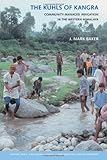
J. Mark Baker. The Kuhls of Kangra: Community-Managed Irrigation in the Western Himalaya. Culture, Place, and Nature Series. Seattle: University of Washington Press, 2007. 271 pp. $22.50 (paper), ISBN 978-0-295-98764-4.
Reviewed by Christopher V. Hill
Published on H-Asia (September, 2011)
Commissioned by Sumit Guha (The University of Texas at Austin)
Adaptation and Irrigation in the Himalaya: The Kuhls of Kangra
J. Mark Baker has set out to write an expansive study of the irrigation networks in the district of Kangra, located in the foothills of the Himalaya. The district is divided by a vast number of irrigation canals, known as kuhls. By examining the evolution of irrigation from precolonial times to the present, Baker believes we can understand the dynamics of agriculture in Kangra and beyond. He largely succeeds (to borrow from one of the author’s metaphors) in weaving the social tapestry of the region to its environmental peculiarities.
Baker suggests that there are four strands that help explain the transformation of both agriculture and society within Kangra. His first point centers on local-level social and ecological processes that affect intra-regional relationships. The second strand concerns exchange and control between separate communities--this would include running a joint marketplace, or, most noticeably, a social obligation to assist those whose canals were damaged or ruined. The third aspect focuses on the relationship between the irrigators and state agencies, who often try to intervene in the name of “progress.” The final strand emphasizes regionality as a catalyst for action against would-be invaders throughout time.
Within the confines of these factors, Baker hopes to answer the following question: “How do kuhl regimes persist in Kangra Valley despite recurring, destructive environmental disturbances and unprecedented rates of regional and socioeconomic change?” (p. 20). Rational choice, Baker argues, is of critical importance, for it engages all social and economic levels of village society. Water is expected to be shared in times of drought and destruction. As Baker demonstrates in the second strand, this requires social networks that transcend caste and class. In theory, the water controller at the very top of the network has no reason to share his water with those down below, since the less fortunate have nothing to offer him in return. The fact that the upstream landlord will share his water in times of distress is testimony to the importance of tradition and social networking.
The intervention of the state has affected Kangra greatly. Under colonial rule, the emphasis was on “progress,” based on Western concepts of engineering and farming. In tandem with reorganization, the British introduced a moneyed economy, which was new to the district. As Baker notes, “In Kangra, state systems and the processes related to statemaking are related to the persistence of kuhl regimes” (p. 29). In terms of regionality (the fourth point), Baker asks one overarching question: “To what extent do kuhl regimes embody and reproduce the social relations that compose the Kangra region?” (p. 12). In other words, Baker’s underlying contention is that were it not for a sense of place, we might never see the type of coordination and volunteerism we find in the region during times of trouble.
Baker then takes us on a tour of the kuhls of Kangra. He underlines the fact that “at the watershed level the pattern of multivillage kuhls and multi-kuhl villages creates a network of interdependence between upstream and downstream kuhl regimes” (pp. 67-68). To keep relations running smoothly, most water systems had a kohli, whose duties included managing the kuhl, arranging for repair teams, conducting religious rituals, and resolving conflicts. The kohli was a hereditary position, and usually belonged to a village notable. In return, the kohli received a portion of the region’s rice crops, as well as signs of deference and respect.
In what I see as the strongest portion of this book, Baker looks at the transformation of the kuhl networks from precolonial times to the present. Traditional irrigation involving the kuhls, while not perfect, seemed to function smoothly, up until state intervention. As Baker astutely notes, “state involvement in common property resource regimes produces specific types of communities and particular institutional structures and expressions of state power and authority” (p. 97). One generic aspect of state intervention was the arrival of numerous moneylenders. Soon peasants were losing their land to foreclosure, with no way out for the tiller of the soil. Rather than settling land disputes through arbitration, which had been the custom, peasants were forced into courtrooms, of which they had little knowledge, and small chance of getting back their land. Baker notes the changes the colonial administration established, all of which modified kuhl communities profoundly: “Land settlements, codification of irrigation rights, establishment of judicial arenas for conflict resolution, imposition of state authority to distribute water during periods of drought, and mobilization of state resources to help repair kuhls destroyed by floods or earthquakes” (p. 134).
Baker concludes by looking at the advantages and disadvantages that government intervention has wrought. On the one hand, there has been a rise of readily available consumer goods within the district. On the other hand, rising unemployment and disenfranchisement from the land has led many peasants to forsake repairs and maintenance of irrigation works. Consequently, many of the canals are in poor shape indeed.
Baker has written a fascinating study of one group of villagers increasingly having to cope with outside forces. While the book drags a little in the middle chapters, this work belongs on the shelf of recommended reading for anyone interested in the environmental and social history of South Asia.
If there is additional discussion of this review, you may access it through the network, at: https://networks.h-net.org/h-asia.
Citation:
Christopher V. Hill. Review of Baker, J. Mark, The Kuhls of Kangra: Community-Managed Irrigation in the Western Himalaya.
H-Asia, H-Net Reviews.
September, 2011.
URL: http://www.h-net.org/reviews/showrev.php?id=30863
 | This work is licensed under a Creative Commons Attribution-Noncommercial-No Derivative Works 3.0 United States License. |

