



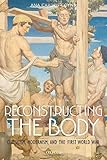
Ana Carden-Coyne. Reconstructing the Body: Classicism, Modernism, and the First World War. Oxford: Oxford University Press, 2009. xiii + 344 pp. $120.00 (cloth), ISBN 978-0-19-954646-6.
Reviewed by Emma Reilly (University of Strathclyde)
Published on H-Disability (November, 2010)
Commissioned by Iain C. Hutchison (University of Glasgow)
Rebuilding Bodies, Rebuilding Lives: Reconstructing the Western Male after the First World War
The First World War has long been a subject of fascination for historians, and many useful books that explore its aftermath and impact have been published. Cultural historians such as Joanna Bourke and more recently Michael Roper have produced interesting accounts of the First World War.[1] This book by Ana Carden-Coyne is also a cultural study. However, it focuses on cultural representations of reconstruction in the period following the First World War.
The first part of the book explores the nature of classicism. It argues that classicism was a powerful tool that shaped conceptions of reconstruction in the aftermath of war. Its functions included the promotion of universal values for nations previously divided by conflict, the re-imagination of the body in memorials and memory, and the representation of the rehabilitated body through medical expertise and cultural forms such as art, film, and literature. The second chapter, “Culture Shock,” focuses on the reactions of ex-servicemen to their war experience and the ways that they responded to disabling physical and emotional experiences. In narrating their suffering, ex-servicemen endeavored to heal as well as to express the nature of their suffering. In the wider cultural sphere, film, art, and literature publicly expressed the pain, suffering, and trauma that the men had witnessed on the battlefield. In addition, doctors contributed to this visualization of the wounded body through the publication of books and photography. The next chapter moves from narrating the disabled body to what Carden-Coyne refers to as the “healing aesthetic,” which is memorializing the damaged body using classical art forms, in this case war monuments, as whole. She argues that in using classical forms, architects and sculptors attempted to reduce the remembered horror of the war into an image of renewal through the beauty of the classical form. She points out that while classical beauty was expressed in monuments, disabled veterans continued to struggle to recover from their war experiences.
The focus of the book moves away from the theoretical and material to focus more on corporeality and sexuality, which is an area that will probably interest historians of medicine. The chapter “The Sexual Reconstruction of Men” examines the nature of rebuilding men through the interrelationships of medical knowledge and military experience. This, argues Carden-Coyne, improved man’s confidence in the expression of his sexuality. The establishment of a consumerist body culture with its emphasis on classical styles, together with new ways of showing the male body through public display and photography, ensured that men were provided with new ways to rebuild their sense of masculinity. These pervasive images affected all men, not just those who had served on the front lines. Additionally, women were not exempt from the reconstruction agenda. In the next chapter, Carden-Coyne focuses on women’s beauty and argues that this was also commercialized. She explores the tensions between the challenges to the strict demarcation of gender, and the image of the “perfect woman” who embodied combinations of attractiveness, independence, and social acceptance. In addition, modern conceptions of the female form, particularly that of slimness, added to the complexity of gendered and sexualized bodies. Carden-Coyne explores this further through investigation of the role of classical revival dance in the reconstruction process after the war. Overall, people reconstructed their lives after the war in a number of ways, including the pursuit of bodily pleasure, the rehabilitation of bodies and minds, and the creation of collective memories and memorials. Although the book argues that classicism was a motivating force behind much of the cultural reconstruction after the First World War, Carden-Coyne notes that it was controversial and its message was rejected.
The book is a very ambitious project, and asks a lot of the reader. To combine artistic movements and concepts such as classicism and modernism with disability, memorialization, death, medicine, sexuality, gender, consumerism, and reconstruction is a difficult task. However, it does bring these themes together well and is a valuable contribution to the cultural history of modern war.
The text is accompanied by a number of images that illustrate classical styles, particularly of war memorials.
Note
[1]. J. Bourke, Dismembering the Male: Men's Bodies, Britain and the Great War (London: Reaktion, 1996); and M. Roper, The Secret Battle:Emotional Survival in the Great War (Manchester: Manchester University Press, 2009).
.
If there is additional discussion of this review, you may access it through the network, at: https://networks.h-net.org/h-disability.
Citation:
Emma Reilly. Review of Carden-Coyne, Ana, Reconstructing the Body: Classicism, Modernism, and the First World War.
H-Disability, H-Net Reviews.
November, 2010.
URL: http://www.h-net.org/reviews/showrev.php?id=30323
 | This work is licensed under a Creative Commons Attribution-Noncommercial-No Derivative Works 3.0 United States License. |

