

Christopher Payne. Asylum: Inside the Closed World of State Mental Hospitals. Cambridge: MIT Press, 2009. 209 pp. $45.00 (cloth), ISBN 978-0-262-01349-9.
Reviewed by Beth R. Handler (University of Louisiana)
Published on H-Disability (September, 2010)
Commissioned by Iain C. Hutchison (University of Glasgow)
The Rise and Fall of the American Asylum: A Life History in Pictures and Text
When most of us think about mental illness and the lives of those challenged by it, we tend to create mental images of degradation, impoverishment, unhappiness, frenzy, or chaos. Concepts such as peace, beauty, tranquility, contentment, and happiness do not tend to surface in contemporary discussions of the lives of people living with mental illness. Similarly, the word “asylum” is more often associated with its negative than positive connotations. Such views focus only on the latter-day shortcomings of such residential facilities without acknowledgement of their original intent and functions. From a historical perspective, this limited and compressed view is myopic and fails to consider not only the complete evolution of institutional care but also that of societal constructions of deviance, mental illness, and disability. While many texts reinforce this shortsighted view through compression of American asylum history into a single-chapter story, Asylums: Inside the Closed World of State Mental Hospitals by Christopher Payne does not.
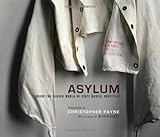
Upon first glance, Asylums: Inside the Closed World of State Mental Hospitals, with its photograph of a straightjacket on the cover, appears to be a coffee-table book on an intriguing, if not potentially macabre subject. A flip through the pages reveals beautiful pictures of buildings in various states of repair, medical equipment, kitchens, clothing, and landscapes. Christopher Payne’s skill as photographer is immediately apparent. What is not immediately apparent in such a cursory review of this artistic work is the beautiful and unique historiography of the American asylum that those images cumulatively create. To truly appreciate the story pictorially represented between the covers, one must give a focused and attentive read to the introductory essay by Oliver Sacks and the text by Christopher Payne, then carefully review the photographs again. Such careful reading of both text and image reveals not only an unexpectedly ample history of the rise and demise of state hospitals, but a snapshot of the changes in the societal construction and response to mental illness and developmental disabilities associated with institutional creation and demolition. The book covers approximately one hundred years of American asylum history.
Christopher Payne’s book occupies a unique space in the literature of American asylum history. The story of the American asylum has been told in narratives and pictorial histories with varying levels of scholarship. Some works focus on critique of institutional responses to deviance while others attempt to provide a historiography through words or pictures. A number of works have focused on individual institutions, some of which offer pictorial support for the histories presented. Works like The Architecture of Madness: Insane Asylums in the United States by Carla Yanni (2007) use photographic and pictorial imagery to frame discussions or critiques of therapeutic designs or medical treatments employed in these institutions. These works frequently focus on the state hospital as a medical treatment facility and, typically, reinforce the construction of disability as something in need of cure. Christopher Payne’s work distinguishes itself from these previous works through its unique approach to historiography and in its breadth and organization. Coupled with the textual content provided by both Oliver Sacks and Christopher Payne, the photos offer a surprisingly complete illustrated history of the birth, life, and death of state mental hospitals in America.
Beginning with an essay by noted psychologist Oliver Sacks, the book immediately takes a qualitatively different approach to the historical discussion of life in an asylum and what state hospitals for the insane offered to their residents. Oliver Sacks opens his essay with the voice of Anna Agnew, an inmate of the Indiana Hospital for the Insane, recounting her feelings of “contentment” at being surrounded by others who were “in like bewildered, discontented mental states” and of the way she felt comfort, protection, and safety in what she described as a place run like a “well-regulated family” (p. 1). Oliver Sacks immediately redirects the reader’s concept of state hospitals for the insane away from contemporary views and back to an earlier conceptualization of asylum as place of refuge and a sanatorium as a place of peaceful pursuits. His narrative offers an accurate and vivid description of institutional care in the age of paternalistic construction of disabilities, when the protective responsibility of the state for the care of individuals with mental and developmental disabilities drove the management of and functions within institutions. He is careful, however, to articulate the variations among inmates in terms of disposition and the respective responses to the diversity of populations living in these institutions. As he progresses through this short essay, Sacks moves us quickly across the changes in size, population, and functions of asylums to the age of deinstitutionalization.
Sack’s essay is historically accurate and provides an excellent framing of changes in the nature and practices within state institutional systems within contexts reflecting the evolution of societal responses to disability. Of particular note is his perspective on the influence of those concerned about the rights of inmates within institutions. He specifically discusses the movement by outsiders to restrict the amount and nature of labor conducted by inmates, particularly work that supported the institution as a self-sustaining entity, and offers an interesting argument for the failures of vision of those who supported the rapid transition from institution to community-based service models. In his commentary, Sacks shares his first-hand knowledge of the societal and political forces that fostered the transformation of the self-reliant, self-sustaining state asylum where residents were occupied with interesting and meaningful activities, to institutionalized, custodial care facilities where residents were not permitted to do the work of the asylum, leaving them with few options but to stare at a television most of the day. He also addresses the arguably poorly conceptualized and quickly implemented deinstitutionalization movement, acknowledging the effects of such decisions on the human beings who lived in the asylums.
In his essay, Sacks does an excellent job of outlining a history of the American asylum from the middle of the nineteenth to the end of the twentieth century. He provides just enough specifics to allow the reader to understand the nature of the enterprise and its transitions over time. Sacks makes a point not to romanticize mental illness or developmental disabilities. He cautions the reader to do the same, but due in part to his personal experience as a neurologist at Bronx State Hospital he is able to offer us a portrait of the institution and of its rise and fall grounded in the milieu of the times. His essay, though short, is quite well balanced and comprehensive. The accompanying images (i.e., photographs, copies of postcards, and drawings) enhance the reader’s experience and understanding of the written text.
Sacks’s essay is followed by a brief chapter on the “origin, construction, and demise” of the state mental hospitals by Christopher Payne. Where Sacks provides both the human and medical dimensions of the history of these asylums, Payne gives the architect’s perspective. In about seven pages, he provides an overview of the purpose and philosophy associated with the design of these sprawling campuses. He offers a brief, but clear connection between the nature of the structures and the operational approaches to disability being applied within them. The tone of Payne’s essay parallels that of the rise and decline of state hospitals. He very effectively makes the reader feel that the early asylums, particularly those built on the Kirkbride model, were places where people with mental illness or developmental disabilities could feel protected, enjoy their lives, and feel at home. Similarly, he makes clear how costs and changes in the inmate population, as well as changes in the interpretation and treatment of mental illness and developmental disabilities, undermined the continuation of the large campus model of asylum. In the space of his essay, Payne reveals that the physical dismantling of the asylum began long before the deinstitutionalization movement and that the final destruction of most state hospitals paralleled change in societal interpretation of appropriate care for people with disabilities. He makes clear that when societal perceptions of the role of asylums as “places of refuge, therapy and healing” (p. 13) and paternalistic care shifted to one of hospitals for cure, the fate of the state asylum was sealed.
When taken in total, text plus photographs, Asylums: Inside the Closed World of State Mental Hospitals provides a historical examination of American asylums that offers a balanced, interesting, and thought-provoking reconsideration of the American state institution and the lives of people who lived within them. It also offers a brief but needed history of the architecture of these large, beautiful, and functional buildings. Together, Christopher Payne and Oliver Sacks offer a scholarly, yet readable, story of the rise and fall of the hospitals for the insane. They present a story of the asylum's evolution from refuge to hospital with a medical focus, from human warehouse to vacant monolith. Of particular note is the way the book situates the story of the transformation of societal interpretations and responses to people with intellectual or psychological impairments within the physical transformations of these great, expansive state hospital campuses, as is clearly depicted in the photographs. The photographic story evolves from images of beautifully landscaped and decorated buildings with people engaged in productive, enjoyable activities, through images of ward-like spaces or functional rooms clearly designed for medical treatments, to images of decay, abandonment, and finally, purposeful destruction. Of particular note is the emotional response elicited by the text and photographs as they take the reader from a time when large state hospitals were held up as sources of pride for a community, with well-cared-for beautiful campuses of trees and flowers, to their more recent history as sources of embarrassment and shame. If one is even moderately aware of the history of mental illness in America, one cannot help but see the parallel between the history of the asylum as portrayed in this book and that of the mentally ill in America.
In Asylums: Inside the Closed World of State Mental Hospitals, Christopher Payne offers a full portrait of the architecture, grounds, and physical plants of many of America’s asylums. His text and that of Oliver Sacks offer the reader a deeper understanding of the rationale behind the arrangements of buildings and the variety of functional spaces within their walls, but the work goes well beyond that of photographic expose, architectural history, or pictorial documentation of the rise and fall the American asylum. Instead, it presents a clear visual and textual historiography that reveals the societal contexts in which these facilities came to be, were operated for so many years, and ceased to be. Despite its brief textual content, this is a welcome account of the American asylum that has much to offer a wide and varied audience.
If there is additional discussion of this review, you may access it through the network, at: https://networks.h-net.org/h-disability.
Citation:
Beth R. Handler. Review of Payne, Christopher, Asylum: Inside the Closed World of State Mental Hospitals.
H-Disability, H-Net Reviews.
September, 2010.
URL: http://www.h-net.org/reviews/showrev.php?id=30037
 | This work is licensed under a Creative Commons Attribution-Noncommercial-No Derivative Works 3.0 United States License. |

