

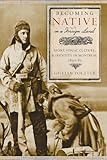
Gillian Poulter. Becoming Native in a Foreign Land: Sport, Visual Culture, and Identity in Montreal, 1840-85. Vancouver: University of British Columbia Press, 2009. Illustrations. 390 pp. $34.95 (paper), ISBN 978-0-7748-1442-3; $85.00 (cloth), ISBN 978-0-7748-1441-6.
Reviewed by Jason Blake (University of Ljubljana) and Eszter Szenczi (Eötvös Loránd University)
Published on H-Canada (April, 2010)
Commissioned by Stephanie Bangarth (King's University College, UWO)
A Novel Search for National Identity
In the conclusion of her excellent Becoming Native in a Foreign Land, Gillian Poulter searches for turning points in Canadian history. Modern Canadian sport history “did not begin with the formation of the Montreal Hunt Club in 1807,... but in 1840 with the first tramps of the Montreal Snow Shoe Club, thus coinciding with Lord Durham’s enjoinder to give Canadians ‘our English character’” (p. 270). Canada’s national awakening did not happen in the trenches of World War I or in the centennial air of Montreal’s Expo ’67. Rather, “it was the 1885 North West Rebellion that marked Canada’s cultural birth by extinguishing all internal boundaries and ‘others’ and by giving Canadians a sense of themselves as a transcontinental nation” (p. 279). In our glib view (and to oversimplify Poulter’s argument somewhat), if there was a watershed, Canadians would have found it by now. The rest of this review is unmitigated praise.
To review a book is to be a nitpicker in search of undernourished arguments, stylistic slipups, or flat-out errors. It is a rare pleasure to have to wait until the final half-dozen pages to find anything to quibble about. The quality of Poulter’s writing is uniformly excellent and jargon free, and not a single paragraph looks tired. Especially when she goes beyond history proper to examine photographs or paintings, or even Montreal parade routes, Poulter’s clarity induces envy. Even information that is old hat to sport historians seems new. We know that Anglophone Montreal society gave birth to modern Canadian sport and that British settlers appropriated native customs, but Poulter’s reminders somehow seem necessary. A trained art historian, Poulter is perfectly placed to analyze images of such sporting (including the sport of kings). For the most part, these were documents of British subjects transforming themselves into what they felt were proper Canadians.
The one-two-three step to naturalization was this: they began British, then pilfered and adapted native (and sometimes canadien/francophone) customs, and finally arrived at the identity synthesis of invented Canadian. Poulter notes that “snowshoers positioned themselves within an invented mythological national past and appropriated the visual attributes of both the Aboriginal and French ‘real’ Canadian Natives in order to do so” (p. 36). Whether she is examining snowshoeing, sport hunting, lacrosse, or even tobogganing, Poulter capably shows how the activities were “tamed, organized, and made more scientific” (p. 174).
The identity aim was to move away from British games, like cricket, and to sportingly differentiate Canada from the United States. This was not without minor hypocrisy: the relatively short-lived Montreal winter carnivals of the 1880s were put on for an American crowd. Similarly, there was a constant desire for a “royal seal of approval,” whether it was royal representatives watching or, in one instance, Queen Victoria herself witnessing and thus tacitly sanctioning a lacrosse match (p. 182). All but left out were French Canadians and women, as well as native Canadians--unless they were being put on display for a general public. Throughout, Poulter emphasizes that most of this play was middle-class boys sporting among themselves.
Lacrosse has had its ups and downs in Canada’s history but in the period examined by Poulter, it proved to be “an effective national identifier” (p. 160). It had its unifying force and, thus, could represent an “old-new” white Canadian game. Yet from the point of view of English Canada, organized sport encouraged unity; from the point of view of native peoples and French Canadians, it provoked the opposite. When French Canadian Montréalers took up sports in large numbers in the 1890s, "they did so in part to contest English domination" (p. 276).
For the most part, though, native peoples and women were excluded from the gentlemanly play. This way the most important part of an Englishman’s purported manly character--that is, morality, patriotism, stamina, and discipline--could be preserved and demonstrated. Indians represented only a source of knowledge as long as challenging white teams made their appearance in the playing fields. Also, the emerging middle classes were able to monopolize the spheres of the game by ignoring the wealthy elite and the social workers during the period discussed.
Nothing held lacrosse back; and by the 1880s, the game had fought its way to become the major team sport of Canada. Poulter strengthens the common belief that lacrosse was widely considered the national game of a young country. However hard the colonists tried to elide the Indians from something they had invented, the English had to realize that their indigenizing themselves “from colonist to native Canadian” was impossible without the presence of the First Nations and their culture (p. 271). The “colonizer can only be ‘almost but not quite’ Native”--hence the need to pretend that English-style science and organization were crucial to sporting identity (p. 272).
Poulter goes to stranger places than sport as a historian, but leaves no doubts as to why we should pay attention, for example, to her examination of an illustration called The Looting of the Old Town of Battleford (1885) from the time of the 1885 Rebellion in Manitoba, or images of an ice palace being stormed during an 1880s Montreal carnival. She tells us why these images are representative and crucial to the process of becoming Canadian and even if one were to remain skeptical, it is sheer intellectual pleasure to tag along as she reads visual images. Consider this close and terse reading of a literal human arch: “evergreen boughs, snowshoes, and lacrosse sticks referred to the environment and Indigenous peoples; the snowshoes and blanket coat uniform referred to the fur trade and French Canadian culture; and the flags, royal emblems, and national anthem proclaimed loyalty to the queen and empire. As they stood waving from atop the arch, the club members were displaying the constituents of their new hybrid identity” (p. 24). Not a word is lost as the art historian shows (not tells) why it is worthwhile reading visual records long ignored by historians.
The entire book is propelled by an admirable narrative verve, and Poulter employs suspense. At the beginning of chapter 2, a group of bold and brave hunters are preparing for their noble task: to pose in a Montreal studio for a series of photographs. The resulting images told a glorifying story about these middle-class chasseurs, a story that privileged sport hunting while “subordinat[ing] pot hunting and the First Nations and French Canadian hunters associated with it” (p. 87). Proper, gentlemanly sportsmen lived for the chase rather than for the kill--let alone something as lowly as food--and the hunters were not shown eating or preparing meat.
Although Becoming Native in a Foreign Land examines visual culture and thus necessarily considers audiences and viewers, Poulter does not insist her subjects were always playing Canadian or engaging in a sort of mimicry. Sometimes it was fun for these club members just to go tramping in the snow and sing bawdy songs. The amateur sportsmen “deliberately chose to traverse an untraveled route on fresh snow that had covered up evidence that this was already domesticated land” (p. 48). In other words, they knew they were pretending. When the public was too much involved, such as at the carnivals--where fewer than 10 percent of spectators actually hailed from Montreal--the play mood was destroyed. Not everyone liked to play Canadian to the crowd and at least one “complaint over ‘hippodroming’ reveals that the result of the carnivals was to commodify and commercialize winter sports and thereby weaken their potency as national symbols” (p. 205). Today, this seems charmingly anachronistic. If such coolheadedness could be applied to ice hockey (which obliterated all other sports by around 1900), Canadians would be spared hockey images that tell us to be good Canadians and buy beer.
If there is additional discussion of this review, you may access it through the network, at: https://networks.h-net.org/h-canada.
Citation:
Jason Blake and Eszter Szenczi. Review of Poulter, Gillian, Becoming Native in a Foreign Land: Sport, Visual Culture, and Identity in Montreal, 1840-85.
H-Canada, H-Net Reviews.
April, 2010.
URL: http://www.h-net.org/reviews/showrev.php?id=29907
 | This work is licensed under a Creative Commons Attribution-Noncommercial-No Derivative Works 3.0 United States License. |

