



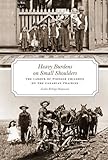
Sandra Rollings-Magnusson. Heavy Burdens on Small Shoulders: The Labour of Pioneer Children on the Canadian Prairies. Edmonton: University of Alberta Press, 2008. 177 pp. $34.95 (paper), ISBN 978-0-88864-509-8.
Reviewed by Mona Gleason (University of British Columbia)
Published on H-Canada (November, 2009)
Commissioned by Stephanie Bangarth (King's University College, UWO)
Necessity, Invisibility, and the Labor of Children
In the current context of the affluent Global North, "child labor" denotes an uncomfortable oxymoron--children are not supposed to labor. They are supposed to play, learn, experience, laugh, wonder, and daydream. Despite the fact that laboring children often help produce consumer goods for markets in the West, they are the focus of international campaigns to replace work with opportunities for education. In the nineteenth and twentieth centuries, urban social reformers targeted the worst abusers of child labor, circulating reports about, and photographic images of, sad, filthy, and undernourished children whose experiences aged them well beyond their tender years. The objections of (mostly middle-class) reformers were spurned on by evolving attitudes toward childhood as a protected phase of life characterized by play, schooling, and freedom from concerns of adulthood.
Scholars have challenged these stereotypes both historically and contemporarily on at least three accounts: by establishing more clearly distinctions between "child labor" and "working children," by placing children's work in the context of family strategies for survival, and by considering the perspectives of working youngsters themselves on their experiences. In Boys in the Pits: Child Labour in Coal Mines, Robert McIntosh refines our understanding of "child labor" by focusing attention on the meaning of work for the boys involved. Rather than simply dismissing the history of boy's labor in the coal mines of Canada as a "tragic record of forfeited childhood," McIntosh points out that "pit boys repeatedly demonstrated courage and initiative--a refusal to be the mere victims that historians have persistently labeled them."[1] Recent sociological work conducted by scholars, such as Manfred Liebel, similarly focuses on the perspectives of children whose work often saves families from slipping into extreme poverty and deprivation. In A Will of Their Own: Cross-Cultural Perspectives on Working Children, Liebel makes clear that his intention is not "to minimize the various forms of exploitation and abuse of children ... but to open the reader's eyes to the variety of forms and meanings that work has and can have for children."[2] These studies encourage us to replace simplistic and ahistorical equations between work and exploitation and instead consider the multiple meanings attached to its varied forms for youngsters and their families over time.
Heavy Burdens on Small Shoulders by Sandra Rollings-Magnusson makes noteworthy contributions to our understanding of children's work in the past. The overarching point that Rollings-Magnusson's study fleshes out is that the varied labor contributions made by children, particularly during the intense phase of settlement on the prairies, was critical to the survival of settler families. More than simply helpful or beneficial, Rollings-Magnusson argues, "although farm children (those aged four to sixteen) did not receive payment or documented recognition for their economic contributions, boys and girls expected, and were expected, to work and did in fact perform essential duties and necessary tasks that contributed to the success of farms and family survival" (p. 11). Likening the "economically invisible" but critical work done by farm women to that of children, Rollings-Magnusson lays out a typology or system of classification based on both gender and age to more fully account for the kinds of work that children did and what this work represented for various farm family economies.
Heavy Burdens on Small Shoulders is organized into seven chapters that take the reader methodically through children's relationships to specific kinds of farm labor. Rollings-Magnusson describes her analytical approach as grounded primarily in historical sociology. Her methodology is aimed at combing prairie archival materials (diaries, letters, memories, letters in newspapers) and published materials (autobiographies and collections of letters) for information regarding child labor on pioneer family farms. Gathered with an eye to the broader quantitative contours of children's work, Rollings-Magnusson then builds her labor typology. After an explanation of her methodology, sources, and the structure of the book, Rollings-Magnusson provides a now rather well worn summary of social attitudes toward children and work that characterized the late nineteenth and early twentieth centuries. This context establishes that farm work in the context of helping family fortunes was not only a common and expected facet of many children's lives, but was also considered an effective vehicle for life lessons about perseverance, family loyalty, and mutual support. Work was also considered a healthy physical past time for all family members, including children who were encouraged to take in as much fresh air and sunlight as possible over the summer months. Rollings-Magnusson devotes the subsequent chapters to the dominant forms of farm labor that children engaged in: productive labor (chapter 3), entrepreneurial labor (chapter 4), subsistence labor (chapter 5), and domestic labor (chapter 6).
Within each chapter, and reporting both the gendered dimensions as well as varying age dimensions of children's work, Rollings-Magnusson provides a portrait of laboring prairie children. After the unfathomably difficult period of establishing both a dwelling for family and livestock (both tasks were largely possible only with the labor contributions of the entire family), farm production took over in earnest. Rollings-Magnusson establishes in chapter 3 that a wide range of tasks were undertaken by children that shifted as they grew up and according to gender constraints. Thus, the youngest children (four to five years) might help clear rocks from fields, while older children (six to eight years) would help feed and water livestock. Teenaged youngsters would be most likely to work directly with horses and to run family errands. Gender did determine the kinds of productive labor children did, but never trumped necessity. For example, boys of all ages were slightly more likely to engage in stable chores and the transportation of crops than were the girls Rollings-Magnusson encountered. As other studies have revealed, exceptions to most rules could be found and the necessity of getting farm work done took precedence over gender constraints. In smaller numbers, as they aged, girls did outside work and boys contributed to domestic labor if this was deemed necessary.
The importance of youngsters' entrepreneurial activities is discussed in chapter 4. Having moved successfully beyond the level of subsistence, farm families needed cash to purchase goods, such as seeds and equipment, which enabled them to get ahead. Children sold fruit and vegetables, gathered bounties on gopher hides, and helped raise animals for sale. The monies they gathered from such activities went into family coffers. The subsistence labor they provided, discussed in chapter 5, such as watering and milking animals, harvesting fruits and vegetable, searching for water and fuel for cooking and for heat, supported much of their entrepreneurial work.
The issue of the gendered nature of children's domestic work is brought to the fore in chapter 6. While boys did help out with household chores, such as cleaning house, washing clothes, making beds, taking care of children, preparing food, and sewing, the evidence suggests that such involvement was, not surprisingly, limited. Girls were overwhelmingly responsible to help in these arenas. In ways that are now quite familiar to historians interested in women and gender, Rollings-Magnusson reiterates the point that such work, paralleling the predominance of boys in the productive labor arena, was understood as training for future roles as husbands and wives. Girls who demonstrated hard work and competency in the management of household chores were valued heterosexual marriage partners. Rollings-Magnusson points out that while domestic work was less labor intensive and skill dependent than other kinds of farm labor, it was perhaps the most important. It freed up other members of the household, particularly adult members, to contribute their labor to other pressing tasks.
Working children challenge hegemonic class, race, and gender-inflected definitions of sentimentalized childhoods and children's rightful place vis-à-vis adults. Certainly in the pages of Heavy Burdens on Small Shoulders we are disabused of the notion that hard, labor intensive, backbreaking work was not the domain of youngsters. While this compact book would be an excellent volume for undergraduate courses devoted to the history of the family, work, and/or the history of children and youth, it does have some significant limitations. First, its origins as a PhD dissertation in sociology from the University of Alberta have not been sufficiently edited out of the book version. This means that while the typology model does offer structure for the author's findings, it tends to constrain the analysis and makes the book rather repetitive. We hear little of those children whose race, class, or limited intellectual or physical ability may have set them apart from the experiences of the majority quantitatively determined here. Second, Rollings-Magnusson makes like use of the work of many Canadian scholars who have written extensively about children and labor. Studies by Neil Sutherland and McIntosh, and older work by Susan Houston and John Bullen are not discussed. Thus the work of prairie children is left unconnected, first to that of other children working in different regions at a similar time, and second to those children who came before and after. Were prairie children in this era unique? Was pioneering work on the part of farm children conceptualized quite differently from that undertaken in small towns or large cities? Third, Rollings-Magnusson argues that the invisible labor of women parallels that of children, but her discussion of feminist theorizing to flesh out this point in the Canadian context is never fully realized in sustained, analytical terms.
Ultimately, while the book's emphasis on the critical centrality of children's work in the past is a welcome addition, a deeper engagement with the historiography and the theoretical debates currently animating questions surrounding children's work and significant historical change are still to be grappled with.
Notes
[1]. Robert McIntosh, Boys in the Pits: Child Labour in Coal Mines (Montreal: McGill-Queen's University Press, 2000), 178-179.
[2]. Manfred Liebel, A Will of Their Own: Cross-Cultural Perspectives on Working Children (London: Zed Books, 2004), 1.
If there is additional discussion of this review, you may access it through the network, at: https://networks.h-net.org/h-canada.
Citation:
Mona Gleason. Review of Rollings-Magnusson, Sandra, Heavy Burdens on Small Shoulders: The Labour of Pioneer Children on the Canadian Prairies.
H-Canada, H-Net Reviews.
November, 2009.
URL: http://www.h-net.org/reviews/showrev.php?id=25772
 | This work is licensed under a Creative Commons Attribution-Noncommercial-No Derivative Works 3.0 United States License. |

