



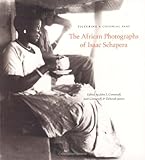
John L. Comaroff, Jean Comaroff, Deborah James, eds. Picturing a Colonial Past: The African Photographs of Isaac Schapera. Chicago: University of Chicago Press, 2007. Illustrations. xv + 224 pp. $25.00 (paper), ISBN 978-0-226-11412-5.
Reviewed by Paul Landau (University of Maryland)
Published on H-Africa (December, 2009)
Commissioned by Esperanza Brizuela-Garcia (Montclair State University)
The Visual Archive of Isaac Schapera
Isaac Schapera (1905-2003) spent his productive life crafting a huge published corpus of professional anthropological material, perhaps the greatest for Africa. Less well known are his photographs, which capture a quiddity very different from his ordered depictions of customs and social structures. The photos are presented together in an accessible format for the first time here, in a handsome, folio paperbound book.
As a writer, Schapera devoted himself to what he sometimes represented as a single African people or tribe. This was and is "the Tswana," a denotation he helped promulgate, and whose meaning he both refined and undermined. Originally, the word "Sechuaan" or "Secwana" was not so specific, and meant something like "those same people." The Tswana came to be understood as people of the South African and Botswana highveld, minus the descendants of Moshoeshoe's and Sekhukhune's kingdoms (and assorted others) whose political heritage and confessionally based orthographies marked them differently.[1]
With his doctoral dissertation, Schapera began, in the 1920s, by adhering to the biometric classifications then current for South African indigenes, in which identity was fixed and embodied. Quite soon he moved toward a more nuanced and particular kind of catalogue of difference, focusing on culture and society, and taking into account histories of growth or attenuation, while confining his contributions to the Tswana ethnic entity. He remained attuned to individuals' own expressions of difference and belonging, and reproduced individual letters from contemporary Africans as part of his work.[2] Nonetheless, he essentially stuck with the tribal paradigm in which Africans are seen to have assembled into organic divisions that were since amended, corrupted, or perpetuated in compromised form.
Recently, Patrick Harries has credited Schapera (in Butterflies and Barbarians: Swiss Missionaries and Systems of Knowledge in South-East Africa [2007]) with initiating the critical break with missionary-anthropology and its diffusionist and evolutionary typologies in South Africa; structural-functionalist anthropology thereafter for many years stood in the vanguard of the science of man internationally. The work he accomplished on "the Tswana" and more particularly "the Kgatla" was necessary and is irreplaceable, and it overmatched Schapera's quieter initiatives, his recovery of individuals' opinions and dispositions from within these matrices. This book, focusing on Schapera's photographs, brings this latter element of his life's work into relief. Indeed, the tensions between Schapera's approach to data, and to persons, emerges in poignant form here.
The deft introduction by Jean and John L. Comaroff sensitively frames Schapera's visual archive and the story of its recent recovery. The reader also has the benefit of a biographical sketch written by Adam Kuper, to my knowledge unmatched elsewhere. Kuper does not lack for fond feelings toward Schapera, and he and his wife Jessica knew Schapera quite well; still, he is surprisingly candid in appraising Schapera in his work and (to an extent) personal life. The essay brings to this book a higher level of critical scholarship than one expects in a pictorial production, and thus elevates it considerably.
The black and white photographs themselves, most of them dating from the early 1930s, were, as the editors point out, alive to the "relentless melt of time" (p. 11). They are often excellent, and they are well reproduced, glossy, and uncropped, in these pages. Schapera used a "rudimentary, fixed-lens Voigtlander camera" without a flash or tripod, and used "commercial developing services" (p. 3). He apparently favored medium format (120 mm) roll film and focused without a range finder. Most of the pictures eschew the impersonal middle distance--too far for greetings, too close for hailing--and opt for panoramic shots, or close and personal portraits. They did not isolate ageless "types" as did so many images in ethnographic studies, and indeed Schapera's earliest publications. Many of the best were taken in the rural town and political capital of Mochudi.
The editors have made a conscientious attempt to assemble and explain a hidden visual archive. Some editorial decisions, nevertheless, provoke further questions. Chapter 3, "Ditshwantso, Portraits," is acknowledged to be a kind of ragbag gathering of pictures Schapera took for many reasons, portraiture being only one. They are said to reflect "primarily" his desire to make studies of varieties of people, children, women in domestic scenes, initiates "in the process of transition to adulthood," and so on in the ethnographic mold (p. 99). The personal quality of the images is undeniable and is consistently brought forward by the editors, regardless of Shapera's intentions. Even A. M. Duggan-Cronin's pictures and Gustavus Fristch's engravings from glass-plate photographs often reveal the personal and subjective, even intimate, nature of the sitter. Such is the nature of the close-up of the face as a sign. Still, Schapera's photographs certainly do not seem like impositions on their subjects. To look at them is to see, in most cases, people who are comfortable with the man behind the lens. If the editors perhaps go too far in calling the pictures "coproductions," it is so that his "profound familiarity" with the norms of village and town life allowed him access and spared his pictures any hint of fussiness (p. 10).
Perhaps problematically, the captions are sometimes altered in ways that have not been clearly laid out, so that we tend to associate them with Schapera's thinking even where this may not be warranted. Sometimes these captions serve to link the photos to one section and not another: plate 2.14, "Rakabani Monametse eating his daily meal in his homestead," is as much a portrait as the best portraits in chapter 3; the picture of a smiling woman on the facing page (plate 2.13) might have been too, were her identity known. Chapter 7, "Moroka: The Rainmaker," features numerous photographs not just of "the rainmaker," as an abstract type but also of Rapedi Letsebe, a particular individual and a friend of Schapera's who instructed him in his arts. Schapera's understanding of "magical rites" in Kgatleng is discussed by Kuper in his essay as if it is a since-superseded feature of scholarly understanding. In chapter 7's account of Letsebe, however, there is no indication of how recent anthropology has treated rainmaking, and the notion "magic" is instead retrieved in the explanatory text which is not in Schapera's voice. Letsebe, for instance, is concretely identified with his "lightning whistle used in his efforts to control the elements," without comment (plate 7.6, and see plate 7.13, "derelict horns and pots at site of old rain shrine") (p. 165). I should have liked to see the erudition of the editors further put to work here.
Yet this is to quibble, as the contribution of the photographs is often to speak more loudly than the descriptions, which are unobtrusive and modest. Of especial interest is plate 8.8, of Klaas Segogwane, chiefly praise-poet "in ceremonial garb," at the installation of his Kgatla chief. Here, ceremony has preserved archaic usages and forms, as the complex, sewn kaross, the curved ornamental staff, and most of all, the mask and headdress look nothing like the stereotyped image of "Tswana." The false beard with whiskers especially is more associated with central Africa than the highveld. The images of children are wonderful: plate 4.4, the girl building a miniature house, an activity one still sees in rural Botswana; the "small girls at play" (plate 4.5), muddy, and wearing adornments with bead-string skirts; the next plate, "Young boys, playing with toy cattle," or rather, paused in their play, looking up at the photographer, Schapera, from their four, small clay figurines. The panoramas of court (kgotla) meetings, crowds of ordinary people, and aggressive, dancing age-grade regiments are breathtaking. The best portraits are moving in their simplicity and vulnerability.
Overall this is a rich and well-executed addition to the growing literature on photography and pictorial representation in colonial Africa. It is a window into the past of rural South Africa and Botswana during the interwar period. It humanizes the work of one of Africa's most important ethnographers. And it is easy to enjoy.
Notes
[1]. This shift is elaborated by Stephen Volz, "European Missionaries and Tswana Identity in the 19th Century," Pula: Botswana Journal of African Studies 17, no. 1 (2003): 3-19; and Sinfree Makoni and Alastair Pennycook, "Disinventing and (Re)Constituting Languages," Critical Inquiry in Language Studies 2, 3 (2005): 137-156.
[2]. This has been recently discussed by Keith Breckenridge, "Reasons for Writing: African Working Class Letter-Writing in Early Twentieth-Century South Africa," in Africa's Hidden Histories: Everyday Literacy and Making the Self, ed. Karin Barber (Bloomington: Indiana University Press, 2006), 143-145. I focus on Schapera's writerly methods in chapter 6 of Paul Landau, Popular Politics in the History of South Africa, 1400 to 1948 (New York: Cambridge University Press, in press).
If there is additional discussion of this review, you may access it through the network, at: https://networks.h-net.org/h-africa.
Citation:
Paul Landau. Review of Comaroff, John L.; Comaroff, Jean; James, Deborah, eds., Picturing a Colonial Past: The African Photographs of Isaac Schapera.
H-Africa, H-Net Reviews.
December, 2009.
URL: http://www.h-net.org/reviews/showrev.php?id=25683
 | This work is licensed under a Creative Commons Attribution-Noncommercial-No Derivative Works 3.0 United States License. |

