



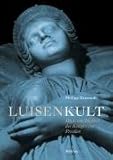
Philipp Demandt. Luisenkult: Die Unsterblichkeit der Königin von Preußen. Cologne: Böhlau, 2003. 559 pp. EUR 36.90 (paper), ISBN 978-3-412-07403-6.
John M. Klassen, Eva Dolezalová, Lynn Szabo, eds. The Letters of the Rozmberk Sisters: Noblewomen in Fifteenth-Century Bohemia: Translated from Czech and German With Introduction, Notes and Interpretive Essay. The Library of Medieval Women. Woodbridge: D.S. Brewer, 2001. vii + 134 pp. Bibliography, index. $27.95 (paper), ISBN 978-0-85991-612-7.
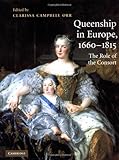
Clarissa Campbell Orr, ed. Queenship in Europe, 1660-1815: The Role of the Consort. Cambridge: Cambridge University Press, 2004. xvii + 419 pp. $129.00 (cloth), ISBN 978-0-521-81422-5.
Pauline Puppel. Die Regentin: Vormundschaftliches Herrschaft in Hessen 1500-1700. Geschichte und Geschlechter. Frankfurt: Campus, 2004. 407 pp. EUR 45.00 (paper), ISBN 978-3-593-37480-2.
Reviewed by Cornelia Niekus Moore (University of Hawaii, Honolulu)
Published on H-German (August, 2009)
Commissioned by Susan R. Boettcher
Noblewomen in Charge
In the attempts to establish a women's history, two general approaches have predominated. The first tries to find evidence, traces, documents, or works that reveal the presence and workings of long forgotten or perhaps never widely known women in order to clarify how women could function and make an effect on societies that might not have readily enabled or acknowledged such accomplishments. The other takes a new look at those women who, even from today's perspective, stand out as having played a role in the political or cultural scene of their day. It asserts that these women were successful not by denying the fact that they were women, but by employing their position as women. Together, the results of these approaches have allowed a better understanding of the role of women in bygone eras. In the end, though, the look we cast across the ages reflects our own times, where we stand, and where we come from. The books under review reflect all of these standpoints.
John M. Klassen's edition of the letters by Perchta and Anéžka of Rožmberk presents the situation of two medieval women, one unhappily married and one single. These letters are the primary material on which the fourth chapter of Klassen's previous work, Warring Maidens, Captive Wives and Hussite Queens (1999), was based. The story of Perchta, the married woman, is dealt with more extensively. The marriage between Perchta of Rožmberk and John of Lichtenstejn (1449) was arranged to unite two wealthy and powerful families, but the marriage never became a happy one. The situation was exacerbated by the failure of the parents of the bride to pay the agreed-upon dowry for several years. Klassen makes much out of the relatively sparse material, emphasizing how, with her letters, Perchta was able to rally persons in her household and family to help her solve her difficulties. In the end, though, it is still a tale of an unhappy marriage, a mother-in-law who ruled the roost, a husband who beat his wife, and a wife and mother who went home to her parents. Klassen clarifies the complex political situation in Bohemia at the time and elucidates the rights that the legal system did give women, even if they were declared weak, dependent, and submissive. He notes that others certainly did not condone the bad treatment to which Perchta was subjected. In an interpretative essay, he also asserts that she was successful in escaping her lot, because she carefully observed the limits but also the possibilities available to a woman from a proud aristocratic family. He uses Anéžka's letters to illustrate how the rights of single women of nobility to own and use property were stronger than those of married ones. The most intriguing portion of his tale is the connection of Perchta with the legend of the "white woman." At some point between her death and the mid-seventeenth century, people began to connect her name with the legend about a white lady that would appear to people. Thus, the ghost of Perchta was associated with the expulsion of the Swedes from Bohemia. As Klassen tells it, the woman who had to invoke the help of others in solving her own situation became an independent force in Bohemian history. This enduring legend of the white woman--and Perchta's connection to it--could have been elaborated upon more fully. Still, Klassen and the editors of the series ought to be commended for making these letters available to an audience not familiar with the Czech language or the history of Bohemia. They provide evidence for one more facet of the position of women in the late Middle Ages.
The other three books under review all engage in revisionist history. They seek to reevaluate persistent reputations, highlight hidden corners that have been overlooked by history, and come to a new understanding of the role of the queen/consort. In so doing they provide a fascinating new look not only at the position of women at court, but also at political and cultural history of early modern Europe.
Philipp Demandt's Luisenkult is one in a long string of books about the cult of the Prussian queen, Luise, Princess of Mecklenburg-Strelitz. Born in 1776, at seventeen she married the crown prince of Prussia, who then succeeded his father as Friedrich Wilhelm III. She gave birth to ten children and died on July 18, 1810. Her life and death soon became the stuff of legend. Modern readers will see similarities between the pomp of her funeral and that surrounding the funeral of Diana, Princess of Wales, with the difference that the queen of Prussia had actually participated in the politics of her country--Luise had befriended the czar and had a meeting with Napoleon, although not with the desired results--and that the practice of her memory could rightly be called a cult that has persisted for more than a century. Even today, copies of portraits and statues of Luise are found in every Berlin souvenir shop. The author seeks to explain the rise, existence, and longevity of this cult, primarily through an analysis of the visual images that successive generations created. In doing so, he comes to some interesting conclusions. It was not so much the statue of the two sisters by Johann Gottfried Schadow (1795-97) that captured the public imagination, but the sarcophagus that the young Daniel Christian Rauch was commissioned to make. Although the widower, in his grief, kept demanding that the images painted and sculpted after Luise's premature death should closely resemble the object of his affection, he was most satisfied with the statue in which the sculptor had deviated from the portraits that the widower put at his disposal to make the deceased's features more classical. With a wealth of visual and written sources, especially letters and memoirs, Demandt demonstrates how each successive generation portrayed Luise as a figure most closely connected to their own idea of the ideal queen (wife, mother, leader, Amazon, sacrifice, saint), even as a succeeding bourgeois era came to terms with the revealing fashions evident in the portrayals made during her lifetime. Most convincing is his discussion of Königin Luise in 50 Bildern für Jung und Alt (1896), a work that influenced the portrayal of Queen Luise in books and films of the early twentieth century. In his attempt to discuss the various aspects of the "Luisenkult," Demandt is often repetitious. At other times, his chronology is hard to follow. In toto, however, this book makes an insightful and thorough attempt to explain a cult that a rising nation obviously needed and adhered to, and that persisted through several attempts to reinvent both the myth and the nation. Its significance to our awareness of women's history lies in its explanation of the ways in which the subject was seen as especially suited to become the basis of a cult because she was a woman, that is, a national heroine to whom wifely, motherly, and queenly virtues could be attributed as needed.
Pauline Puppel's Die Regentin: Vormundschaftliche Herrschaft in Hessen 1500-1700 focuses on the possibilities and boundaries of political action by women entrusted with the regency of their underage sons. In her introduction, the author details the status of the research. This is followed by two large sections. The first one describes the legal underpinnings of the regencies and how these could be adapted to women regents. In the second section, the author discusses four regents in Hesse, Hesse-Kassel and Hesse-Darmstadt: Anna von Hessen (1485-1525), Amelie Elisabeth von Hessen-Kassel (1602-51), Hedwig Sophie (1623-83) and Elisabeth Dorothea von Hessen-Darmstadt (1640-1709). Throughout the book, the author demonstrates that being a woman worked against widows who desired to be regents for their sons, but at the same time, being a mother provided a powerful argument for being appointed regent. The fact that women could not become reigning monarchs tended to work in a regent's favor, as she could not be accused of trying to reserve the throne for herself. Contrary to popular historical opinion, the reigns of these regents were not seen as interim periods in their own time, and could last for more than a decade. Puppel highlights in particular the ways in which these regents dealt with the various political entities in their region, including the ruling factions and councils, the nobility, their own families, and the emperor. They were able negotiators who used their rule wisely. Through a wealth of documents, the author is able to illustrate how a woman regent was indeed master of the policies carried out during her reign, not the passive tool of counselors and advisers.
The division in two parts--the first one laying the legal foundation, the second one demonstrating how individual regents made use of them--is an effective way of proving that this arrangement was not just the invention of a supposedly power-grabbing widow and mother, but that women regents fulfilled a necessary and useful role in the continuation of government in sixteenth- and seventeenth-century Hesse. This long overdue revision shows convincingly that here the regent fulfilled a role that was hers as mother. The appendices (genealogical trees, short biographies, and legal excerpts) are thorough, enlightening, and necessary to the work. This book is a must for anyone interested in the political history and the role of the ruler in Germany.
Following her earlier Queenship in Britain 1660-1837 (2002), Clarissa Campbell Orr has edited another collection of essays, this one called Queenship in Europe 1660-1815: The Role of the Consort. Its individual chapters dovetail nicely with the situation in Hesse as portrayed by Puppel. In Orr's anthology, the subject is again consorts, some of whom fulfilled the role of regents. The courts surveyed include those of France, Spain, Russia, Sweden, Denmark, the imperial court at Vienna, and the three German electorates linked to monarchies: Brandenburg-Prussia, Saxony-Poland, and Hanover-Great Britain. Also included is the duchy of Württemberg and Savoy, which attained royal status during the period under discussion. This collection is proof once again that collaborative studies can be an excellent means to present a wealth of material when they do not become disjointed. Time and again it becomes evident that courts were connected, and persons who appear in one chapter appear again in another. Thus we learn about each consort's formal and informal power, her religious role, and her cultural patronage. The German connections can be warmly recommended as an integral part of the total work. Consorts in the German empire discussed by the contributors are Eleonore of Pfalz-Neuburg (1655-1720), the third and last wife of Emperor Leopold I; and their two sons' consorts, Wilhelmine Amalia of Braunschweig-Lüneburg (1673-1742), wife of Emperor Joseph I, and her cousin, Elizabeth Christine of Braunschweig-Wolfenbüttel (1691-1750), who married Emperor Charles VI (by Charles W. Ingrao and Andrew L. Thomas). Peter Wilson's contribution on the Württemberg consorts discusses first Eberhard Ludwig's wife, Johanna Elisabethe von Baden Durlach (1680-1757), and her struggles against her husband's mistress, unofficial consort and bigamous wife Christina Wilhelmina von Grävenitz, and then the wife of Carl Alexander: Marie Auguste von Thurn und Taxis (1706-56), who became a powerful co-regent during her son's minority. Helen Watanabe-O'Kelly's chapter on the two electresses of Saxony who were also queens of Poland, "Religion and the Consort," emphasizes the consequences of the refusal of Christiane Eberhardine, Margravine of Brandenburg-Bayreuth, to convert to Catholicism and the Catholic piety of the Habsburg daughter and Imperial Princess Maria Josepha (1699-1757). In "The Hidden Queen: Elisabeth Christina of Prussia," Thomas Biskup argues that even though Frederick II made known his disdain for the woman he had been forced to marry, Elisabeth Christine of Braunschweig-Wolfenbüttel (1715-95), he needed her and her court to carry out the necessary functions of a court in Berlin, and that she carried out these duties more effectively that history gives her credit for. This multifaceted work also features women who, as daughters of German dynasties, became consorts at foreign courts: Caroline of Brandenburg-Ansbach (1683-1737, discussed by Andrew Hanham) and Sophie Charlotte von Mecklenburg-Strelitz, (1744-1818, discussed by Clarissa Campbell Orr) at the British court; Juliane Maria of Braunschweig-Wolfenbüttel (1729-96, discussed by Michael Bregnsbo) at the Danish court as wife of Frederick V; and Luisa Ulrica of Prussia (1720-82) at the Swedish court (discussed by Marc Serge Rivière). The introduction in particular is a must-read, as Clarissa Campbell Orr masterfully ties all of this detail together. She argues--and the content of the book bears her out--that courts were monarchic; that international relations were underpinned by dynastic links; that consorts have to be studied within the context of the dynasties from which they came as well as the ones into which they married; and that new wives had to become familiar and deal with the powerful elites in a foreign court. What is most fascinating about the consequences of this style of politics is our realization that most of these women had to overcome significant and inflexible preconditions for their actions: most had little say in whom they would marry, and from the time of their arrival at the homes of their future partners, they were exposed to existing court dynamics. What they made of these forced matches, however; how they played dynastic politics in the families they left behind and the families into which they married; and how they set up their own networks, were often determined by their individual talents and character traits. This handsome book is produced with many illustrations and genealogical tables. It makes an essential contribution to the history of women's roles in the political and cultural history of early modern Europe.
If there is additional discussion of this review, you may access it through the network, at: https://networks.h-net.org/h-german.
Citation:
Cornelia Niekus Moore. Review of Demandt, Philipp, Luisenkult: Die Unsterblichkeit der Königin von Preußen and
Klassen, John M.; Dolezalová, Eva; Szabo, Lynn, eds., The Letters of the Rozmberk Sisters: Noblewomen in Fifteenth-Century Bohemia: Translated from Czech and German With Introduction, Notes and Interpretive Essay and
Orr, Clarissa Campbell, ed., Queenship in Europe, 1660-1815: The Role of the Consort and
Puppel, Pauline, Die Regentin: Vormundschaftliches Herrschaft in Hessen 1500-1700.
H-German, H-Net Reviews.
August, 2009.
URL: http://www.h-net.org/reviews/showrev.php?id=25109
 | This work is licensed under a Creative Commons Attribution-Noncommercial-No Derivative Works 3.0 United States License. |

