




Shannon Lee Fogg. The Politics of Everyday Life in Vichy France: Foreigners, Undesirables, and Strangers. Cambridge: Cambridge University Press, 2008. xxii + 226 pp. $80.00 (cloth), ISBN 978-0-521-89944-4.
Allan Mitchell. Nazi Paris: The History of an Occupation 1940-1944. New York: Berghahn Books, 2008. 230 S. $75.00 (cloth), ISBN 978-1-84545-451-7.
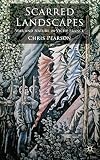
Chris Pearson. Scarred Landscapes: War and Nature in Vichy France. Basingstoke: Palgrave Macmillan, 2008. xv + 253 pp. $69.95 (cloth), ISBN 978-0-230-22012-6.
Reviewed by Andrew Knapp (University of Reading)
Published on H-German (June, 2009)
Commissioned by Susan R. Boettcher
Three New Takes on Vichy France
The Revolution aside, France's "Dark Years" of German occupation between 1940 and 1944 count as the most intensely worked-over period of French history. Has it been completely covered now? These three books suggest not: each has something new to contribute to an already dense historiography.
Looming large over the field since 1972 has been Vichy France: Old Guard and New Order (1972), Robert Paxton's founding work on the regime created after France's humiliating defeat at the hands of the Wehrmacht in June 1940, headed by Marshal Philippe Pétain and (for most of its life) by Pierre Laval, domiciled not in Paris but in the spa town of Vichy, and committed to a policy of collaboration with the German occupier. One part of Paxton's achievement was to dissect the different ideological currents that struggled for influence through Vichy's short history, including authoritarian traditionalists, technocrats, and full-blown fascists. Another was to demolish, not one, but two myths that had grown up around Vichy since its ignominious collapse at France's liberation in 1944. Vichy was not, as its Gaullist enemies had claimed, a mere handful of criminals acting on Germany's behalf against a nation overwhelmingly committed to resistance; nor did it, as apologists like Robert Aron tried to maintain in his Histoire de Vichy (1954), act as a "shield" for France against the occupier, or function as a preferable alternative to a Gauleiter. Paxton demonstrated, on the one hand, that Vichy was rooted in the political traditions of France's anti-parliamentary Right and enjoyed, initially at least, significant popular support; and, on the other, not merely that it was a poor shield, but that it was both committed to collaborating with the Germans and capable of running ahead of their demands. This second point was particularly true in relation to the persecution of Jews, where Vichy legislation--in particular the Statuts des juifs of October 1940 and August 1941--was unprompted by the occupier. Needless to say, his findings were of wider interest. Along with other reassessments of the same period--most notably Marcel Ophüls's film Le Chagrin et la Pitié (1971)--Paxton prompted a long and highly political debate on France's responsibility for events in the occupation, and in particular its contribution to the Holocaust.
Though Paxton's work has not been challenged frontally by serious historians in the nearly forty years since its publication, it has been somewhat nuanced; and the field of research on occupied France has expanded drastically. To take a small handful of examples, the record of high-profile individuals like Maurice Couve de Murville or, most notoriously, François Mitterrand, showed how individuals deeply involved with Vichy could emerge from the war with an impeccable record of service to free France and the Resistance. Thanks to Simon Kitson's The Hunt for Nazi Spies (2008), we know that Vichy both collaborated with Nazis and, in the southern zone, it actively pursued members of their espionage services. We know, through the work of John Sweets, that ordinary people living under Vichy navigated a narrow line between resistance and collaboration under exceptionally difficult material conditions.[1] We know that, in addition to resistance, the ordinary French were capable of engaging in public protest against a fiercely authoritarian régime and its Nazi backers.[2] The nearest thing to a "consensus" on this deeply controversial picture is probably summed up by Julian Jackson: "the history of the Occupation should be written not in black and white, but in shades of grey."[3] This view is unobjectionable so long as one does not lose sight of the two extremes--the waterboarding, eye-gouging thuggishness of Vichy's Milice, and the extraordinary heroism of the Resistance fighters who knew exactly what risks they faced and carried on regardless.
Where can these three new works be situated in this variegated landscape? First, Paxton's stern injunction that Vichy "cannot really be seriously studied without attention to the German archives" is heeded only by Allan Mitchell (by far the most experienced historian of the three).[4] Shannon L. Fogg and Chris Pearson show that is still possible to write about occupied France using only French sources, but there is little doubt that German ones can benefit almost any area of research. Second, while Mitchell's work is situated squarely on Paxton's terrain and deals, if not quite in the realm of "high politics" (the very term seems a misnomer for the low and grubby deals between Vichy and its occupier), at least with policymaking at the national level, Fogg falls within the domain of social history from below set out by Sweets and others. Pearson, finally, extends the boundaries of Vichy studies by striking out into the new area of environmental history. Third, each of the titles is at least partly misleading. Prurient readers of Mitchell hoping for racy accounts of the Nazis' good life in the French capital will be disappointed; the drinking and whoring are confined to a marginal place in an account largely devoted to how the Nazis in Paris made policy for France. Fogg's book, like that of Sweets among many others, is less about Vichy France as a whole than about one particular region (in this case the Limousin), from which we are invited to generalize. Pearson, meanwhile, writes as much about the Resistance as about Vichy, as well as about convergences between the two; and his last two chapters, on reconstruction and memory--a third of the book--refer to the postwar period.
At first sight, Nazi Paris might be viewed as a direct challenge to Paxton. "The notion of Vichy France," Mitchell begins, "is of course a complete misnomer," because "for more than four years Nazi Germany ruled France, and it did so from Paris" (p. xi). The author uses French primary sources a little but German ones (from the French Archives Nationales and the German military archives in Freiburg im Breisgau) far more. His focus falls not on Vichy policy--Pétain's "National Revolution" barely figures in this book--but on what the Germans wanted from France: internal security, loot in the form of both goods and labor for German use, and Jews for the crematoria of Auschwitz-Birkenau. This grim reading is interspersed with material on the "glorious display of creative endeavor" (p. 27) in culture that Mitchell claims characterized occupied Paris. At late as June 1944, the Propaganda Section announced a program of ninety-one concerts; the Berlin Philharmonic (conducted on occasion by the young Herbert von Karajan) was a frequent visitor. Art auctions, exhibitions, and opera, as well as the Auteuil racecourse, were all still in full swing late in July, even as Allied bombing isolated Paris from the rest of France and American ground forces broke through at Saint-Lô.
Mitchell's more substantial chapters make abundantly clear the degree of pressure that bore down on the French administration. If the Statuts des juifs were enacted on Vichy's initiative, they were contemporaneous with German anti-Jewish decrees (on registration of Jews and "Aryanisation" of the economy) whose makers were referring to a "final solution" to the Jewish question in France as early as January 1941. And it was at German prompting that Xavier Vallat was replaced by Louis Darquier de Pellepoix at the Commissariat Général des Questions Juives (CGQJ). The "mobilization" of the French economy for German needs, and the export of labor to Germany, began in the summer of 1940. By August 1942, at the same time as Fritz Sauckel was requiring the transport of 250,000 French workers, Göring was demanding that France deliver to Germany over 2,000,000 tons of grain, 350,000 tons of meat, 300,000 tons of potatoes, 150,000 tons of vegetables, 300,000 tons of fruit, and 6,000,000 hectoliters of wine. Meanwhile the demands made on the French police steadily escalated, to include strike-breaking, helping round up Jews, patrolling the Franco-Spanish frontier, and arresting those trying to escape compulsory labor service. Again, it was the Germans who inspired the substitution of Joseph Darnand, founder of the Vichy Milice, for René Bousquet at the head of Vichy's various police forces. Both Vallat (who received a ten-year prison sentence after liberation) and Bousquet figure high in the canon of Vichy villains; for the Nazis, however, they were obstructive.
German pressure was not always consistent, for three reasons: turf wars between different branches of the chaotic Nazi state, the varying ideological zeal of individuals, and genuine policy differences (did French labor work better for Germany in French factories, or after deportation to Germany? Should "Aryanisation" proceed even at a cost to French economic effectiveness? How far should the French police be trusted with weapons?). But the trend in France inevitably reflected its twin in Germany towards greater radicalization, as the "correctness" of the two Stülpnagel cousins who succeeded one another at the head of the military administration (Otto resigned in February 1942; Carl was executed in the aftermath of the July plot of 1944) was progressively eclipsed by the activities of committed Nazis like Carl Oberg.
Mitchell's emphasis on German pressure might suggest either that Vichy had no choice, or that the "shield" thesis should be rehabilitated. Mitchell's central argument, however, is subtler than either of these. Vichy, he shows, usually complied fully with Nazi demands and sometimes anticipated them in order to preserve the trappings of French sovereignty. However, compliance by Vichy, or at least its agents, was less than total: for example, on February 12, 1943, French police refused to assist with the transfer of French Jewish detainees from the Drancy camp to the nearby railway station at Le Bourget. The conclusion that Mitchell draws from such instances is less that Vichy acted as a "shield"--they were too rare--than that a French refusal to act forced the occupiers either to renounce their goals or to engage scarce manpower to do the job themselves. And manpower was always the Nazis' Achilles' heel, especially after the occupation of the southern zone of France in November 1942; the German police force, for example, barely exceeded three thousand in France during the occupation. Had the French withdrawn cooperation, in other words, "it would have been impossible to approach even remotely the goals and quotas that were demanded from Berlin" (p. 136). On this basis, Vichy stands as definitively condemned by Mitchell as by Paxton, though for somewhat different reasons.
Mitchell does not, finally, wear his thesis on his sleeve. Much of the opening material in Nazi Paris is a dry, factual dissection of the various institutions of the German occupation, and the argument is developed layer by layer in the succeeding chapters. His riskiest suggestion, made on his last page, and with every degree of precaution, is that wartime collaboration between France and Germany laid the foundations for postwar cooperation. Whatever the value of this claim, Mitchell has managed, in a text of barely more than 150 pages, to write what will surely become one of a handful of indispensable books in the canon of scholarly literature on occupied France.
If Mitchell cultivates a degree of discretion, Shannon L. Fogg, by contrast, states and restates her central thesis in abundance. In essence, it is that the application on the ground of Vichy's policies towards minorities (and, indeed, of those of the preceding late Third Republic governments) was mediated by the material interests of the majority population. "Politics in general," she writes, "lost importance as material concerns increasingly dominated day-to-day interactions. In most cases, political ideology was the background against which the quotidian played out and not vice versa" (p. 190). That ordinary people at a time of increasing shortages of every kind were guided substantially (though not exclusively) by the dictates of their wallets and their stomachs is a fairly unremarkable claim; the contrary, indeed, would be odder, and at times the reader may feel that Fogg tends to push at open doors. The strength of Fogg's work, therefore, lies less in her statement of the main theme as in the delicacy and complexity of the variations she makes on it. And here, her careful and detailed archival research stands her in good stead.
Blockaded by the British, looted by the Germans, cut off beginning in November 1942 from colonial suppliers, chronically short of farm labor, and with an increasingly crumbling transport system, wartime France was doomed to shortages--though the mixed-farming Limousin region in the "free" southern zone, the center of Fogg's study, fared better than the cities or monocultural areas like vine-growing Languedoc. Rationing utterly failed to work; the black market was rife; and a ration ticket offered no guarantee whatever of obtaining the goods stated on it. Fogg does not account for this massive failure, but she analyzes its effects well. Peasants stopped going to market once they realized that their city-dwelling consumers were sufficiently desperate to come to them--by bicycle or, when the tires wore through, on foot--to conclude black-market deals in order to survive. Eggs, transportable crops like potatoes and fruit, and livestock were regularly stolen. Food parcels, sent by relatives or purchased from trustworthy rural contacts, complemented the meager diet of the more fortunate city dwellers: in a single month in 1942, twenty-seven thousand eggs were sent from the station of Eymoutiers, whose population was below three thousand. As otherwise respectable citizens were forced into illegal black-market activity or even theft, respect for Vichy's laws, and the legitimacy of the regime, were steadily corroded.
Valuable in itself, Fogg's account of shortages sets the scene for the treatment by Limousin natives of three groups of outsiders who gravitated to their region in the war years: refugees from Alsace, "gypsies," and Jews. Each presented a different challenge to the natives; and in only one case, that of the "gypsies," was the reaction of Limousin natives more or less in tune with government policy.
Alsatian refugees, inhabitants of an obviously vulnerable region on the German frontier, began to arrive after the outbreak of war in September 1939 as a result of official evacuation policy, and Limousin natives were encouraged by the Édouard Daladier government to welcome them as a patriotic duty. They did so, but only up to a point. Food and other material assistance were readily forthcoming, especially in the early weeks (shortages were not an issue yet), but housing was far more reluctantly offered--and by the end of 1939 there were some thirty-seven thousand Alsatians in the Haute-Vienne alone. Cultural differences, moreover, quickly set the newcomers apart. For many Alsatians, the natives of Limousin were primitives; the Alsatians themselves, however, appeared to their "hosts" as dirty (because of their strange preference for indoor toilets), greedy, and complaining. Above all, however, their dialect sounded alarmingly like German, prompting fears of a fifth column installed deep in the French interior. Small wonder, then, that the Alsatians were "not fully integrated" by May 1940--or that perhaps two-thirds of them chose to return to their homes, now annexed to the Reich, after August 1940.
"Gypsies" were certainly fewer in the Limousin, though their number certainly increased with German expulsions from the occupied zone. A complex series of regulations had been applied to Roma, fairground people, and other travelers since before 1914; after September 1939, fearing spies among these itinerant populations, the Daladier government sought to assign them to set residences. Vichy sent many to a camp at Saliers in the Camargue, though its treatment of them was in no way comparable to the Nazis'. This policy was broadly approved by the natives of Limousin, who considered them to be dirty, drunken when they got the chance, and prone both to thieve and to force their children to beg (almost nothing that Fogg says contradicts these claims, though she does invite us to make cultural allowances for them). And even when sympathetic towards the children, many Limousin natives thought they would be "better off" in camps--especially as Vichy always presented Saliers as a model camp (which it was not, as material in Pearson's Scarred Landscapes abundantly indicates). Here, a material view of the "gypsies" helped swing the public towards supporting their internment.
Perhaps the strongest part of Fogg's work is her treatment of Jews in the Limousin. About one in eight of the Alsatian refugees of 1939 (and, of course, a higher proportion of those who stayed after August 1940) was Jewish. The Israelite Social Aid agency, initially created to assist Jewish refugees in Limoges, extended its services to all refugees after the debacle of 1940. Limoges became an attractive haven for Jews from occupied France, with the border between the two zones just fifty miles away: a prewar Jewish population of 161 had grown to 3,400 by early 1942. The (admittedly very unreliable) results of a poll carried out for the CGQJ suggested a less welcoming picture: the Limousin stood out as about the most antisemitic region in France. And for material reasons, for example, Limousin residents readily used Vichy's antisemitic legislation to remove unwanted tenants. But the converse was also true: antisemitism was much tempered where Jews formed economic relationships with local inhabitants. In 1942, for example, ninety-six residents of Germain-les-Belles signed a petition in favor of their veterinarian, a Romanian Jew who was barred from practicing under antisemitic legislation. By 1941, moreover, the region had become home to some twenty homes run by the Oeuvre de secours aux enfants (OSE) and housed a total of about 1,200 Jewish children. Financed in part from the United States, OSE homes brought outside money into often poor rural neighborhoods, and as such were welcomed; the more so as older children supplied much-needed labor for surrounding farms. It was ironic that these Jewish homes, which trained young men in traditional trades and sent them back to the land, could be seen to have taken to heart some of the basic tenets of the National Revolution. And authorities' attempts to blame Jews for shortages and the black market cut little ice in the Limousin. From August 1942, the OSE began to close its homes, rightly seeing them as an inviting target for round-ups. We are not given details as to the fates of the children, though Fogg does claim that supportive families in the Limousin eventually saved hundreds from the camps.
While both Mitchell and Fogg offer new contributions to relatively familiar debates, Pearson offers the most innovative book of the three in Scarred Landscapes. This novelty has drawbacks as well as advantages. If Pearson has a single, broad, subject--the environment (more specifically, the rural environment of the southeastern corner of France, stretching from Lyon to Menton, or from Arles to Chamonix) in time of war and postwar--nonetheless it is harder to follow a single thread of argument. Indeed, each of his chapters could be read as a single, more or less discrete, essay.
That said, most of Scarred Landscapes turns around three main themes: economic, military, and ideological. The economic material centers on the efforts of Vichy and the liberation governments to turn "wasteland" and forest to productive uses. This activity involved not only the "back-to-the-landism" of the National Revolution, but also attempts to reclaim marginal land--marshes (the Limagne in the Auvergne, the Saintonge in Charente-Maritime, as well as the Vendée), plus the Albens wetlands in Savoie and the Crau plain near Arles. Most of these projects were doomed to failure: land reclamation either fell afoul of labor shortages or proved unproductive, and France finished the war with nearly three million fewer hectares under the plow than in 1938, a drop representing nearly 7 percent of total national territory. Like Fogg, Pearson points out that some of the most dynamic elements in the back-to-the-land movement were Jews: he cites the Jewish scouting movement before its disbandment in 1943. Of more lasting importance were the attempts of both Vichy and the liberation governments to produce and cut more wood from France's forests. As Pearson points out, the war was France's "age of wood" (p. 41). Fuel shortages in occupied France pressed wood into service as a substitute for coal (in houses) and, when transformed into charcoal-based gazogène fuel, for petrol in motor vehicles. Armies, both German and Allied, displayed a vast appetite for wood for fuel and defensive works that found expression in the destructive clear-cutting of tracts of woodland. Demand for wood placed the forestry authorities in a difficult position, caught between short-term, often forcefully expressed, demands, the need to enlist the cooperation of private owners of forestland, and the requirements of long-term woodland management. This dynamic continued into the postwar period, though the liberation settlement appears to have laid the foundations for authoritative public management that achieved significant successes in balancing production and conservation over the next generation.
The landscapes of the southeast also played a more direct role in the war, both as "actors" and as victims. The very use of the term maquis, which initially referred to the arid scrubland of Corsica, to define the rural resistance indicates the close interpenetration between landscape and resistance activity. Forest work camps provided admirable cover--physical and administrative--for Resistance groups; the mountains also, famously, offered refuges, though these could prove illusory, as Pearson's account of the Vercors tragedy shows. The war also left its traces on natural landscapes, most obviously in the forests of Lorraine, where fierce fighting had taken place at the end of 1944, and of the Var, where a combination of Allied bombardment and German use of fires to flush out Resistance groups wrecked some twenty thousand hectares of forest. In addition, some 13,000,000 mines and unexploded bombs were scattered across France by 1945: some 52,000 German prisoners of war were drafted to dispose of them, a decision of dubious legality under the Geneva convention, and 738 of them (as well as 471 Frenchmen) lost their lives as a result. The Camargue, meanwhile, was used as an aerial training ground by both German and Allied air forces, and as a helpfully "empty" place for Allied aircraft to dump unused bombs. One natural tragedy, finally, was narrowly averted when German attempts to flood the Camargue altogether to prevent its possible use as an Allied airfield were frustrated, apparently by a shortage of fuel for pumping stations.
Perhaps the most interesting sections of Scarred Landscapes refer to the ideological significance of landscape in the war and after. For Vichy, its armed forces reduced to a powerless rump, both woodland and mountains were mobilized as testing grounds for masculinity, the former in the Chantiers de la Jeunesse, the latter in an air force offshoot called Jeunesse et Montagne. Both organizations were meant to promote a healthy, clean-living, outdoor generation of young men, far removed from the miasma and moral distractions of the city. Neither was a resounding success. Young men in the Chantiers were soon bored by woodcutting. Those in Jeunesse et Montagne found the living conditions extremely tough, and some died. However, as Pearson underlines, a remarkable convergence was discernible between the ideological investment of forest and mountains by Vichy and that of the Resistance in the exultant prose descriptions of bare manly torsos on both sides. This similarity was limited, however, by one distinction: for the Resistance, forest and mountain also signified freedom from the stifling atmosphere of Pétain's regime.
As Pearson makes clear in his closing chapter, the ideological investment of landscape has continued with commemoration of the Resistance since 1944; his cover photograph, indeed, shows one of Jean Amblard's maquis tapestries exhibited at Saint-Denis Town Hall. More frequently, commemoration involves memorials on the sites of Resistance activities. This approach presents a series of difficulties. Sites may be inaccessible by road. Monuments may prove intrusive, but a landscape allowed to "speak for itself" as a memorial may merely offer a pleasant view to the visitor with no particular reference to what is memorialized. Above all, perhaps, the traces of war, whether in natural spaces or in preserved sites like Oradour-sur-Glane, are being progressively obscured as "nature, the supposed preserver of memory, becomes the destroyer of memory" (p. 174).
Mitchell, Fogg, and Pearson all make significant contributions to the field. It is a pity that their expensive academic books are not produced to the highest standards. Mitchell's is perhaps the most satisfactory in this respect, though I wonder if his sometimes terse language was not dictated by an overly tight word limit. The use of endnotes as opposed to footnotes is an irritant to any remotely curious reader, but at least Berghahn makes clear in its headers to which chapters the endnotes refer. Cambridge allows Fogg footnotes, but its copyeditors should have been stricter with some of her sentences. Palgrave, finally, does both Pearson and the reader a grave disservice by supplying fifty pages of endnotes without the slightest indication as to which chapters or pages they cover. This is a lazy and unprofessional procedure for a respected academic publisher.
Notes
[1]. John Sweets, Choices in Vichy France: The French under Nazi Occupation (Oxford: Oxford University Press, 1994).
[2]. Lynne Taylor, Between Resistance and Collaboration: Popular Protest in Modern France, 1940-1945 (New York: Palgrave McMillin, 2000).
[3]. Julian Jackson, France: The Dark Years, 1940-1944 (New York: Oxford University Press, 2001), 2.
[4]. Sweets, Choices, 395.
If there is additional discussion of this review, you may access it through the network, at: https://networks.h-net.org/h-german.
Citation:
Andrew Knapp. Review of Fogg, Shannon Lee, The Politics of Everyday Life in Vichy France: Foreigners, Undesirables, and Strangers and
Mitchell, Allan, Nazi Paris: The History of an Occupation 1940-1944 and
Pearson, Chris, Scarred Landscapes: War and Nature in Vichy France.
H-German, H-Net Reviews.
June, 2009.
URL: http://www.h-net.org/reviews/showrev.php?id=24766
 | This work is licensed under a Creative Commons Attribution-Noncommercial-No Derivative Works 3.0 United States License. |

