



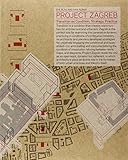
Eve Blau, Ivan Rupnik, eds. Project Zagreb: Transition as Condition, Strategy, Practice. Barcelona: Actar, 2007. Illustrations. 335 pp. $43.00 (paper), ISBN 978-84-96540-57-6.
Reviewed by Brigitte Le Normand (Indiana University Southeast)
Published on H-Urban (September, 2009)
Commissioned by Alexander Vari (Marywood University)
Productive Paradoxes: Transition as Permanency, and Powerlessness as Generative in Zagreb’s Urban Planning and Architecture
Recent writings on the built environment in socialist Eastern Europe tend to highlight one or both of the following themes: firstly, that socialist regimes tried to devise a specifically "socialist" urbanism and architecture, and secondly, that they encountered a great deal of practical difficulties in putting such ideas into practice. The resulting agglomerations and spaces are thus best understood as a product of both socialist ideology and socialist practice. Regardless of the authors' opinion of the value or success of these projects, they are consigned to the past, strange relics of a system that no longer exists and from which nothing can be learned.
That is why it is so refreshing to read Eve Blau and Ivan Rupnik's Project Zagreb, a collaborative volume that resulted from a two-semester seminar at the Graduate School of Design at Harvard University. Taking as a starting point Zagreb's current status as a city in transition, they posit that Zagreb has, in fact, been in perpetual transition for the last 150 years, and that insights into how to cope with instability can be gleaned from the efforts of previous generations of architects and urban planners. According to the authors, they were able to give coherence to the city's growth because they developed conscious strategies, which Blau differentiates from tactics, as being generative rather than merely reactive. Beginning with the Austro-Hungarian Empire and ending in the present, Blau, Rupnik, and various other contributors take us through a series of case studies, each one showcasing an attempt to create permanency in a context of instability, and often of limited resources.
Some of the case studies indeed make a strong argument. The development of Zagreb's green horseshoe (case study 3), for example, stands in powerful contrast to Vienna's Ringstrasse. Whereas the Ringstrasse came into being when the Habsburg emperor ordered the demolition of the city walls and their replacement by a monumental avenue of public buildings, the green horseshoe was made possible by the ad hoc maneuverings of Zagreb's city surveyor Milan Lenuci, starting in the 1880s. Although the city did not own the land on which he imagined the horseshoe, he preserved most of this land from private development by organizing public programming, such as sporting events, on its premises, until public institutions could be coaxed to take up residence there. Lenuci compensated for his lack of effective power through creativity, and in so doing brought into existence an urban figure that would continue to shape the development of the city for generations. Future municipal authorities in Zagreb would use similar informal strategies to further expand the city. Thus, in relocating the Zagreb trade fair (case study 12) south of the Sava River, Većeslav Holjevac, Zagreb's mayor in the early socialist period, managed to bring new infrastructure to this area of the city, an undertaking that was beyond the city's financial capacity and administrative purview. This development enabled massive construction in what would later become known as Novi Zagreb.
The case of the Endowment Block (case study 7) adjacent to Jelačić Square, in the 1930s, reveals a similar level of creativity in the face of powerlessness, this time at the level of the architect. The Endowment Block, like most of Zagreb's city blocks in the lower town, is quite large. Due to city regulations mandating that the periphery of blocks should be continuously developed, this part of Zagreb evolved into what Blau has termed "parallel cities," defined as "a condition in which the perimeter and the interior of the city block were subject to different codes and functioned according to different spatial logics" (p. 104). The conditions on the insides of these blocks were on the whole cramped, unpleasant, and sometimes unhygienic. However, in the case of the Endowment Block, which was freed up for construction after the demolition of a hospital, multiple architects working for different clients innovated a new type of spatial arrangement, creating a variety of internal corridors connecting the insides of the block to the street. Blau and Rupnik refer to this practice, which was used elsewhere in Zagreb, as "parcel urbanism" and to the practice of introducing new urban spaces into these parcels as "interpolation" (pp. 130, 134).
This volume undermines the common notion that, during the socialist era that began in 1945, architects and urban planners lacked creativity and flexibility. The self-managing company Jugomont, for example, became a leading innovator in the early 1960s, not only in Yugoslavia but also apparently globally, with its Jugomont 61 system for housing construction (case study 15). Through the design process, the Jugomont architects rethought the entire process of developing land into housing, from the provenance of construction materials to their transportation, the organization of the construction site, and even the life expectancy of the finishings. They then devised the most rational construction system possible, combining high-tech prefabricated and onsite materials, producing the most affordable apartment buildings in Zagreb. Ironically, the market reforms of the mid-1960s hurt Jugomont. Vladimir Mattioni informs us that "a new class of socialist 'managers' preferred buying these licenses from the West, receiving hefty commissions as a result, rather than developing new technologies" (p. 276). This example demonstrates that the limited nature of openness to the West until the mid-1960s had some positive consequences.
One thus finds it puzzling to read Vedran Mimica's comment later in the book associating creativity among today's young architects with "liberation" from government-imposed constraints (p. 286). This seems to contradict one of the important points made by the volume as a whole, that constraints also generate intense creativity. Mimica seems to contradict himself a few paragraphs later, deploring the fact that today's young architects are less interested in concepts than in regulations. This is, indeed, one of several inconsistencies between the arguments made in the various contributions. In the last contribution, for example, Charles Maier questions whether the practices outlined in this volume are really strategies, preferring to describe them as tactical. While it is obviously not essential for all the contributors to agree on all things, such discrepancies occasionally create the impression of a lack of internal coherence.
While the volume sheds a good deal of light on the practices of architects, it is less convincing in its dealings with symbolic and identity issues. Ivan Rogić presents the project of modernizing Zagreb undertaken in the late nineteenth century by the ruling elite in Zagreb exclusively as a Croatian nation-building project. This strikes me as a case of reading history backwards, looking for the seeds of a recently realized national project in the distant past. It seems far more interesting to conceive of Zagreb, as Maier puts it, as "a relational city, mediating overlapping claims for territorial jurisdiction, trying to tackle between alternative worlds." Consequently, urban planners and architects "have responded to territorial and political contexts--those of empire and nation and ideology--as they have looked east and west" (p. 325).The authors also claim that the multiple incarnations of Jelačić Square, from the erection of the statue of Ban Jelačić to his disappearance in the socialist period to the present day, is an example of cultural recycling, practiced by "Zagreb" which "reflects ... a discomfort with symbols and a comfort with change" (case study 1, p. 52). One is tempted to ask, who precisely are the authors referring to? Architects and urban planners? The citizens of Zagreb? And what evidence do we have that they were comfortable with change, that they did not experience frequent change as confusing or traumatic?This is perhaps an example of methodological differences that may frustrate historian readers approaching a book conceived by and written for architectural historians and designers. As the authors professed a desire to let the buildings speak for themselves, the nitty-gritty details were sometimes neglected. One wondered, for example, precisely what prerogatives the municipal officials in question had and did not have, and what regulations exactly constrained the architects. As noted in the case of Jelačić Square, the contributors had a decidedly more fluid notion of agency than that with which historians may feel comfortable. To give another example, Novakova Street, a housing development that was "designed by different architects for a variety of clients, and built over more than two decades" is described as a "result of collaboration" between architects, clients, and city planning (p. 150). It is unclear what "collaboration" means when actors do not interact with one another. Elsewhere, projects that were not realized are described as having "a decisive impact" (p. 146). That may be, but how does that actually work, in practice?
The last section of the volume, which deals with the most recent past, is perhaps the Achilles' heel of the book from the historian's perspective. Lacking the critical perspective of the rest of the contributions, these case studies seem less analytical than programmatic, introducing an uncomfortable tension into the book. While the best contributions in the volume reveal how the strategies deployed by authorities and designers, in Maier's words, provided "a temporal map, making logical the city that is disappearing, making desirable the conurbation that is emerging, and suggesting that there are really rational motives to make the transition," the final contributions, lacking self-awareness, seem to obscure this process, by naturalizing it (p. 329).
In some ways, the format of the book is well suited to the project. It is richly illustrated, and the photos, diagrams, and illustrations convey some very useful spatial information. At times, however, confronted with a provocative statement, one feels that more text and less images would have been preferable in explaining a concept. The images were also occasionally too small to read, and illustrations that are maybe self-explanatory to an architect would have benefited from legends. Moreover, while some of the contributors used footnotes, the focus of the volume as a whole does not seem to have been to document so much as to expose. As a result, while this volume does a compelling job of opening up important questions and proposing an interesting conceptual framework, it does not provide definitive answers.
If there is additional discussion of this review, you may access it through the network, at: https://networks.h-net.org/h-urban.
Citation:
Brigitte Le Normand. Review of Blau, Eve; Rupnik, Ivan, eds., Project Zagreb: Transition as Condition, Strategy, Practice.
H-Urban, H-Net Reviews.
September, 2009.
URL: http://www.h-net.org/reviews/showrev.php?id=24343
 | This work is licensed under a Creative Commons Attribution-Noncommercial-No Derivative Works 3.0 United States License. |

