



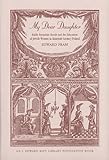
Edward Fram. My Dear Daughter: Rabbi Benjamin Slonik and the Education of Jewish Women in Sixteenth-Century Poland. Cincinnati: Hebrew Union College Press, 2007. xx + 337 pp. $39.95 (cloth), ISBN 978-0-87820-459-5.
Reviewed by Herbert Basser (Department of Religious Studies - Queens University)
Published on H-Judaic (March, 2009)
Commissioned by Jason Kalman (Hebrew Union College - Jewish Institute of Religion)
With Rhyme and Reason
From the thirteenth century until the present, rabbis composed legal how-to books for women so they could properly observe the Jewish laws that applied to them. Beginning in the early sixteenth century, these manuals were written in Yiddish and other spoken vernaculars, and they continue to be written in modern languages. Halachos of Niddah by Shimon D. Eider (1999) includes a preface with a perceptive overview of the uses and abuses of these works, and it allows us to find nuances in Edward Fram’s evaluation of the impact and controversy surrounding these guides.
Rabbi Binyamin Aharon ben Avraham Slonik’s life spanned the latter half of the sixteenth century and the early part of the seventeenth century. This master of Jewish law and lore was a student of two outstanding scholars of the sixteenth century: Maharshal (Rabbi Shlomoh Luria) and Rama (Rabbi Mosheh Isserles) who had studied together as yeshiva students. Luria’s major work is an exposition of Talmudic Novellae, not legal rulings as such. Isserles is an important legalist and commentator to the Code of Yaakov ben Asher and the major glossator to the Code of Rabbi Yosef Caro. Slonik penned numerous authoritative responsa and is noted as a major posek (halakhic decisor). However, the scholarly chain of tradition behind Slonik’s erudition is only of passing interest to Fram. He is more interested in his guide for women, written in Yiddish, to the laws of niddah (ritual purity and menstruation), rules of candle-lighting, and instructions of separating "challah." Slonik's book was most likely known as Sayder mizvoys ho-noshim as opposed to Fram’s modern Israeli vocalization of it as Seder mizvot ha-nashim, and it was written to educate women in the minutiae of these matters. Slonik discussed laws revolving around technical procedures for the calculation of menstrual and non-menstrual parts of periods from start to finish (a minimum of twelve days by law), as well as rules for preparing oneself for ritual immersions and the possible complications that might arise in every step of these procedures. He also explained the proper customs relating to lighting Sabbath and festival candles. He provided detailed examination of baking rules, concentrating on the amounts of dough needed, and kneaded, to have an obligation requiring challah separation. He gave clear steps. Also, the rabbi used talmudic sources, reworking them, to show the seriousness of these obligations.
Fram is no slouch. He provides summaries of topics of much wider interest than just those bearing on Slonik’s digest, and in all but a few instances he has chosen the best modern scholars for his information. His overviews are masterful: halakhic handbooks; the implications of printing for literacy; intellectual currents in Germany, Italy, and Poland; education (especially of women); women’s roles; and the spread of the Shulhan Arukh as an authoritative code. Fram seems to think that the roles of men and women he describes in the sixteenth century speak of a society long past. However, there is very little in this description that is not standard life today among the significantly large numbers of Jews (very large numbers if the children of non-secularist Jewish communities worldwide are included). Indeed, all of Slonik's laws and their presentation in Fram’s work look standard (with rare exception) in terms of current manuals.
The volume has something to tell us about the development of Yiddish as well. This review will first consider the Yiddish text that lies at the heart of this book. In point of fact, the Yiddish guide comes at the end of his book. Fram enlisted the able assistance of Agnes Romer and also thanks other Yiddish specialists. It seems that basic Polish Yiddish has not changed too much over the years. Of interest is the orthography: both vav and feh were used, "v" and "f" sometimes pronounced the same in German too (e.g., viel) which interchanged in our Yiddish text (when signifying “f”) even when spelling the identical word. I was also struck by the writing of prefixes as separate words, e.g., "fahr zinden" (sin). "Oon gemach" is, in my opinion, needlessly emended to "oon-gemach" (p. 157n2)--prefixes are regularly separate words in this text and "oon" should not be rendered as done here by mis-signifying "oond" (and). "Oon," in my opinion, is the entire word as it is pronounced. The text, also in my opinion, has no abbreviations in it. That is: Fram adds a geresh-apostrophe suggesting "oon[d]," when at all times "oon" is sufficient. It is an overcorrection appearing throughout the work and can lead to confusion. No need to write "oon[d]" and then go on to say that we must emend to read as one word "oon-gemach." Did he not notice that prefixes are separated as a matter of rule in his text and that we need no emendation? His emendation is precisely the way the text reads.
In discussing the text I will generally confine my remarks to page 157, the beginning of the guide, to exemplify the whole. In regard to orthography, I found it striking that "fahr-z[u]inden" betrays its Germanic origin from "u umlaut (ü)" (as does the spelling of "b[u]ichlin" [pamphlet]) which then naturally rhymes with the word "kinden" (children) that follows. (Note the variations in the 2nd to last line bwyklyn but byklyyn in the 3rd line as the u umlaut disappears.)
Let us enter the Yiddish text by saying something about the sporadic but also generous use of rhymed prose in it. I am at a loss to explain the places where the rabbi used rhyme and where he did not. But I have not given the matter too much thought. The guide ends with a few lines of Hebrew also utilizing rhymed prose. Unit 1 has thirty-three printed lines--the printed punctuation and translation sometimes obscure the phrasing intended by the rhyme (p. 157). The observation is not trivial. We look at a few lines, as I have translated them, to show what is at stake.
“God we shall Loyben (praise)/
For he is deserves our praise: He is incomparable below and Oyben (above).
And [just] as he supplies all creatures their needs, so in this attractive pamphlet for women we have done his Villen (will)/
to improve the body and adorn its Zillen (spiritual core).
Not like [a pamphlet of ] song or Mer (fable)/
only of God-fearing matters does it (der)-Her (inform).”
My translation varies somewhat with Fram's since I have been guided by the rhyme scheme to find periods and commas while our translator ignores (or more likely, did not notice) the scheme. The translator gives us: “We shall praise God for He is worthy of praise. He rules above and below. He nourishes all creatures. It is for this reason that we wanted to write a lovely booklet for women, for the betterment of the body and the adornment of the soul--unlike songs and tales. Rather, only containing God fearing things so that everyone should know what to observe and what to avoid...” (p. 156). One can readily perceive the move backward and forward in nuance, cause and effect, and the need to shift words away from normal prose word order. In taking the rhyme scheme into account we can appreciate that Fram’s concern of “stylistic confusion” is simply poetic license (p. 151). Also based on this scheme, I would suggest correcting "shpra(w)n" (157, line 7) to shpawren (as properly, p.171 unit 10, line 9) for it to rhyme with "der-fa(w)ren" (p. 157, line 8--apart from the fact that "shpa(w)ren" is its proper spelling). Also on this page it would be useful to indicate a pause (perhaps a comma) after "hadlokoh," which goes on to rhyme with the following "tsdokoh"--similar to the proper punctuating of "kalloh" rhyming with "challoh" (which Fram’s edition in this place happens to get right).
An interesting complication in Yiddish rhyme occurs on page 173, unit 12, line 3: "oon der toyt vert zein la[w]n zein":(“and death will be his reward”). The rhyme scheme needs to end in “a(w)n” but "vert zein, zein la(w)n" with a double “zein” was too bewildering and the zein takes it's better placement at the end as a verb. Only after readjusting the final zein before la(w)n can this interesting word then rhyme with what follows: "vor oygen ha(w)n" ("set before his eyes"). I wonder if all the manuscripts have our word order. Notes would have been useful in such cases. Furthermore, what is noted as an addition (based on a variant text) is really integral to all texts: two lines where we have a perfect rhyme ("halten/... alten") (p. 157n1). I have no idea whether Fram noticed the rhyme scheme here; and in general I found no mention of it anywhere in his book. Those lines should have been placed into his reading if only in parentheses. They are almost certainly part of the original text.
As a whole, this is a very well written and competently executed contribution to studies of Jewish books for women in Yiddish. There are a few statements, and only a few, with which disagree. In his treatment of texts, both positive and negative toward the status of women, he mentions a passage that "perpetuated a view of women as vicious and dangerous, if not completely mad or inhuman." His note tells us, "Already in the Talmud, the amora Abaye was of the opinion that women are ‘a breed apart’ (B. T., Shabbat 62a. See Wegner, 'Image and Status,' 82.)" (p. 43n27). In fact, Abaye’s statement is very positive since it recognizes that women and men share different cultures in respect to their dress conventions and psychological attitudes toward items that have halakhic implications. Women are not to be put into male categories and the Bavli devotes considerable space to principles that play out differently for the two genders. In general, as I have noted elsewhere, Romney Wegner is not a reliable source.[1] Here, in a rare instance, Fram’s categories get muddled. Also, Fram’s discussion regarding original sin, in connection with a discussion of Eve’s three transgressions needing atonement (poetic justice really), engages in needless anti-Christian polemic. The concept of descendants atoning for sins of ancestors is not antithetical to rabbinic thought. The topos is found, for example, in Numbers Rabba 13: a sin offering on behalf of the tribe of Judah in the desert mishkan (tabernacle) for the sin of ancestor Judah who tricked his father, Jacob, with Joseph’s bloodied garment.
I would have preferred that Fram discuss how Slonik reworked his sources to make them more immediate for his audience, e.g., Tanhuma Noah 1: "And since Scripture (literally) says whoever spills the blood of Adam so within man shall his blood be spilled (Gen 9:6)./ Her blood is spilled in punishment in surety/ and she shall observe the blood of menstrual purity/ That it may atone for the spilling of Adam’s blood in perpetuity." Slonik completely ignored the Bavli, Yerushalmi, Tanhuma, Genesis Rabba, and Avot de Rabbi Natan accounts to create his own story (I know of no other source for this) that Eve beat Adam into submission to eat the sinful fruit, bringing him pain and suffering (p. 160). Women, Slonik stated, should remember the lesson monthly and this is a reason to observe niddah law. By conflating and reworking a number of sources (including Rashi’s comment to Bavli Shabbat 32a), Slonik found that Eve contaminated all of us, the people of Israel, who are “the dough offerings of the world”--a construction bridging several sources that is found nowhere else (p. 162). In his discussion of candle-lighting laws, the rabbi claimed that Eve extinguished our light by bringing all of us certain death and now women atone by lighting candles (p. 164). Slonik read "Adam" in his sources as "Jews" (not without warrant) and Eve as "Eve." The poetry of the midrashic images allowed Slonik room for his creativity.
Throughout, the choice of vocabulary for the English translation is generally good but Fram's use of modern Hebrew in textual footnotes is somewhat strange considering the text is in Yiddish and the translation in English. Why not use English for them?
I now turn to the first sections of Fram’s work, which contains a wealth of information. He discusses Jewish legal manuals and literacy before the use of printing, and devotes considerable attention to centers of Jewish learning in the fifteenth and sixteenth centuries and the role of women in these centers. He then discusses the history of popularizing legal “how-to” manuals with much attention to the analysis of Rabbi Slonik’s methods. For the most part, these chapters are well researched, finely documented, and easy to read. Their tone is scholarly but not obtuse. Fram deserves credit for bringing Slonik’s work out of the dustbins of libraries and into a well-printed format. A critical edition might have been an even greater service but students of Yiddish have more material to look at now and scholars of Jewish law will find the digest intriguing. Fram’s introductory chapters are worthwhile reading for everyone quite apart from the legal digest.
This is a commendable study and recommended particularly for those interested in halakhic digests of the past that deal with the role of women in Jewish law and custom.
Note
[1]. Herbert Basser, "Feminism and Mishnaic Law: A Response to Judith Romney Wegner," in Approaches to Ancient Judaism: New Series, vol. 11, ed. Jacob Neusner (Atlanta: Scholars Press, 1997): 3-15.
If there is additional discussion of this review, you may access it through the network, at: https://networks.h-net.org/h-judaic.
Citation:
Herbert Basser. Review of Fram, Edward, My Dear Daughter: Rabbi Benjamin Slonik and the Education of Jewish Women in Sixteenth-Century Poland.
H-Judaic, H-Net Reviews.
March, 2009.
URL: http://www.h-net.org/reviews/showrev.php?id=23860
 | This work is licensed under a Creative Commons Attribution-Noncommercial-No Derivative Works 3.0 United States License. |

