



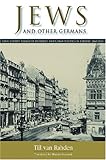
Till van Rahden. Jews and Other Germans: Civil Society, Religious Diversity, and Urban Politics in Breslau, 1860-1925. Translated by Marcus Brainard. George L. Mosse Series. Madison: University of Wisconsin Press, 2008. Tables. 486 pp. $65.00 (cloth), ISBN 978-0-299-22690-9; $29.95 (paper), ISBN 978-0-299-22694-7.
Reviewed by Brendan Karch (Harvard University)
Published on H-Urban (July, 2009)
Commissioned by Alexander Vari (Marywood University)
Rewriting Jews into German History
Eight years after the publication of Till van Rahden’s Juden und andere Breslauer--eight years in which the term “situational ethnicity,” central to his work, has steadily gained currency in nationality and ethnic studies--this important book has received an English translation under the title Jews and Other Germans. The translated monograph is nearly identical to the original: footnotes have been updated and converted to endnotes, and the numerous tables have likewise been moved to the back, but the main text remains essentially unedited. Nevertheless, the significance of van Rahden’s project extends well beyond the specific circles inhabited by German-speaking academics, making this a welcome translation. Scholars of nineteenth-century liberalism, urban history, as well as Jewish history, and indeed anyone interested in the complexity of ethnic boundaries in modern urban societies can benefit from this engaging case study of Jews and “multicultural liberalism” in this formerly German metropolis (p. 5).[1]
Van Rahden sets out two main tasks for his work. The first is to challenge an older, but still established historiography, which presents Jews of the German Kaiserreich primarily as the passive objects of increasing anti-Semitism, or as a distinct subculture. By focusing as much on the limits of anti-Semitism as its successes, and providing a broad sociological profile of the high level of Jewish integration in Breslau society, he works to write “the history of German Jews simultaneously as a part of Jewish, German-Jewish, and German history” (p. 3). To do this, as van Rahden recognizes, requires breaking the telos of the homogenous nation-state still inherent in much writing on Jewish-German history, which assumes the violent path to a German nation rid of most Jews. It requires, moreover, the recasting of modern history on German Jews and anti-Semitism in terms of broader, more current debates about multicultural societies, which is his second task. Asserting that ethnic difference and cultural plurality are “not only desirable but also unavoidable,” van Rahden articulates in his work a liberal multiculturalist model that accepts individual difference in the context of a tradition of a universalist project of civil rights and social development (p. 4). He contrasts this to more radical visions of multiculturalism, which see the liberal project as inherently effacing all notions of ethnic or cultural difference. While the liberal multicultural state cannot erase cultural tensions any more than it can erase social difference, van Rahden suggests its significant capacity to diminish the potential negative consequences of ethnic difference.
In writing the history of Jews in Breslau in this theoretical frame, van Rahden revises traditional models of subcultures and assimilation, which assume the normative existence of a dominant, homogenous national body. The “life world” of Jews in this modern, anonymous metropolis was “marked by diffuse forms of inclusion and exclusion”--depending on one’s marriage partner, network of friends and club memberships, occupation, and above all social status--in a manner far too varied and complex to conform to a linear scale running from isolated subculture to assimilated Jew (p. 8). Instead, van Rahden adopts the term “situational ethnicity” to give justice to this complexity, suggesting that Jews experienced their Jewishness only in certain milieus, while never rising to the level of a self-defined ethnic group (p. 8). Jews were far from marginal in German society, but rather formed a cornerstone of liberal society as Germans, and lived among the poor as workers. That they were Jewish need not elide or deprecate their other roles and identities in society, he argues.
At the same time, van Rahden remains sensitive to the disconnect between a contemporary, liberal multicultural society and the one he studies. Liberal thinkers in nineteenth-century Germany almost invariably equated their project with the goal of erecting a society built on Protestant morals. In exchange for Jewish emancipation in the mid-nineteenth century, liberals expected them to assimilate fully. These expectations were as unrealistic as those of modern day cultural pluralists who see no room for multiculturalism to coexist with liberal universality. Yet, thanks to the relatively high proportion of Jews in Breslau (ranging from 4 to 8 percent of the population in the 1860-1925 period), and particularly thanks to their overrepresentation in the upper strata of liberal politics and society, Jews and other Germans were able to craft an imperfect experiment in liberal multiculturalism, even if the models of accepting difference were never explicit. Van Rahden also pays particular attention to the precise ways that anti-Semitism infringed on this experiment, without assuming the total failure or breakdown of multiculturalism in the face of anti-Jewish discrimination from conservative and official Prussian circles.
How does van Rahden set out to prove his case empirically? The substantive chapters of his work address social status and income levels, associational life, Christian-Jewish marriages, the educational system, and anti-Semitism. (We learn from the endnotes that a planned chapter on residential patterns had to be abandoned after a catastrophic computer error destroyed his database.) His ultimate empirical goal is to reconstruct patterns of inclusion and exclusion of the whole of the city’s Jewish population--a task that meant assembling, through painstaking archival research, immense databases of evidence. The thousands of hours invested in gathering statistics (organized into forty-eight tables) are truly mind-boggling. His methodology, and his results, at times skirt the disciplinary boundaries between history and quantitative sociology. Thankfully for the narrative historian, van Rahden alternates between numerical data and historical background, including not only pertinent narrative (particularly in his chapter on anti-Semitism) but also many personal anecdotes and vignettes, all of which add a vivid glimpse into the everyday life of Breslau’s Jews.
The overall statistical and empirical portrait of Jews in pre-World War I Breslau emphasizes their varied lives and high level of social integration with non-Jewish society. In chapter 1, van Rahden carefully dissects the social status of Jews in Breslau, drawing a careful distinction between income and class level. He discovers wide variations in wealth that play against stereotypical depictions (both at the time and in historiography) of the haute bourgeois Jew. While he recognizes the serious overrepresentation of Jews at the uppermost level of bourgeois society, he also concludes convincingly that the majority of Jews lived in households without a bourgeois income. His analysis also takes into account Jewish women, who tended to be much poorer on the whole than Jewish men, leading him to claims that “Jewish poverty in Breslau had a female face” (p. 47). Chapter 2 examines the high level of integration among Jews into Breslau’s secular associational life beginning in the 1850s. The analysis does not shy away from discussing a minority of clubs that tended to exclude Jews, particularly in the 1880s and after, when anti-Semitism grew as a “cultural code” in conservative nationalist circles. This anti-Semitism, however, did little to dent the high level of social mixing, which also served as the basis for many friendships between Jews and non-Jews. Associational patterns compel van Rahden to conclude that many Jews practiced situational ethnicity, living simultaneously in both Jewish and non-Jewish social worlds.
The next two chapters of his work address Jewish-Christian marriages and educational policy. Critiquing portrayals of mixed marriage, which suggested total assimilation or even moral decay, van Rahden sees the increasing rates of Jewish-Christian marriage as a sign of the widening experiment in multicultural liberalism and the loosening of gender restrictions for the “new woman” (pp. 110-116). He finds that rates of interreligious marriage were much more common among Jews in the lower classes, suggesting that these Jews interacted more with non-Jews than did their bourgeois coreligionists, while also paying less attention to upper-class marriage strategies of social advancement or maintenance of status. His research into education works from the basic premise that Jewish students, the majority of whom attended public Christian schools (nearly all schools in Germany at the time being confessionalized), were subject to acculturation policies through intermixing and through the nationalist school curriculum. Jews were overrepresented in the elite track of secondary schools (the Gymnasium), but tended to make educational decisions based on their class rather than any religious solidarity. Religious pluralism, however, had its limits in educational policy and teacher hiring. When the municipality (dominated by liberals) fought in the 1870s to open an inter-confessional Gymnasium that treated Protestants, Catholics, and Jews as equal participants, they encountered resistance from the Prussian state and from Catholics hoping to have the school be their own. Moreover, after the turn of the century, not a single public school teacher out of more than 1,100 in the city was Jewish.
As the example of educational policy suggests, many of the limits to Jewish integration and multiculturalism came not from the liberal-dominated municipality, but from the decidedly more conservative, and often anti-Semitic, Prussian state administration. In his final chapter on anti-Semitism, van Rahden explores this dynamic through case studies of political anti-Semitism, conflicts over naturalization of foreign Jews, and honoraria for distinguished citizens. Political anti-Semitism emerged at the local level among a broad swath of Catholic and right-wing nationalist dissenters in city politics in 1880, but proved a brief anti-Semitic flame for city politics, which remained dominated by Jewish-friendly liberals until World War I. Anti-Semitism was essentially shut out of local politics and considered an insult to rational civic governance. As naturalization and expulsions show, however, the Prussian government was much more willing to hew to exclusionary nationalism, as they overrode local recommendations to naturalize foreign Jews and took a hard-line stance against citizenship and for expulsions. Municipal liberals, meanwhile, tended to favor naturalization for all those who were seen to possess the proper financial and moral capital. This emphasis on class propriety and civic pride, regardless of religion, also led Breslau to grant its first honorarium to a Jew in 1897 (one the first cities in Germany to do this), when the botany professor Ferdinand Cohn was given the city’s highest honor. The contrast between this era and the period beginning with World War I is made strikingly clear in van Rahden’s conclusion. As he notes, the breakdown of interreligious social links and rising violence in the 1920s only serve to reconfirm the high level of integration before World War I.
Jews and Other Germans begs the question of applicability to other German cities or localities. A range of city-specific studies in the same era indicates that integration of Jews was not limited to Breslau. Despite significant regional variations, urban centers, such as Frankfurt am Main and Königsberg (today’s Kaliningrad), for example, seem to have maintained vibrant Jewish communities that were well-integrated into German society.[2] While these works and others suggest a high level of assimilation and peaceful coexistence, van Rahden pushes the methodological boundaries of Jewish-German history, in order to challenge assumptions about the nature of integration, the coherence and autonomy of Jewish communities, and the impact of Jews on the German experiment in liberal multicultural society. Testing his theories about Jews’ central role in the practice of late nineteenth century liberal multiculturalism would necessitate a fresh look at urban cases across Germany. (Nonurban Jewish settlements would be much more difficult to investigate using van Rahden’s methods.) Nonetheless, there is no overwhelming reason to believe that Breslau was a unique case, or that similar studies of other German cities would yield a drastically different portrait of Jews and other Germans.
Upon finishing this work, the reader will doubtless come away feeling that van Rahden has more than proved his thesis--and perhaps even done so a bit too exhaustively. The resolute focus on proving “situational ethnicity” sometimes renders the analysis a bit single-minded, while the reader’s head dances with other issues that are raised, but sometimes left underexplored. In particular, the nature and scope of intra-Jewish social solidarity deserves more attention. Although this strays from the core purpose of his work, which is to assess integration with non-Jews, relations within Jewish circles would be a good way to measure the situational salience of Jewish identity. A greater focus on class difference among Jews may have been welcome in this context: one gets the sense that a working-class Jew lived much more in social circles with fellow working-class Germans than with upper–class Jews, but this remains underexplored. The issue of Jewish religious solidarity could have also shed light on patterns of identity and social inclusion. For a group ultimately defined by religion, we learn little (as hard as it may be to discover) about variations in religious practice. Did the “secular Jew” who rarely attended synagogue find him or herself more likely to integrate? While van Rahden gives attention to debates between Zionists and more liberal Jews, he could have analyzed the implications of this intra-Jewish diversity to greater effect. Finally, Jews and Other Germans still bears the clear marks of a German dissertation, a format more commonly known for thoroughness than for stylistic bravura. The anecdotes and narrative examples will likely form the most exciting portion of the analysis for nonspecialists, and to broaden the book’s appeal, these portions of the book could have been better highlighted for an English-language edition.
Nonetheless, this work remains a tour de force and a highly important contribution. The stimulating introduction in particular is a must-read for scholars grappling with issues of Jewish identity or multiculturalism in modern Germany, or in urban societies more generally. Van Rahden's work provides historians with a working model to challenge assumptions about ethnic enclaves or subcultures. In so doing, Jews and Other Germans participates in a larger project to undo one key aspect of nation-state teleology: the assumption that social boundaries between ethnic groups formed naturally, dividing them neatly into a world leading to nation-state homogeneity. In the context of modern Central Europe, this has meant revising depictions not just of Jews, but also other ethnicities--Poles, Germans, Czechs, Slovaks, Hungarians, Slovenes, and Romanians, to name only a few--as having fundamentally distinct histories as well-defined, mutually exclusionary groups. Van Rahden’s portrait of Jews and other Germans in Breslau makes it much more difficult to sustain this assumption, and begins to fill major lacunae in our understanding of urban history and ethnic difference, particularly in the long nineteenth century in Central Europe.
Notes
[1]. Breslau, in the historical province of Silesia, was Prussia’s second largest city in the late nineteenth century. Its 1910 population exceeded five hundred thousand residents. The city, along with the vast majority of Silesia, was ceded to Poland in 1945, and took on the Polish name Wrocław.
[2]. Andrea Hopp, Jüdisches Bürgertum in Frankfurt am Main im 19 Jahrhundert (Stuttgart: Franz Sterner, 1997); and Stefanie Schüler Springorum, Die jüdische Minderheit in Königsberg/Preußen, 1871-1945 (Göttingen: Vandenhoeck und Ruprecht, 1996).
If there is additional discussion of this review, you may access it through the network, at: https://networks.h-net.org/h-urban.
Citation:
Brendan Karch. Review of Rahden, Till van, Jews and Other Germans: Civil Society, Religious Diversity, and Urban Politics in Breslau, 1860-1925.
H-Urban, H-Net Reviews.
July, 2009.
URL: http://www.h-net.org/reviews/showrev.php?id=23661
 | This work is licensed under a Creative Commons Attribution-Noncommercial-No Derivative Works 3.0 United States License. |

