

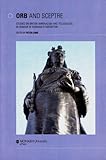
Peter Limb, ed. Orb and Sceptre: Studies on British Imperialism and Its Legacies, in Honour of Norman Etherington. Clayton: Monash University ePress, 2008. xv + 269 pp. (e-book), ISBN 978-0-9803616-6-7.
Reviewed by Jane Carruthers (Department of History, University of South Africa)
Published on H-SAfrica (August, 2009)
"Hidden Forces at Work in the Making of an Empire"
This review was commissioned by Peter Limb for H-SAfrica. The review was edited by Mark L. Lilleleht, a review editor for H-Africa.
Orb and Sceptre offers new angles on, and insights into, the history of British Empire and its legacy.[1] Contributions come from a dozen scholars all associated with the University of Western Australia (UWA), some as former postgraduate students, others as members of staff. As the subtitle indicates, this book is a festschrift in honor of Norman Etherington, who retired recently after many years of service in the Department of History at UWA. Etherington's contribution to history teaching and to historiography is well worth celebrating in print for he is doubtless the foremost scholar of imperialism in Australia. His long tenure at UWA brought much respect to that institution generally and to its Department of History in particular. An American by birth and training, Etherington was drawn to British imperial studies when he studied at Yale in the 1970s under Robin Winks, an interest that widened and deepened through his later association with Hugh Stretton at the University of Adelaide.
Etherington's own legacy has been immense and he has been rightly lauded as an outstanding teacher and brilliant researcher. He has made important speeches as president of the Australian Historical Association, at the opening of the Maritime Museum of South Australia, and at a joint sitting of both houses of the South Australian Parliament, among others. Many historians gain their reputations by homing in on an important topic and dissecting it over decades. That is not the case with Etherington. While the British Empire has formed the core of his attention, within that broad category he has always fearlessly pushed the boundaries of both ideas and themes. Often framed within missionary endeavors and issues around Christianity--the bedrock of imperial ideology that offered new mind-sets and worldviews to the colonized and elicited often unexpected indigenous responses--Etherington's research has made a significant intellectual contribution.
The volume contains a bibliography of Etherington's extraordinarily prolific publications and printed public addresses: nine books and two, three, or even four journal articles, review essays, and book chapters every year since 1970. With a writing style that is clear, full of vitality and energy, following mission and empire have led Etherington into the history of identity, gender and ethnicity, segregation and apartheid, precolonial societies and the Mfecane, socialism and capitalism, explorers and cartography, literature, and biography. South African history, in particular, has benefited from his engagement with the past. For example, The Great Treks: The Transformation of Southern Africa, 1815-1854 (2001) put an entirely new gloss on nineteenth-century migrations in the subcontinent; while Mapping Colonial Conquest (2007), "A False Emptiness: How Historians May Have Been Misled by Early Nineteenth Century Maps," published in Imago Mundi (2004), and "Genocide by Cartography," published in D. Trigger and G. Griffiths's edited collection, Disputed Territories (2003), have ensured that never again can southern African historians neglect the ideology of space. In short, Etherington's contributions have often identified historical interstices and opened the floodgates for innovative research. This collection is divided into three parts. The tensions between metropole and periphery are explored in chapters 1 to 3; the networks of power and knowledge rethought in chapters 4 to 7; and transnational and global entanglements are given priority in chapters 8 to 12.
Etherington's innovative thinking and provocative approach is reflected in the chapters of this book. They all look toward a fresh historiography, one spearheaded by younger scholars whose arguments are shaped by trends in feminism, dependency theory, postcolonialism, and other philosophies of recent decades. These ideas have begun to permeate a reconceptualization of imperial and Commonwealth history and have led to discovering new links between former colonies and their imperial pasts. This is exciting new research and Orb and Sceptre makes for fascinating reading at a number of levels. Importantly, the legacy of imperialism does not wane. In his introduction, Peter Limb quotes John MacKenzie: "'Whatever else may be said about the British Empire, it is clear that we need to understand its history in order to comprehend much of the present.... Ultimately, empire was a joint enterprise between the dominant and the subordinate peoples, with elements of co-operation as well as conflict ebbing and flowing in imperial territories'" (p. xiii).
The purpose of a review is not to summarize every chapter in a work such as this, nor to single out specific contributions above others--it is the whole that is important. The various chapters do not cohere tightly, but instead generally analyze discrete and very different aspects of the imperial experience that, while extremely interesting and illuminating in themselves, are also thought provoking in terms of advancing imperial historiography along the lines that Etherington pioneered in his own writing. There is a strong biographical strand, but contributors Fiona Groenhout (on Govind Singh), Jennifer Weir and Etherington (on Theophilus Shepstone), Weir (on Shaka), Keith Smith (on Lord Chelmsford), and Jeremy Martens (on Henry Parkes) avoid tedious chronological narrative and concentrate instead on very different and unusual aspects of these people's lives as they relate to the imperial tapestry. For example, we learn of the aberrant personality and behavior of Singh, the princely ruler of the state of Datia (presently Madhya Pradesh) whose scandalous lifestyle caused Britain enormous trouble in its indirect rule of the state. The chapter on Shepstone dissects a single, primary source--a letter written by Shepstone to Henry Francis Fynn in 1836--that suggests aspects of Shepstone's private life may have had a formative and enduring effect on his "native policy." Weir's exploration of how the Zulu king Shaka manipulated his traditional diviners to benefit his contemporary relationship with colonial authorities is also fascinating. She explains how these events came to permeate colonial historiography, a topic that is also dealt with by Ryôta Nishino in an analysis of how colonial attitudes emanating from work of the settler historian George McCall Theal on the Eastern Cape frontier war of 1818-19 (written in 1890) lasted well into the modern era in South African school textbooks. Smith's explanation of the relationship between Lord Chelmsford and Sir Garnet Wolseley during the Anglo-Zulu War of 1879 introduces a novel interpretation of the progress of that war and revitalizes a subject that has hitherto been regarded as well worn. Martens's chapter on Henry Parkes (the well-known nineteenth-century politician in New South Wales and champion of Australian federation) highlights events of 1888 during which Parkes opposed immigration to Australia of Chinese people and manipulated Britain's Colonial Office as well as citizens and fellow politicians in Sydney and Melbourne in negotiations around the matter.
Four chapters deal with the twentieth-century legacy of imperialism. In an absorbing chapter, Limb explains how cleverly many early leaders of the African National Congress (ANC), which was founded in 1912, used imperial values and mores to construct complex identities that provided purchase on the British World but simultaneously, and contradictorily, also contributed to the growth of African nationalism. The ambiguous relationship between periphery and metropole could not be better drawn than in this succinct contribution that identifies the roles played by a large number of ANC leaders--including Pixley Seme, Sol Plaatje, John Dube, and Josiah Gumede--until the 1930s. Tim Dymond offers a related kind of history, but on a larger canvas. In short, Australian conservatives in the mid-twentieth century used Britain's experience as the kind that Australia should eschew--the "mother country" lacked prestige, was in economic decline and dynamism, and was marked by an absence of entrepreneurial spirit. Essentially, "Western Civilisation" rather than "British loyalty" became the mantra of conservatives. The United States was the new model and before long Australia was its ally. Jason Lim's chapter picks up on the economic strand by combing through the rich records (held at Cambridge University Library) of Jardine, Matheson, and Company, a tea trading company founded in 1832. By the early twentieth century, the parameters of the tea industry had changed markedly, especially in terms of the decline of the Chinese tea trade owing to political and economic circumstances. Lim deals with the tea company's involvement in the tea producing province of Fujian, and his contribution highlights the transnational aspects of imperialism and nongovernmental flows of expertise, capital, and ideas around the globe. The fourth contribution in this suite also relates to global entanglements but at a very different level: the reaction of the British royal family, particularly of Queen Elizabeth, to the death of Princess Diana. Jennifer McGuire shows how the queen's public persona, since her accession in 1952, has been carefully manipulated "to accommodate a changing relationship with the Commonwealth" (p. 12.1--the pagination, to accord with the e-version of the book, is by chapter, hence 12.1 refers to chapter 12 page 1, and so on). McGuire uses the queen's statements and appearances on radio and television to argue that the "family values" of the royals (and of the 1950s) were transmuted onto Commonwealth membership, and that stability and commitment--as befitting a model family--were to be its hallmarks.
Two other chapters pick up on Etherington's interest in space and place. Felicity Morel-EdnieBrown gives details about how the Western Australian city of Perth came into existence in 1829, including how the town was deliberately planned to project imperial values. Various aspects of imperial city life--social, political, commercial, and military--were separated, "both for protection and for control" (p. 4.7). Perth's precedent lay in such towns as Williamsburg, Virginia, heavy with symbolism appropriate to a state capital. There were wide streets, an imposing governor's residence and other public buildings, a central square, and private dwellings with large gardens, giving a "rustic appearance" (p. 4.10). Streets were named after landmarks in London (e.g., Russel Square) or after prominent imperial politicians (e.g., Lord Palmerston). Swamps (later drained) cut Perth dwellers off from any association with Aboriginal people. This chapter is usefully augmented by many illustrations, town plans, and diagrams. In her conclusion, Morel-EdnieBrown summarizes the values and self-consciousness of Perth, "Dullsville"? "Cinderella"? "Melbourne's poor relation"? "An ongoing tension between buoyant enthusiasm and a restrictive and controlling governance"? (p. 4.31).
Natalie Lloyd takes up another environmental aspect of imperialism: zoological gardens. She identifies how zoological gardens in Australia were promulgated to showcase imperial aspirations by way of landscape and garden design, but also, and most important, acclimatization. Lloyd explains how the zoological gardens can be viewed as imperial texts, as well as evidence of the relationship to empire of the natural world. She critiques Melbourne Zoo through the "Garden of Eden" envisaged by the first director, Albert Le Souef (who was, incidentally, the first person to breed Australian scrub turkeys in captivity and whose family was extremely prominent in early Australian ornithological circles).[2] The other case study is Taronga Zoo in Sydney, a space less regulated than Melbourne's zoo, and an example of a "natural" environment in which animals might be displayed for the enjoyment of visitors and--without bars between wildlife and spectator--their titillation. Lloyd's analysis of Australian zoos highlights the difference between these colonial spaces and the zoos of Britain in terms of the distinction between metropole and periphery, a relationship whose changes are so interestingly evident in zoo design and the exhibition of animals.
The editor and contributors to Orb and Sceptre are to be congratulated on gathering such an appealing collection to honor, in equal measure, the rich contribution that Etherington has made to southern African, imperial, and Australian history in the course of his formal academic career.
Note
[1]. This edited collection is available as an e-book through Monash University ePress and in print through Sydney University Press. The title of this review comes from Keith Smith's contribution to this collection, "The Irregular Progress of Empire."
[2]. See Libby Robin, The Flight of the Emu (Melbourne: Melbourne University Press, 2001).
If there is additional discussion of this review, you may access it through the network, at: https://networks.h-net.org/h-safrica.
Citation:
Jane Carruthers. Review of Limb, Peter, ed, Orb and Sceptre: Studies on British Imperialism and Its Legacies, in Honour of Norman Etherington.
H-SAfrica, H-Net Reviews.
August, 2009.
URL: http://www.h-net.org/reviews/showrev.php?id=23584
 | This work is licensed under a Creative Commons Attribution-Noncommercial-No Derivative Works 3.0 United States License. |

