




Margaret Humphreys. Intensely Human: The Health of the Black Soldier in the American Civil War. Baltimore: Johns Hopkins University Press, 2007. xx + 197 pp. Ilustrations. $40.00 (cloth), ISBN 978-0-8018-8696-6.
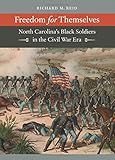
Richard M. Reid. Freedom for Themselves: North Carolina's Black Soldiers in the Civil War Era. Chapel Hill: University of North Carolina Press, 2008. xvii + 420 pp. Illustrations, maps. $40.00 (cloth), ISBN 978-0-8078-3174-8.
Reviewed by Gregory J. W. Urwin
Published on H-CivWar (November, 2008)
Commissioned by Charles D. Grear (Prairie View A & M University)
Imagining New Approaches to the Black Military Experience
The nearly simultaneous release of the feature film Glory (1989) and Joseph T. Glatthaar’s pioneering book, Forged in Battle: The Civil War Alliance of Black Soldiers and White Officers (1990), inspired a steady stream of scholarship on the United States Colored Troops (USCTs) that continues to this day. Works devoted to the African American military experience in the Civil War have taken a variety of forms. They include general overviews, annotated collections of letters written by black soldiers, and the memoirs or letters of their white officers. Some historians have written individual biographies of USCT officers or dealt with those belonging to a specific ethnic group. Battles in which the USCTs figured prominently have received increasing coverage, especially those involving racial atrocities like Fort Pillow and Poison Spring. The still-thriving genre of the Civil War regimental history has been enriched by several sound studies of black commands that either verify or challenge the conclusions drawn by Glatthaar and the authors of other broader works.
In Freedom for Themselves: North Carolina’s Black Soldiers in the Civil War Era, Richard M. Reid takes the regimental history a step further by examining the four USCT regiments raised by Union authorities in the Tar Heel State. The 1st, 2nd, and 3rd North Carolina Colored Volunteers ultimately became the 35th, 36th, and 37th U.S. Colored Infantry (USCI), and the 1st North Carolina Colored Heavy Artillery was renamed as the 14th U.S. Colored Heavy Artillery (USCHA). These four commands would compile different service records and earn reputations that reflect the diversity of the black military experience.
The outposts that the Union military captured along the North Carolina coast early in the war became magnets for runaway slaves. With the promulgation of Abraham Lincoln’s Emancipation Proclamation on January 1, 1863, North Carolina seemed a promising recruiting ground for the Union army’s new black regiments. Governor John A. Andrew of Massachusetts, a leading proponent of emancipation and black military service, wanted to exploit the potential of an area where so many white Bay State units were already stationed. He obtained a promotion to brigadier general for a like-minded officer, Edward A. Wild. Wild reported to North Carolina determined to raise three infantry regiments comprising a model brigade that would demonstrate the black man’s capacity for soldiering.
Wild’s superiors ended up denying him the time necessary to make his experiment work. The officers of the 35th USCI proved to be efficient recruiters, filling their regiment’s ranks with enlistees in May and June 1863, but the 36th and 37th USCI were transferred to Virginia, which inhibited their recruitment and training. Wild’s “African Brigade” would never reunite, and its three regiments ended up fighting quite different wars.
The 35th USCI got its first taste of combat in the stinging Union defeat at Olustee, Florida, on February 20, 1864. Standing side-by-side with the 54th Massachusetts Volunteer Infantry, the North’s most famous black regiment, the 35th won a reputation as a fighting regiment by checking a Confederate advance and preventing other Union units from routing. Despite personality clashes among the 36th USCI’s officers, that regiment also developed into a respected combat unit. It gained experience on several raids in North Carolina and Virginia. During the siege of Petersburg, Virginia, the 36th joined several other black regiments in the assault on New Market Heights, September 29, 1864. Four of its enlisted men received the Medal of Honor for their valor. Plagued by slow recruitment, organizational problems, and internal discord, the 37th USCI never matched the exploits of its two sister regiments. Mistrustful commanders preferred to keep the 37th out of combat rather than risk its disintegration under fire.
The 14th USCHA, like many other black units, spent the bulk of its war on garrison duty rather than engaging in offensive operations. In fact, the men who joined it did so under the assumption that they would spend the war in North Carolina. Consequently, the regiment served much of the time as a labor battalion. It suffered from a shortage of officers, had some of its recruits diverted to other units, and was posted as the provost guard in New Bern to spare white regiments exposure to a yellow fever outbreak.
Freedom for Themselves offers much more than a chronicle of four black regiments that happened to come from the same state. Reid leavens military history with social history. He is interested in what black Tar Heels expected from military service; the treatment they received from their commanders, comrades, and foes; and the fate of the communities from which they sprang. One of the book’s most interesting chapters focuses on what befell the families of these men, especially those who gravitated to a freedmen’s colony on Roanoke Island. Reid concludes by recounting his regiments’ contentious service in the initial phases of Reconstruction and how black veterans adjusted to life in a state that fell under the control of former Confederates. The Union’s black defenders would be excluded from the soldierly brotherhood that bonded white veterans after the North and South reconciled.
Reid aptly sums up the experience of North Carolina’s black Union soldiers by saying, “Their lives were a complex balance of gains and frustrations” (p. 325). Though they continued to face discrimination after they donned their blue uniforms, army life offered them “a less unequal treatment than they had, or would, receive in civilian society” (p. 326).
Intensely Human: The Health of the Black Soldier in the American Civil Warresulted from its author’s willingness to grasp an unexpected opportunity. Margaret Humphreys set out originally to write a broad history of medicine in the U.S. Civil War and how that conflict impacted on the subsequent development of the medical profession. In the course of her research, she uncovered so much material on the medical history of the U.S. Colored Troops that she decided to write this monograph first.
Other historians have established that the Union army failed to provide its black soldiers with equal medical care, which resulted in a higher proportion of them dying from disease than their white comrades. That story of prejudice and callous neglect remains among Humphreys’ main concerns, but she takes a novel approach to her topic.
The Civil War brought the fate of African Americans to the center of America’s consciousness. It also gave Northern physicians an unprecedented opportunity to study the black body, which fascinated many of them. This was a time when even educated men believed that a person’s physical condition reflected his state of moral development. Advocates of emancipation and the establishment of the U.S. Colored Troops saw the Civil War as an opportunity for African Americans to attain full manhood, but that vision clashed with the deeply rooted conviction that blacks were either children or savage brutes.
White nineteenth-century physicians saw the black body as different from the white one, and that perspective influenced how the Union army deployed and used black soldiers. It never dawned on these medical men that the supposed physical deficiencies they perceived in black recruits stemmed from the deprivations of slavery rather than inherent physiological differences. The antebellum belief that African Americans tolerated malaria better than whites resulted in USCT units being stationed in swampy, mosquito-infested areas, a practice that saddled those outfits with higher malaria rates. Consequently, Union authorities tended to consider black men weaker than whites and more susceptible to disease. That attitude would influence the way the war’s medical history was written in the generations that followed.
Despite this perception of weakness, the Union army provided black soldiers with second-class health care. Unwilling to commission more than ten black surgeons, the army found it difficult to procure enough competent white doctors to serve with black regiments, which meant they had to settle for mediocre medical personnel. Incompetent or indifferent surgeons caused untold misery in the ranks of the U.S. Colored Troops and cost many black soldiers their lives.
A black soldier’s chance of enjoying good health and proper medical treatment depended on where the Union army stationed him. The black regiments serving along the coast of North and South Carolina tended to have outstanding white officers who took an active interest in their welfare. It should come as no surprise that these units ranked among the healthiest in the U.S. Colored Troops. The officers who controlled the fate of black soldiers assigned to the Mississippi Valley and Texas were not as conscientious as their counterparts on the East Coast, and their units logged much higher mortality rates. Nevertheless, Humphreys takes pains to demonstrate that a single official could make an enormous difference in less enlightened areas. Appalled by the treatment of black patients at the general hospital at Benton Barracks outside St. Louis, Missouri, Dr. Ira Russell pulled political strings to wrangle an appointment as that institution’s senior medical officer by March 1864. Under Russell’s tenure, black soldiers finally received decent care at St. Louis.
Both of these books represent admirable additions to the better literature on the U.S. Colored Troops. They rest on impressive research and compelling arguments. At first glance, Reid’s Freedom for Themselves appears to be the more traditional of the two, but both authors deserve credit for taking an imaginative approach to their subjects. Each has made an original contribution.
If there is additional discussion of this review, you may access it through the network, at: https://networks.h-net.org/h-civwar.
Citation:
Gregory J. W. Urwin. Review of Humphreys, Margaret, Intensely Human: The Health of the Black Soldier in the American Civil War and
Reid, Richard M., Freedom for Themselves: North Carolina's Black Soldiers in the Civil War Era.
H-CivWar, H-Net Reviews.
November, 2008.
URL: http://www.h-net.org/reviews/showrev.php?id=23045
 | This work is licensed under a Creative Commons Attribution-Noncommercial-No Derivative Works 3.0 United States License. |

