



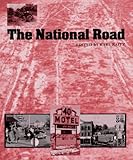
Karl Raitz. The National Road. Baltimore: Johns Hopkins University Press, 1996. xviii + 489 pp. $34.95 (cloth), ISBN 978-0-8018-5155-1.
Reviewed by H. Roger Grant (Clemson University)
Published on H-Review (May, 1998)
Although the famed National Road, "America's Grand Portage," which stretched from Maryland to Illinois, has been the subject of several important historical studies, including Philip D. Jordan's popular The National Road (1948), Karl Raitz's edited new book of the same title is unmistakably the best work on this roadway. What is striking about this volume is that as a collection of original essays, the quality is consistently high and the amount of overlap is surprisingly low.
The National Road provides a comprehensive historical and geographical review of this premier ante-bellum travel corridor, detailing how this federally-sponsored roadway became America's first long-distance artery. A vast and diverse array of people, whether newly arrived immigrants, Yankees from New England or southerners from the Carolinas, chose this way from Cumberland, Maryland, to Vandalia, Illinois, to the fabled West. Moreover, the National Road was a symbolic highway of nation, literally and figuratively dividing North from South and connected East with West. Yet its time of glory lasted for only a few decades. Even before the National Road was completed, it became an anachronism, overtaken by a replacement transportation technology, the railroad. With the triumph of the iron horse, the importance of National Road faded rapidly. Sporting substantial bridges and an all-weather surface (when maintained), the road retailed value as a local travelway during the immediate post-Civil War era.
Then the new twentieth century brought dramatic change. With the invention of the automobile and its widespread use after 1910, the National Road regained importance. The road sliced through a rich and populous section of America and served a number of flourishing cities, including Columbus, Ohio, and Indianapolis, Indiana. With the intense crusade to lift the country out of the mud and dust, the National Road became a prime candidate for rehabilitation. Public support of highways, especially the Federal Highway Act of 1921, meant betterments, and in early 1920s the road was extensively overhauled; the old macadam pavement gave way to concrete. Within a decade or so, a new roadside architecture appeared, represented by filling stations, tourist courts, and diners. These structures differed dramatically from stagecoach taverns and related ante-bellum traveler-oriented facilities. The National Road, reconstituted as US Highway 40, served its constituency well until the construction of the largely parallel Interstate 70, the result of the federal government's ambitious program of high-speed, divided roadways that enactment of the National Defense Highway Act of l956 made possible.
For anyone who is intrigued with the National Road, this is the first book to read. Not only does it update the 1948 work of Philip D. Jordan, but also features an imaginative section, "Preserving the National Road Landscape," by Glenn A. Harper. Fine illustrations, including maps, "A Chronology of Contextual Events," and a comprehensive bibliography further enhance this useful and attractive book.
Copyright (c) 1998 by H-Net, all rights reserved. This work may be copied for non-profit educational use if proper credit is given to the author and the list. For other permission, please contact H-Net@H-Net.MSU.EDU.
If there is additional discussion of this review, you may access it through the network, at: /reviews.
Citation:
H. Roger Grant. Review of Raitz, Karl, The National Road.
H-Review, H-Net Reviews.
May, 1998.
URL: http://www.h-net.org/reviews/showrev.php?id=2033
Copyright © 1998 by H-Net, all rights reserved. H-Net permits the redistribution and reprinting of this work for nonprofit, educational purposes, with full and accurate attribution to the author, web location, date of publication, originating list, and H-Net: Humanities & Social Sciences Online. For any other proposed use, contact the Reviews editorial staff at hbooks@mail.h-net.org.

